%22%2F%3E%0A%20%20%3Ccircle%20cx%3D%22220%22%20cy%3D%22150%22%20r%3D%22180%22%20fill%3D%22%2322d3ee%22%20fill-opacity%3D%220.12%22%2F%3E%0A%20%20%3Ccircle%20cx%3D%221010%22%20cy%3D%22130%22%20r%3D%22220%22%20fill%3D%22%2338bdf8%22%20fill-opacity%3D%220.08%22%2F%3E%0A%20%20%3Ccircle%20cx%3D%22920%22%20cy%3D%22520%22%20r%3D%22170%22%20fill%3D%22%2322d3ee%22%20fill-opacity%3D%220.06%22%2F%3E%0A%20%20%3Cpath%20d%3D%22M140%20430h920%22%20stroke%3D%22url(%23line)%22%20stroke-width%3D%2212%22%20stroke-linecap%3D%22round%22%2F%3E%0A%20%20%3Cpath%20d%3D%22M220%20360c120-150%20260-220%20380-220s260%2070%20380%20220%22%20fill%3D%22none%22%20stroke%3D%22%2367e8f9%22%20stroke-opacity%3D%220.5%22%20stroke-width%3D%2216%22%20stroke-linecap%3D%22round%22%20stroke-linejoin%3D%22round%22%2F%3E%0A%20%20%3Cpath%20d%3D%22M300%20398h600%22%20stroke%3D%22%2394a3b8%22%20stroke-opacity%3D%220.24%22%20stroke-width%3D%228%22%20stroke-linecap%3D%22round%22%2F%3E%0A%20%20%3Ctext%20x%3D%22220%22%20y%3D%22510%22%20fill%3D%22%23e2e8f0%22%20fill-opacity%3D%220.7%22%20font-family%3D%22Arial%2C%20Helvetica%2C%20sans-serif%22%20font-size%3D%2238%22%20letter-spacing%3D%228%22%3EINSIGHTS%3C%2Ftext%3E%0A%3C%2Fsvg%3E)
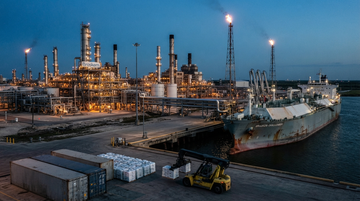
Braskem BAK ‘s Mexico subsidiary, Braskem Idesa, has filed for a U.S. prepackaged Chapter 11 restructuring in the Southern District of Texas, aiming to reduce total senior debt from about $2.5B to about $1.6B. That debt write-down is the financial tell that the ethane-to-PE economics broke—and when one node of the Americas chain fails, the market usually reprices the rest: ethane exports, cracker utilization, and then downstream polyethylene spreads.
This is the “canary in the coal mine” for a specific link in the chain: Mexico’s ethane-cracker model. When feedstock contracting and volume discipline can’t hold, the region stops behaving like a clean arbitrage trade and starts behaving like a bargaining ecosystem.
Event verified: prepackaged U.S. Chapter 11 to cut senior debt
What actually happened—and what it implies for feedstock-linked petrochem cash flows
Restructuring form
Prepackaged Chapter 11
Braskem Idesa and certain subsidiaries commenced “prepackaged” in-court Chapter 11 cases
Court / venue
Southern District of Texas
U.S. Bankruptcy Court referenced in Braskem’s disclosure
Debt reduction target
From ~$2.5B to ~$1.6B
Braskem Idesa aims to reduce total senior debt by more than $920MM
Timing for emergence
~60–90 days
Company stated an expected emergence window after filing
The critical investor takeaway is not the Chapter 11 label—it’s the debt plan magnitude and the “prepackaged” framing. A prepack usually means the restructuring is designed around agreed creditor economics rather than pure liquidation math. In petrochem feedstock models, that typically translates to one or more of the following under stress: (1) reduced utilization, (2) rebalanced contractual feedstock volumes/costs, and/or (3) renegotiated downstream pricing/spreads capture.
Supply-chain mechanism
Why an ethane-cracker collapse turns into a PE-pricing floor question
- Ethane crackers are volume businesses: when contracted feedstock is short (or too costly), unit economics fall fast.
- PE pricing often tracks competitive marginal cost. If a high-fixed-cost cracker node exits or runs below capacity, the “floor” shifts unevenly across regions.
- Credit stress changes behavior: counterparties (feedstock suppliers, terminal operators, offtakers) push for cash discipline first, not incremental production last.
In this case, the restructuring is happening while Braskem Idesa’s Mexico production has been affected by lower-than-contracted ethane supply, with reported financial impact tied to that operating condition. The chain reaction investors should watch is straightforward: a depressed cracker does not just reduce polymer volumes—it changes how much incremental ethane (and ethane-linked logistics capacity) the region needs.
From Mexico to the U.S. balance sheet
The “read-through map”: who profits, who pays, and where consolidation shows up
| Supply-chain layer | Who is exposed | Transmission channel | What should move next (days–quarters) |
|---|---|---|---|
| Feedstock (ethane sourcing) | Ethane suppliers and contracted offtake counterparties | Contract volume/cost renegotiation risk after Chapter 11 filings | Credit tightening; formula resets; less tolerance for under-delivery |
| Logistics / terminals | Terminal and import-handling structures serving ethane | Capacity utilization and guarantee enforcement | Counterparty rebalancing; potential for lower contracted throughput |
| Cracking / conversion | Ethane crackers and polymer production sites | Utilization and margin compression before and during restructuring | Run-rate changes; maintenance or feed re-optimization |
| Downstream pricing (PE) | Polyethylene producers and converters | Regional marginal cost repricing when a node exits/cuts output | Spread volatility; weaker PE price floors if supply rationalization stalls |
Investor fundamentals (listed comps)
How the market should frame Braskem BAK versus more resilient PE/olefins cash generators
Braskem BAK revenue (TTM)
$70.6B
TTM through Aug. 18, 2026; operating environment remains stressed while restructuring unfolds
LyondellBasell LYB revenue (TTM)
$31.2B
TTM through Aug. 18, 2026; profitability positive at the company level
LyondellBasell LYB net income (TTM)
-$0.35B
TTM through Aug. 18, 2026; still risk-bearing but not in restructuring mode
The listed-name contrast matters because Braskem BAK is carrying the direct restructuring story, while large olefins/polymers peers are more likely to be “price-taking” beneficiaries or victims depending on whether Mexico’s rationalization tightens or destabilizes PE spreads.
For Braskem BAK, the key investor question is whether the Chapter 11 plan changes the operating contract geometry enough to restore ethane-linked cash conversion. For peers like LYB and DOW, the question is whether reduced Mexico supply supports a PE price floor—or whether broader Americas petrochem glut behavior continues to swamp rationalization.
Short-term / long-term horizons
What to watch after filing: creditor mechanics, operational run-rate, and pricing floor behavior
- In the next 30–90 days, watch for whether Braskem Idesa’s exit plan preserves operating continuity or implies sharper utilization cuts.
- Track whether feedstock supply arrangements tighten or re-price; those contract shifts usually precede any PE pricing trend for the region.
- In quarters following emergence, look for evidence of a broader consolidation wave: fewer marginal crackers, more disciplined output, and less tolerance for low-margin running.
Synthesis (facts vs. inference)
Bottom line: Mexico’s Chapter 11 reframes Americas ethane exports from optionality to constraint
Verified fact: Braskem Idesa filed for prepackaged Chapter 11 in the U.S., targeting a reduction of total senior debt from about $2.5B to about $1.6B and expecting emergence in roughly 60–90 days. That scale of restructuring implies the ethane-cracker-to-PE economics failed under current Americas pricing and feedstock conditions.
Inference (with risk): once the Mexico node changes its volume/cost reality through creditor renegotiations, U.S. ethane demand expectations can reset. That can either (a) tighten the ethane export balance and stabilize a PE price floor, or (b) widen spread volatility if the system keeps discounting supply rationalization.
Investor move: treat U.S. ethane exporters and PE producers as a single pricing system with a credit channel—not separate “energy” and “chemicals” bets.
Tradable read-through: where the next repricing most likely lands
- Braskem BAK faces ongoing earnings pressure while its Mexico unit restructures as TTM net income remains negative (TTM through Aug. 18, 2026).
- The Chapter 11 plan targeting ~$920MM+ debt reduction increases uncertainty on cross-border cash support in the next quarters (company-reported restructuring context).
- If the Mexico operating model needs deeper cuts, Braskem BAK could see additional margin drag until contracts stabilize.
- A Mexico-led rationalization could stabilize PE spreads in the 1–3 quarters horizon, supporting olefin/polyolefin profitability versus a continued glut.
- If ethane demand resets lower and spreads weaken, LYB still has operating exposure via commodity-linked volumes without Chapter 11 leverage to force pricing (company-level profitability remains pressured in TTM).
- Watch whether regional pricing tightens enough for LYB to translate revenue into operating income without a prolonged net-income squeeze (TTM through Aug. 18, 2026).
- If a weaker Mexico model trims regional PE supply, DOW could benefit from a more durable PE pricing floor (near-term spread defense).
- If the broader Americas glut persists, DOW remains exposed because its polyolefin economics remain sensitive to commodity spreads in the next few quarters (TTM profitability near/under breakeven).
- Credit-driven behavior can increase volatility; investors should expect margin range expansion around the post-emergence window.
- If ethane export flows reprice due to Mexico’s Chapter 11, midstream cash yields tied to ethane/logistics could see throughput sensitivity within quarters (watch for volumes changes).
- A tighter ethane balance can support fee stability; a looser balance can force renegotiations in the next 1–3 years depending on contract resets.
- The signpost is whether ethane demand for crackers rebounds after restructuring rather than rerouting to other regions.