%22%2F%3E%0A%20%20%3Ccircle%20cx%3D%22220%22%20cy%3D%22150%22%20r%3D%22180%22%20fill%3D%22%2322d3ee%22%20fill-opacity%3D%220.12%22%2F%3E%0A%20%20%3Ccircle%20cx%3D%221010%22%20cy%3D%22130%22%20r%3D%22220%22%20fill%3D%22%2338bdf8%22%20fill-opacity%3D%220.08%22%2F%3E%0A%20%20%3Ccircle%20cx%3D%22920%22%20cy%3D%22520%22%20r%3D%22170%22%20fill%3D%22%2322d3ee%22%20fill-opacity%3D%220.06%22%2F%3E%0A%20%20%3Cpath%20d%3D%22M140%20430h920%22%20stroke%3D%22url(%23line)%22%20stroke-width%3D%2212%22%20stroke-linecap%3D%22round%22%2F%3E%0A%20%20%3Cpath%20d%3D%22M220%20360c120-150%20260-220%20380-220s260%2070%20380%20220%22%20fill%3D%22none%22%20stroke%3D%22%2367e8f9%22%20stroke-opacity%3D%220.5%22%20stroke-width%3D%2216%22%20stroke-linecap%3D%22round%22%20stroke-linejoin%3D%22round%22%2F%3E%0A%20%20%3Cpath%20d%3D%22M300%20398h600%22%20stroke%3D%22%2394a3b8%22%20stroke-opacity%3D%220.24%22%20stroke-width%3D%228%22%20stroke-linecap%3D%22round%22%2F%3E%0A%20%20%3Ctext%20x%3D%22220%22%20y%3D%22510%22%20fill%3D%22%23e2e8f0%22%20fill-opacity%3D%220.7%22%20font-family%3D%22Arial%2C%20Helvetica%2C%20sans-serif%22%20font-size%3D%2238%22%20letter-spacing%3D%228%22%3EINSIGHTS%3C%2Ftext%3E%0A%3C%2Fsvg%3E)
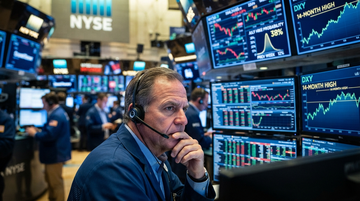
Market-event setup (July 28–29, 2026)
The “hawkish hold” trade is really a September-path trade, not a July decision trade
The core reason a hold can trade like a tightening is simple: what moves priced risk isn’t just whether the Fed changes rates tomorrow—it’s what the Fed wants markets to believe about the next quarters.
CME’s FedWatch had the probability of a July hike at roughly the high-30% range (and up sharply from earlier in the month), while contemporaneous reporting still framed the higher-probability near-term outcome as a hold.
That combination—meaningful hike odds plus a market that expects “hold”—creates a narrow band where any hawkish tilt in the language (or in the forward guidance implied by projections) pushes the market to reprice September and beyond.
FedWatch-implied July hike odds (near-term)
38%
Reported as the CME FedWatch likelihood of a July benchmark-rate hike, up from 12% a week earlier.
Prev. week hike odds (context)
12%
FedWatch-implied hike odds referenced as the week-ago level.
Dollar stress signal
DXY 101.3
DXY reported reaching a 14-month high near the late-June / late-July window.
When hike odds rise fast, a hold becomes a negative surprise for rate-cut expectations
- If the market assigns ~38% to a hike, the pricing distribution is already skewed; a “hold” then forces the market to decide the Fed prefers higher-for-longer rather than just a technical pause.
- Higher DXY at a 14-month high supports that tightening expectations are already spilling into FX; hawkish wording typically strengthens the dollar further through relative-rate expectations and risk premia.
- The Fed’s job in July is not only to set policy today; it’s to shape the expected policy path—so a hold can revise the whole distribution of future cuts.
This is the mechanism behind the “hawkish hold”: markets are not simply waiting for a binary outcome (hike vs hold). They are updating a distribution of future policy.
With FedWatch hike odds rising quickly, a hold shifts the interpretation to: either the inflation/cycle story needs more time to cool, or the Fed is satisfied enough to avoid a hike—but not enough to bring forward cuts. Either way, it can still tighten financial conditions through the term structure.
Supply-chain aware macro transmission
Why the same-day repricing can hit chips, banks, and the dollar simultaneously
A hawkish hold matters for supply chains because it reshapes the cost of capital and the dollar—two levers that transmit across both upstream inputs and downstream demand.
- For semiconductor-heavy AI demand chains, higher-for-longer front-end yields and a stronger dollar tend to tighten the discount rate applied to long-duration cash flows (especially for growth and capex-linked business models). Even if end-demand is intact, valuation and financing conditions can move first.
- For banks, the key is not just the level of short rates—it’s the slope of the curve, deposit betas, and how quickly credit costs change. A hawkish hold can steepen/flatten expectations in ways that change NII assumptions and risk appetite.
- For the dollar, a hawkish shift tightens global financial conditions; for importers/exporters it affects input costs and revenue translation across the whole chain.
| Channel | Immediate move (days) | Follow-through (quarters) |
|---|---|---|
| Front-end rates / term premium | Treasury yields reprice; risk-free discount rates rise | Market-implied capex/credit risk adjusts; margins re-rating begins |
| USD (DXY) | FX hedging costs and importer/exporter translation effects | Inflation expectations abroad shift; policy reactions widen |
| Bank funding + curve expectations | Deposit pricing pressure + NII path repriced | Credit normalization assumptions reset |
| Equity duration (chips/AI) | Growth multiples compress if cuts are pushed out | Supply-chain capex plans reflect financing cost and demand confidence |
Sector implications with listed-company fundamentals (sanity checks)
Which listed names are most exposed to a hawkish hold: duration, credit beta, and the dollar
To avoid pure narrative, here’s what we can ground quickly from listed fundamentals: identify (1) high-duration / high-multiple semis and (2) diversified financials with meaningful sensitivity to macro rates and funding assumptions.
Broadcom AVGO sits in semis/infrastructure with strong cash-generation metrics in this dataset, but its equity multiple is still sensitive to discount-rate repricing. NVIDIA NVDA is an even more duration-like expression of AI capex expectations, with very high operating margins in the dataset. On the financial side, JPMorgan JPM represents a macro-rate-sensitive balance sheet, and its profitability and valuation in the dataset show the kind of re-rating risk that can happen when policy-path expectations shift. Visa V and American Express AXP add a downstream transmission: higher USD and tighter conditions often change consumer and merchant spending expectations through credit/transaction volumes.
Fundamental anchor: operating margin levels (as a proxy for how much earnings are already “built-in”)
Used only as a sanity check for earnings resilience; hawkish-hold impact is still dominated by macro repricing.
Unit: margin (decimal)
NVIDIA NVDA operating margin (TTM)
High operating margin in the dataset
0.7
Broadcom AVGO operating margin (TTM)
High but lower than NVDA
0.5
Texas Instruments TXN operating margin (TTM)
Analog/embedded with sizable margins
0.4
JPMorgan JPM operating margin (TTM)
Bank profitability still rate-expectation sensitive
0.5
September dot plot implications (what we can and can’t verify from primary sources here)
The policy-path signal is the variable traders are buying today—so the Sep narrative is the risk
A key detail: the Fed only publishes the dot plot when the meeting is associated with the Summary of Economic Projections (SEP).
In this research session, the Fed meeting calendar confirms that SEP-associated meetings are marked separately, but it does not provide the SEP/dot plot content for the July 28–29 meeting itself in the visible chunk we opened. Therefore, the safest conclusion is:
- The July decision can still be hawkish even if a dot plot isn’t published at that exact meeting, because the Fed can change market pricing of the rate path through statement language and guidance.
- The September SEP/dot plot can then act as the “final confirmation” or “reversal” of the earlier repricing—meaning positioning for September is often set by today’s communication plus the rate-distribution update implied by FedWatch.
- If markets are already pricing ~38% hike odds, a hold plus hawkish language can shift the distribution toward fewer near-term cuts (a negative for duration assets like semis).
- A stronger dollar backdrop (DXY at a 14-month high) makes FX-sensitive downstream demand and importer margin assumptions more fragile.
- Banks can reprice quickly if the expected curve shape changes—especially if the market moves from “eventual easing” to “cuts are further out.”
Trading horizons: what moves in days vs what matters in quarters
Short-term: repricing happens immediately; long-term: the “policy path” either validates or breaks the trade
- Days (immediate): yields, DXY, and growth-multiple sensitivity update on the Fed’s statement and press conference framing; the “hawkish hold” shows up first in semis and high-duration financials.
- Days (immediate): if FedWatch-implied hike odds fall after a hawkish hold, it can still mean “September is higher for longer,” not “policy is dovish.”
- Quarters (through September/late 2026): the SEP/dot plot and the Fed’s economic narrative decide whether the repricing was correct; if inflation progress is adequate and the Fed signals cuts soon, the trade can unwind quickly.
Bottom line thesis: the market is treating the July meeting as a distribution update, not a binary switch. With FedWatch hike odds around the high-30% range and the dollar already near a 14-month high, the bar for a “dovish hold” is extremely high—so even a hold can transmit like tightening by pushing out September’s expected cut path.
Listed names with evidence-backed linkage to a hawkish-hold transmission (duration + credit + FX)
- A hawkish hold typically compresses NVDA’s duration multiple by shifting the cut path farther out into 2026.
- A stronger USD regime tightens global financial conditions, which can pull forward valuation risk even if AI demand is unchanged.
- A hawkish hold can reprices JPM’s NII path through the curve, moving earnings assumptions before credit costs react.
- If higher-for-longer reduces risk appetite, JPM can see valuation downside despite franchise strength.
- A hawkish hold and stronger dollar can tighten consumer/merchant spending expectations, pressuring near-term transaction-growth assumptions.
- If higher rates are paired with stable credit quality, V can cushion the move through fee-driven resilience into 1–2 quarters.