%22%2F%3E%0A%20%20%3Ccircle%20cx%3D%22220%22%20cy%3D%22150%22%20r%3D%22180%22%20fill%3D%22%2322d3ee%22%20fill-opacity%3D%220.12%22%2F%3E%0A%20%20%3Ccircle%20cx%3D%221010%22%20cy%3D%22130%22%20r%3D%22220%22%20fill%3D%22%2338bdf8%22%20fill-opacity%3D%220.08%22%2F%3E%0A%20%20%3Ccircle%20cx%3D%22920%22%20cy%3D%22520%22%20r%3D%22170%22%20fill%3D%22%2322d3ee%22%20fill-opacity%3D%220.06%22%2F%3E%0A%20%20%3Cpath%20d%3D%22M140%20430h920%22%20stroke%3D%22url(%23line)%22%20stroke-width%3D%2212%22%20stroke-linecap%3D%22round%22%2F%3E%0A%20%20%3Cpath%20d%3D%22M220%20360c120-150%20260-220%20380-220s260%2070%20380%20220%22%20fill%3D%22none%22%20stroke%3D%22%2367e8f9%22%20stroke-opacity%3D%220.5%22%20stroke-width%3D%2216%22%20stroke-linecap%3D%22round%22%20stroke-linejoin%3D%22round%22%2F%3E%0A%20%20%3Cpath%20d%3D%22M300%20398h600%22%20stroke%3D%22%2394a3b8%22%20stroke-opacity%3D%220.24%22%20stroke-width%3D%228%22%20stroke-linecap%3D%22round%22%2F%3E%0A%20%20%3Ctext%20x%3D%22220%22%20y%3D%22510%22%20fill%3D%22%23e2e8f0%22%20fill-opacity%3D%220.7%22%20font-family%3D%22Arial%2C%20Helvetica%2C%20sans-serif%22%20font-size%3D%2238%22%20letter-spacing%3D%228%22%3EINSIGHTS%3C%2Ftext%3E%0A%3C%2Fsvg%3E)
Bottom line
The tape looked like a broken thesis. It was more like a forced reset in a crowded trade.
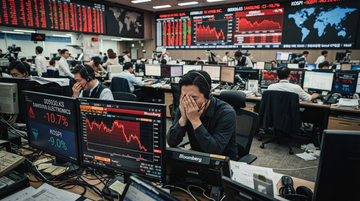
The 15.4% drop in SK Hynix was violent enough to look fundamental, but the catalyst stack was mostly mechanical. Middle East escalation pushed global risk assets lower, the Korean market was already heavily owned, and the newly hot ADR setup created a gap that could snap shut very fast.
That matters because memory demand has not disappeared. The AI buildout still needs high-bandwidth memory, DRAM, and packaging. A stock can trade like a stress asset even while the business remains a scarcity asset.
What changed
Three things hit at once: geopolitical risk, leverage, and a cross-listing dislocation.
The Korean market took the bigger hit because it was the most crowded expression of the memory trade. SK Hynix and Samsung Electronics both sold off hard, and the KOSPI fell far enough to trigger a trading halt. That is the signature of a market that is de-risking first and analyzing later.
The other mechanical pressure point was the U.S. listing. SK Hynix raised $26.5 billion on Nasdaq on July 10, then local shares and ADRs diverged enough to create a sharp valuation gap. When a global stock has both a hot debut and a stressed home market, arbitrage and margin flows can amplify the move.
| Signal | What the market saw | Why it mattered |
|---|---|---|
| Middle East flare-up | Oil moved higher and risk assets weakened | The shock was macro first, company-specific second. |
| KOSPI circuit breaker | The benchmark fell 9% and trading was halted | Forced de-risking turns price action into a feedback loop. |
| SK Hynix / ADR gap | Local shares traded at a steep discount to the ADR | Cross-listing dislocations make liquidation more violent. |
| CEO shortage warning | 2027 was framed as the worst year for memory shortage | The fundamental supply problem still points to tightness, not glut. |
Why this is not a thesis break
The correction is real, but it does not invalidate the supply-side story.
The best long-term read-through came from the company's own outlook: the memory shortage is expected to worsen into 2027 and remain tight beyond that. That is what you would expect when HBM demand rises faster than new wafer starts and packaging capacity can be added.
This is why the right interpretation is not 'AI memory is over.' It is 'AI memory is so crowded that a macro shock can compress prices and valuation before fundamentals catch up.'
- Temporary: geopolitical risk may fade if the Strait of Hormuz stays open and oil retraces.
- Technical: leverage, margin calls, and the ADR/local discount likely drove the sharpest part of the move.
- Fundamental: HBM demand and wafer bottlenecks still argue for a tight memory market.
What to watch
If AI capex stays high, this should read like a reset point. If not, the crowding problem gets worse.
Watch whether NVIDIA, hyperscaler capex, and memory pricing stay resilient over the next few weeks. If they do, the Korean selloff may become an entry point instead of a thesis failure. If they do not, the market will start treating memory like a cyclical beta trade again.
Also watch the won and the ADR gap. If foreign inflows return and the cross-listing spread narrows, the stock can recover much faster than the headline panic suggested.
Shock stack in one session
The bars show the size of the move or valuation gap highlighted in the market reports. They are a magnitude comparison, not a ranking of fundamental value.
Unit: Magnitude / %
KOSPI drop
Benchmark circuit breaker
9
SK Hynix drop
Record single-day decline
15.4
Samsung Electronics drop
Broader memory selloff
10.7
ADR discount
Cross-listing gap
28