%22%2F%3E%0A%20%20%3Ccircle%20cx%3D%22220%22%20cy%3D%22150%22%20r%3D%22180%22%20fill%3D%22%2322d3ee%22%20fill-opacity%3D%220.12%22%2F%3E%0A%20%20%3Ccircle%20cx%3D%221010%22%20cy%3D%22130%22%20r%3D%22220%22%20fill%3D%22%2338bdf8%22%20fill-opacity%3D%220.08%22%2F%3E%0A%20%20%3Ccircle%20cx%3D%22920%22%20cy%3D%22520%22%20r%3D%22170%22%20fill%3D%22%2322d3ee%22%20fill-opacity%3D%220.06%22%2F%3E%0A%20%20%3Cpath%20d%3D%22M140%20430h920%22%20stroke%3D%22url(%23line)%22%20stroke-width%3D%2212%22%20stroke-linecap%3D%22round%22%2F%3E%0A%20%20%3Cpath%20d%3D%22M220%20360c120-150%20260-220%20380-220s260%2070%20380%20220%22%20fill%3D%22none%22%20stroke%3D%22%2367e8f9%22%20stroke-opacity%3D%220.5%22%20stroke-width%3D%2216%22%20stroke-linecap%3D%22round%22%20stroke-linejoin%3D%22round%22%2F%3E%0A%20%20%3Cpath%20d%3D%22M300%20398h600%22%20stroke%3D%22%2394a3b8%22%20stroke-opacity%3D%220.24%22%20stroke-width%3D%228%22%20stroke-linecap%3D%22round%22%2F%3E%0A%20%20%3Ctext%20x%3D%22220%22%20y%3D%22510%22%20fill%3D%22%23e2e8f0%22%20fill-opacity%3D%220.7%22%20font-family%3D%22Arial%2C%20Helvetica%2C%20sans-serif%22%20font-size%3D%2238%22%20letter-spacing%3D%228%22%3EINSIGHTS%3C%2Ftext%3E%0A%3C%2Fsvg%3E)
Bottom line
Freeport maintenance is a supply-demand event, but the price signal is about domestic balance, not just one terminal.
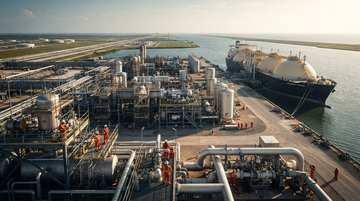
U.S. natural gas prices are sinking because the market is seeing more domestic supply and less export pull at the same time. The Freeport LNG terminal in Texas is going offline for major maintenance through August, which means gas that would have been exported is temporarily staying in the U.S. market.
That distinction matters. The market is not saying gas is permanently weak. It is saying the domestic balance got looser at exactly the moment storage was already comfortable.
What changed
The combination of storage and maintenance is why the market went from tight to heavy.
Why gas prices are under pressure
The market is dealing with a larger storage build, a lower price, and temporary loss of LNG export demand.
Unit: index / Bcf / %
July price decline
Natural gas down more than 10% in July
10
Storage build vs avg
Weekly build in Bcf
61
Freeport share of daily output
Approximate output share
2
| Metric | Value | Why it matters |
|---|---|---|
| Working gas in storage | 2,983 Bcf | Comfortably above average supply conditions. |
| Weekly build | 61 Bcf | Bigger than the 5-year average 51 Bcf build. |
| Inventory surplus | ~6% above 5-year average | The market is already well supplied. |
| Freeport outage | Through August | Export demand is temporarily reduced. |
Transmission
This is the same old gas trade: when exports pause, domestic prices soften first.
- The gas that would have gone to LNG export cargoes stays in U.S. storage instead.
- Lower spot prices help gas-fired power users, utilities, and some industrial consumers.
- LNG exporters and higher-cost producers feel the first negative read-through.
The market also remembers 2022, when the same Freeport terminal shut after a fire and domestic gas prices fell sharply. This time the mechanism is maintenance rather than an accident, but the pricing logic is similar: less export throughput means more domestic availability.
Second order effects
The real valuation question is whether the softness changes capital allocation in gas-linked equities.
| Group | Impact |
|---|---|
| LNG exporters | Spot pricing and feedgas demand weaken. |
| Gas producers | Permian and Haynesville economics soften at the margin. |
| Utilities / power users | Lower gas can improve input costs. |
| U.S. LNG infrastructure | Long-term optionality remains, but near-term cash flow gets noisier. |
A maintenance outage is not a structural bearish call. But it is a very loud reminder that the gas market can get heavy fast.
Conclusion
The deeper lesson is that export optionality is a price variable, not just a logistics variable.
If the market wants to know why gas is weak, the answer is not one headline. It is the collision of a large storage build, comfortable inventories, and an LNG facility that temporarily pulls less gas out of the domestic system.
- The short-term signal is bearish for gas prices.
- The medium-term signal still depends on heat and export recovery.
- Energy investors should separate temporary maintenance from structural demand.