%22%2F%3E%0A%20%20%3Ccircle%20cx%3D%22220%22%20cy%3D%22150%22%20r%3D%22180%22%20fill%3D%22%2322d3ee%22%20fill-opacity%3D%220.12%22%2F%3E%0A%20%20%3Ccircle%20cx%3D%221010%22%20cy%3D%22130%22%20r%3D%22220%22%20fill%3D%22%2338bdf8%22%20fill-opacity%3D%220.08%22%2F%3E%0A%20%20%3Ccircle%20cx%3D%22920%22%20cy%3D%22520%22%20r%3D%22170%22%20fill%3D%22%2322d3ee%22%20fill-opacity%3D%220.06%22%2F%3E%0A%20%20%3Cpath%20d%3D%22M140%20430h920%22%20stroke%3D%22url(%23line)%22%20stroke-width%3D%2212%22%20stroke-linecap%3D%22round%22%2F%3E%0A%20%20%3Cpath%20d%3D%22M220%20360c120-150%20260-220%20380-220s260%2070%20380%20220%22%20fill%3D%22none%22%20stroke%3D%22%2367e8f9%22%20stroke-opacity%3D%220.5%22%20stroke-width%3D%2216%22%20stroke-linecap%3D%22round%22%20stroke-linejoin%3D%22round%22%2F%3E%0A%20%20%3Cpath%20d%3D%22M300%20398h600%22%20stroke%3D%22%2394a3b8%22%20stroke-opacity%3D%220.24%22%20stroke-width%3D%228%22%20stroke-linecap%3D%22round%22%2F%3E%0A%20%20%3Ctext%20x%3D%22220%22%20y%3D%22510%22%20fill%3D%22%23e2e8f0%22%20fill-opacity%3D%220.7%22%20font-family%3D%22Arial%2C%20Helvetica%2C%20sans-serif%22%20font-size%3D%2238%22%20letter-spacing%3D%228%22%3EINSIGHTS%3C%2Ftext%3E%0A%3C%2Fsvg%3E)
Bottom line
Boeing's new production line is important because it says the recovery is becoming industrial, not just financial.
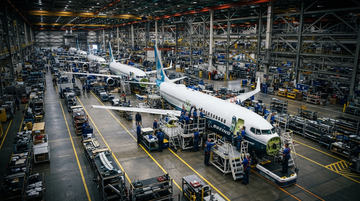
Boeing said its new North Line started operations in Everett on July 6. The market should care, but not because another line is a photo op. It matters because the company is trying to raise the 737 MAX rate from 42 to 47 jets a month while preserving quality and restoring free cash flow.
A higher production line only creates value if it can feed deliveries, reduce bottlenecks, and avoid the quality failures that have repeatedly derailed Boeing's turnaround. That is why this is a signal, not a victory lap.
Why the market moved
The production plan is credible because it sits on top of a huge backlog and a real delivery base.
Boeing 737 production recovery path
Boeing moved from 38 to 42 and now wants 47 jets per month. The point is not the exact number. The point is the slope.
Unit: 737s per month
38 / month
Earlier stabilized production
38
42 / month
Current operating rate
42
47 / month
Target once the North Line is integrated
47
| Metric | Value | Why it matters |
|---|---|---|
| Backlog | $695B | Huge revenue visibility if execution holds. |
| 2025 deliveries | 600 jets | Production and delivery momentum are improving. |
| North Line timing | July 6, 2026 | The new line is not theoretical. |
| 737 MAX orders | ~7,000 | The program remains the commercial backbone. |
Deeper read
The line matters because aerospace is a cash-conversion business, not a factory-output business.
The aerospace industry is unforgiving. A higher production rate is useful only if suppliers, quality control, and certification all keep pace. Boeing knows this better than almost any company in the market. The new line therefore tells you more about confidence in the factory system than about one quarter's delivery tally.
- A wider production system can reduce bottlenecks only if the parts pipeline is stable.
- Quality slips would force rework and erase the cash benefit.
- Certification milestones for the MAX 7 and MAX 10 remain critical to the broader recovery.
Read-through
The winners are not only Boeing shareholders.
| Beneficiary | Why it matters |
|---|---|
| Boeing | Higher output can eventually improve cash flow. |
| Tier-1 suppliers | Volume and mix improve if production stays stable. |
| Airlines | Delivery visibility matters for fleet planning. |
| Leasing companies | A healthier delivery cadence supports asset turnover. |
The real question is not whether Boeing can make more planes. It is whether it can make more planes without inviting the old problems back in.
Conclusion
The new line is a sign of progress, but it is still just one step in a longer recovery.
I like the setup more than the headline because it is concrete. Boeing is pushing the system toward a higher rate, and the backlog gives it a chance to convert. But this remains an execution story first and a valuation story second.
- If the line ramps cleanly, the market can start pricing cash flow instead of repair work.
- If quality slips, the stock will remind investors how fragile the recovery still is.
- The best case is not just more jets. It is more jets with fewer exceptions.