%22%2F%3E%0A%20%20%3Ccircle%20cx%3D%22220%22%20cy%3D%22150%22%20r%3D%22180%22%20fill%3D%22%2322d3ee%22%20fill-opacity%3D%220.12%22%2F%3E%0A%20%20%3Ccircle%20cx%3D%221010%22%20cy%3D%22130%22%20r%3D%22220%22%20fill%3D%22%2338bdf8%22%20fill-opacity%3D%220.08%22%2F%3E%0A%20%20%3Ccircle%20cx%3D%22920%22%20cy%3D%22520%22%20r%3D%22170%22%20fill%3D%22%2322d3ee%22%20fill-opacity%3D%220.06%22%2F%3E%0A%20%20%3Cpath%20d%3D%22M140%20430h920%22%20stroke%3D%22url(%23line)%22%20stroke-width%3D%2212%22%20stroke-linecap%3D%22round%22%2F%3E%0A%20%20%3Cpath%20d%3D%22M220%20360c120-150%20260-220%20380-220s260%2070%20380%20220%22%20fill%3D%22none%22%20stroke%3D%22%2367e8f9%22%20stroke-opacity%3D%220.5%22%20stroke-width%3D%2216%22%20stroke-linecap%3D%22round%22%20stroke-linejoin%3D%22round%22%2F%3E%0A%20%20%3Cpath%20d%3D%22M300%20398h600%22%20stroke%3D%22%2394a3b8%22%20stroke-opacity%3D%220.24%22%20stroke-width%3D%228%22%20stroke-linecap%3D%22round%22%2F%3E%0A%20%20%3Ctext%20x%3D%22220%22%20y%3D%22510%22%20fill%3D%22%23e2e8f0%22%20fill-opacity%3D%220.7%22%20font-family%3D%22Arial%2C%20Helvetica%2C%20sans-serif%22%20font-size%3D%2238%22%20letter-spacing%3D%228%22%3EINSIGHTS%3C%2Ftext%3E%0A%3C%2Fsvg%3E)
What actually happened
This was not a sleepy annual meeting.
NVIDIA's 2026 annual meeting of stockholders took place virtually on June 24, 2026. The official proxy listed three management proposals: elect ten directors, approve executive compensation, and ratify PwC as independent auditor for fiscal 2027. It also laid out four shareholder proposals that the board recommended voting against.
That matters because the meeting materials were not about crisis management. They were a clean signal of confidence: the board was asking investors to keep backing a strategy that is already translating into hyper-scale revenue, while resisting governance proposals that it viewed as distracting from the operating model.
The real signal
The moat is no longer just the GPU.
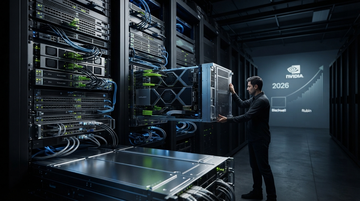
The strongest language in the official materials was not about a single chip. It was about a full-stack computing platform. NVIDIA described Blackwell as a data-center-scale infrastructure stack that includes GPUs, CPUs, DPUs, interconnects, switch chips, networking adapters, software, and the surrounding system design.
That is a very different moat from the old 'fastest GPU wins' framework. The company is now monetizing rack-scale architecture, software attach, and platform orchestration. The meeting reinforced that the economic unit is moving upward from silicon to system design.
- Blackwell Ultra was scaled in fiscal 2026.
- Vera Rubin is slated to start production shipments in the second half of fiscal 2027.
- The roadmap now spans chips, racks, software, networking, security, power delivery, and cooling.
Why this matters for the market
The stock is still being judged too narrowly if you only look at chips.
If the platform keeps deepening, the market has to model more than GPU demand. It has to model the next layer of system adoption, software monetization, and the pace at which enterprise customers keep building AI factories. That usually means the valuation debate stays premium for longer than skeptics want to admit.
What it means downstream
The supply chain will keep moving upstream and outward.
The next bottlenecks are increasingly system bottlenecks. As NVIDIA pushes toward rack-scale AI, the pressure shifts toward HBM, advanced packaging, substrates, networking silicon, optics, power delivery, and thermal management. Suppliers that can solve yield, bandwidth, and power-density constraints will matter more.
That should also ripple into the broader market. Cloud customers will keep pulling for faster deployments, OEM and ODM partners will need more integration capacity, and the infrastructure layer will likely stay capital intensive because every new generation asks for more tightly coordinated components.
- HBM and advanced packaging stay strategically constrained.
- Networking, optics, and power delivery become bigger share gains for the ecosystem.
- Cooling and rack integration become part of the competitive advantage, not just an afterthought.
What happens next
The signal is bullish, but the expectation bar rises too.
If Rubin really lands as a meaningful step down in cost per token, then the next phase of AI expansion is not just more model size. It is more deployment at lower cost, broader inference, and new categories like physical AI and robotics. That is why the meeting felt like a roadmap for the next market regime rather than a recap of the last quarter.
The flip side is that the market will continue demanding execution. NVIDIA now has to ship a growing system, not just a better chip. If it does, the runway extends. If it stumbles, the complexity of the stack increases the penalty. That is the right way to frame the risk-reward after this meeting.