
Materials & Supply Chain
Materials & Supply Chain Insights
실적, 시장 구조, 재무제표에 대한 리서치 노트입니다. 각 글은 결론부터 시작하고, 이후 근거와 시사점을 정리합니다.
2026-07-21
%22%2F%3E%0A%20%20%3Ccircle%20cx%3D%22220%22%20cy%3D%22150%22%20r%3D%22180%22%20fill%3D%22%2322d3ee%22%20fill-opacity%3D%220.12%22%2F%3E%0A%20%20%3Ccircle%20cx%3D%221010%22%20cy%3D%22130%22%20r%3D%22220%22%20fill%3D%22%2338bdf8%22%20fill-opacity%3D%220.08%22%2F%3E%0A%20%20%3Ccircle%20cx%3D%22920%22%20cy%3D%22520%22%20r%3D%22170%22%20fill%3D%22%2322d3ee%22%20fill-opacity%3D%220.06%22%2F%3E%0A%20%20%3Cpath%20d%3D%22M140%20430h920%22%20stroke%3D%22url(%23line)%22%20stroke-width%3D%2212%22%20stroke-linecap%3D%22round%22%2F%3E%0A%20%20%3Cpath%20d%3D%22M220%20360c120-150%20260-220%20380-220s260%2070%20380%20220%22%20fill%3D%22none%22%20stroke%3D%22%2367e8f9%22%20stroke-opacity%3D%220.5%22%20stroke-width%3D%2216%22%20stroke-linecap%3D%22round%22%20stroke-linejoin%3D%22round%22%2F%3E%0A%20%20%3Cpath%20d%3D%22M300%20398h600%22%20stroke%3D%22%2394a3b8%22%20stroke-opacity%3D%220.24%22%20stroke-width%3D%228%22%20stroke-linecap%3D%22round%22%2F%3E%0A%20%20%3Ctext%20x%3D%22220%22%20y%3D%22510%22%20fill%3D%22%23e2e8f0%22%20fill-opacity%3D%220.7%22%20font-family%3D%22Arial%2C%20Helvetica%2C%20sans-serif%22%20font-size%3D%2238%22%20letter-spacing%3D%228%22%3EINSIGHTS%3C%2Ftext%3E%0A%3C%2Fsvg%3E)
2026-07-20
Bezos, Nvidia, Meta Back CuspAI's $450M Series B and 'AI Materials Foundry' — AI Drug-Discovery-Style Bets Now Target Chipmaking Inputs
On July 20, 2026, Cambridge-based CuspAI launched its 'AI Materials Foundry' — a coalition of 45+ technology firms, industrial players, and research labs — alongside a $450 million Series B led by Jeff Bezos with participation from Nvidia (compute), Meta FAIR (Universal Model for Atoms), Kleiner Perkins, NEA, and Temasek, bringing total funding to $650 million. Powered by CuspAI's 'MIRA' platform, the Foundry already screened 300 trillion molecular structures for client Kemira in 6 months (versus years traditionally) and uses curated data from the Cambridge Structural Database, Inorganic Crystal Structure Database, and Wiley. The bet signals that generative-AI-for-materials — analogous to AI drug discovery — is now being explicitly aimed at chipmaking materials bottlenecks.
Molex-Prysmian's $6.29B Data-Center Cable Deal Is the Newest Anchor for the Hyperscaler Optical Supply Chain
On July 20, 2026, Koch-owned Molex struck a 10-year, up to $6.29 billion (€5.5 billion) deal with Italy's Prysmian for the supply of optical cables used inside AI data centers, including a €550 million upfront payment. The agreement — one of the largest hyperscaler-adjacent cabling contracts ever disclosed — follows Prysmian's May 2026 guidance that hyperscaler deals would push 2028 EBITDA up ~64% from 2024, and a $4.68B M&A exploration to bolt on capacity. The deal locks in critical optical interconnect supply at a moment when AI-driven data-center fiber demand is competing with telecom and subsea projects for the same Prysmian capacity.
2026-07-16
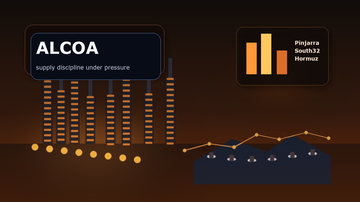
Alcoa Missed the Bar, But the Real Signal Is Supply Discipline: Pinjarra, South32, and Hormuz Are Repricing Aluminum
Alcoa reported Q2 2026 adjusted EPS of $2.12 and revenue of $3.97B, both below expectations, while cutting alumina production guidance after setbacks at the Pinjarra refinery. The stock slid despite better year-over-year profitability because the market is now focused on supply discipline, capital intensity, and how much of the aluminum chain is being shaped by Middle East risk and a major South32 acquisition.
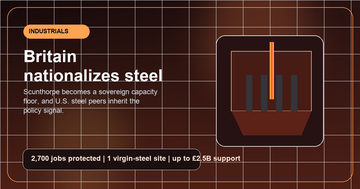
Britain's Nationalization of [British Steel] Is a Sovereign Put Option on Virgin Steel
On July 16, 2026, the UK government moved British Steel into public ownership, citing the public interest, thousands of jobs, and the need to protect a strategic steelmaking capability. The market significance is broader than one plant: when a government is willing to backstop virgin-steel capacity, industrial assets stop being simple commodity businesses and start looking like strategic infrastructure with a policy floor. That matters for Nucor, Steel Dynamics, Cleveland-Cliffs, and every investor who has to price industrial sovereignty risk.
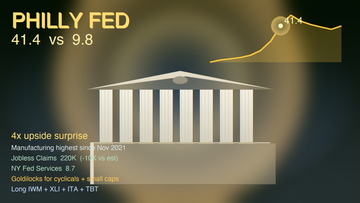
Philly Fed Manufacturing Surges to 41.4 vs. 9.8 Consensus - The 4x Upside Surprise Is the Goldilocks Confirmation for the 2026 Manufacturing + US-Exceptionalism Cycle
The Philadelphia Fed Manufacturing Index surged to 41.4 in July 2026, vs. consensus 9.8 (~4x upside surprise), the highest since November 2021. New orders, shipments, and employment all accelerated. Combined with jobless claims at 220K (-10K vs consensus) and a softer Retail Sales print (-0.2% MoM ex-autos), this is the cleanest goldilocks setup for the 2026 manufacturing + US-exceptionalism cycle. The read-through is for cyclicals + short duration + small caps.
2026-07-15

Atomic Layer Deposition (ALD) Deep Dive: How Applied Materials, Lam Research, Tokyo Electron, and ASM International Built the Most Concentrated Thin-Film Equipment Oligopoly in the AI Chip Era
Atomic Layer Deposition (ALD) is the most concentrated thin-film equipment oligopoly in the semiconductor industry. Applied Materials leads with roughly 50 percent ALD share, Lam Research is at 20 percent, Tokyo Electron is at 15 percent, and ASM International is at 10 percent. This is a full-stack deep-dive into ALD: thermal ALD vs plasma-enhanced ALD (PEALD) vs spatial ALD, the precursor chemistry, the binding layer counts (3nm logic needs 50 plus ALD layers per chip, HBM3E 12-Hi needs 30 plus), the top experts, the customer base (TSMC, Samsung, Intel, SK hynix), the 20B+ USD ALD capex 2025-2027, and the read-through for the AI capex stack.
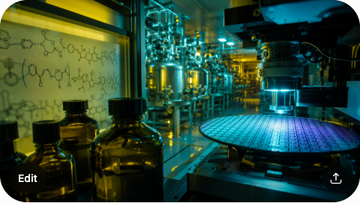
ArF Photoresist Deep Dive: How JSR, Shin-Etsu Chemical, Tokyo Ohka Kogyo, and Sumitomo Chemical Run the Most Concentrated Materials Chokepoint in the AI Chip Supply Chain
ArF (Argon Fluoride) photoresist is the binding materials chokepoint for the entire leading-edge semiconductor industry. The 4 Japanese suppliers - JSR, Shin-Etsu Chemical, Tokyo Ohka Kogyo, Sumitomo Chemical - control ~90% of the global ArF resist market, and the EUV resist oligopoly is even tighter. This is a full-stack deep-dive into ArF photoresist: polymer chemistry (polyhydroxystyrene, acrylate, COMA), photoacid generator (PAG) chemistry, line-edge roughness (LER), the EUV resist roadmap, the 12-inch resist supply chain, the top experts, the customer base (TSMC, Samsung, Intel, SK hynix), the recent CXMT/YMTC Korean/Chinese challenger progress, and the read-through for the 2026-2028 AI capex stack.
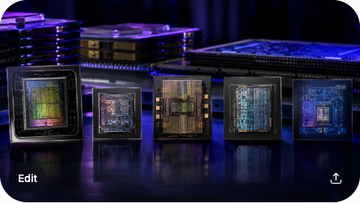
GPU / NPU / ASIC / TPU / CPU Deep Dive: How Nvidia, AMD, Broadcom, Alphabet, Apple, and Intel Are Reshaping the $400B AI Compute Market - Performance, Bottlenecks, Supply Chain, and Demand
The AI compute market in 2026 is a $400B+ market segmented into 5 binding architectures: GPU (Nvidia H100/H200/B100/B200/GB300 + AMD MI300/MI325/MI350), NPU (the cleanest single on-device AI accelerator for Apple Neural Engine + Qualcomm Hexagon + Intel NPU), ASIC (Broadcom custom ASIC for hyperscalers + Marvell custom silicon), TPU (Alphabet TPU v5/v6/v7), and CPU (Intel Xeon + AMD EPYC + Apple M-series). This is a full-stack deep-dive: performance benchmarks (FP8 / FP16 / BF16 / INT8 / FP4 throughput), the HBM + CoWoS + SiP supply chain, the top experts, the customer base, the capex, and the read-through for the AI capex cycle.

HBM Deep Dive: How SK hynix, Samsung Electronics, and Micron Built the Single Most Concentrated AI Supply Chain of the Cycle - and Why the 2026-2028 Capacity Is Already Sold Out
HBM (High-Bandwidth Memory) is the binding AI accelerator supply chain constraint, and the 2026-2028 supply is already spoken for. SK hynix leads with ~52% HBM market share, Samsung Electronics is at ~20%, and Micron is at ~28% with the cleanest 2026 ramp. This is a full-stack deep-dive into HBM: TSV technology, stack height (HBM2/2E/3/3E/4/4E), 12-Hi/16-Hi stacks, base die logic process, the HBM3E race, capacity sold out through 2026, top experts at SK hynix's M16, expansion capex, the customer concentration (Nvidia, AMD, Broadcom), and the read-through for the 2026-2028 AI capex cycle.
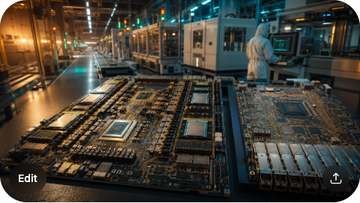
PCB Deep Dive: How Nvidia AI Server Boards, Unimicron + Shennan Circuits Substrate-Like-PCB, and the 800G / 1.6T Switch Era Are Reshaping the $80B Global PCB Market
PCB (Printed Circuit Board) is a $80B/year global market in 2025 that has been structurally reshaped by the Nvidia AI server board cycle. The 5 leading-edge PCB suppliers are Unimicron, Shennan Circuits (the cleanest China PCB exposure), Tripod Technology, Shinko Electric, and Ibiden. This is a full-stack deep-dive: substrate-like-PCB (SLP) + high-density interconnect (HDI) + any-layer HDI (aHDI) + modified semi-additive process (mSAP), the 800G / 1.6T switch PCB cycle, the 224 Gbps PAM4 signaling, the Nvidia GB200 NVL72 / GB300 / Rubin class boards, the customer base (Foxconn + Quanta + Wistron + Inventec + Wiwynn), the capex, and the read-through for the AI server cycle.
2026-07-13

2026-07-10

China's Helium Export Ban Turns a Niche Gas Into a Semiconductor and MRI Chokepoint
China's temporary helium export ban matters less because of absolute volume and more because helium sits at the wrong intersection of scarcity, specialty industry, and no-substitute physics. The read-through is broader than chips: MRI uptime, aerospace, and industrial gas pricing all get tighter when the marginal molecule disappears.
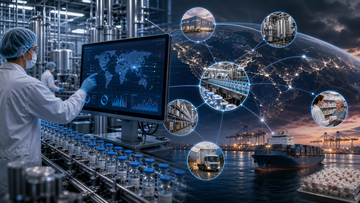
FDA's Drug-Manufacturing Registry Rule Tightens the Supply-Chain Map
The FDA proposed a rule that would let distributed manufacturers register as a single establishment, require advance notice before unit relocation, and close visibility gaps for foreign establishments that make active pharmaceutical ingredients and other drugs for U.S.-linked supply chains. The market implication is that supply-chain transparency is becoming a policy requirement, which favors manufacturers that can prove traceability and domestic resilience, including Eli Lilly and other scaled pharma operators.
2026-07-09
2026-07-08
2026-07-07
AI Inflation Is Reaching Copper and Electricity Before It Reaches CPI
AI data-center demand is pushing inflation into copper, transformers, and electricity procurement before it shows up in consumer prices. The first price signal is upstream in grids and materials, not at the checkout counter.
EUV Is a Chain of Chokepoints, Not a Single Machine
EUV is not one machine. It is a chain of chokepoints spanning light sources, optics, masks, photoresists, metrology, etch, and packaging, and each link can slow the next one.
HBM, DRAM and Wafer Starts Are a Capital Allocation War
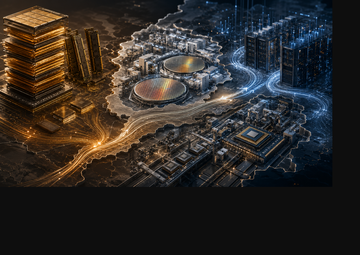
HBM is turning wafer starts, packaging, and clean-room space into a capital allocation war. The companies that can reserve capacity for the right memory mix get paid first; everyone else has to wait or pay up.
Solstice's Element Solutions Deal Turns AI Materials Into a Vertical Stack
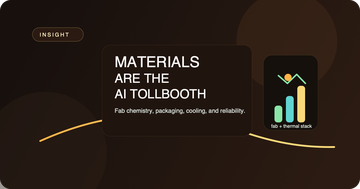
Solstice's $14.5 billion Element Solutions acquisition is not just a chemicals merger. It is a bet that semiconductor fabrication, advanced packaging, thermal management, and data-center cooling are converging into one higher-value AI materials stack.
기대할 수 있는 것
보이는 관점이 있는, 증거 우선의 노트.
이 섹션은 실적, 주주총회, 시장 구조에 대한 날카로운 해석을 모아둡니다. 새 글은 첫 화면 안에서 논지, 사실, 시사점이 모두 드러나야 합니다.
일반론이 아닌 직접적인 분석을 기대하세요.
데이터는 명확하고, 논리는 따라가기 쉬워야 합니다.