
Semiconductors
Semiconductors Insights
실적, 시장 구조, 재무제표에 대한 리서치 노트입니다. 각 글은 결론부터 시작하고, 이후 근거와 시사점을 정리합니다.
2026-07-22
%22%2F%3E%0A%20%20%3Ccircle%20cx%3D%22220%22%20cy%3D%22150%22%20r%3D%22180%22%20fill%3D%22%2322d3ee%22%20fill-opacity%3D%220.12%22%2F%3E%0A%20%20%3Ccircle%20cx%3D%221010%22%20cy%3D%22130%22%20r%3D%22220%22%20fill%3D%22%2338bdf8%22%20fill-opacity%3D%220.08%22%2F%3E%0A%20%20%3Ccircle%20cx%3D%22920%22%20cy%3D%22520%22%20r%3D%22170%22%20fill%3D%22%2322d3ee%22%20fill-opacity%3D%220.06%22%2F%3E%0A%20%20%3Cpath%20d%3D%22M140%20430h920%22%20stroke%3D%22url(%23line)%22%20stroke-width%3D%2212%22%20stroke-linecap%3D%22round%22%2F%3E%0A%20%20%3Cpath%20d%3D%22M220%20360c120-150%20260-220%20380-220s260%2070%20380%20220%22%20fill%3D%22none%22%20stroke%3D%22%2367e8f9%22%20stroke-opacity%3D%220.5%22%20stroke-width%3D%2216%22%20stroke-linecap%3D%22round%22%20stroke-linejoin%3D%22round%22%2F%3E%0A%20%20%3Cpath%20d%3D%22M300%20398h600%22%20stroke%3D%22%2394a3b8%22%20stroke-opacity%3D%220.24%22%20stroke-width%3D%228%22%20stroke-linecap%3D%22round%22%2F%3E%0A%20%20%3Ctext%20x%3D%22220%22%20y%3D%22510%22%20fill%3D%22%23e2e8f0%22%20fill-opacity%3D%220.7%22%20font-family%3D%22Arial%2C%20Helvetica%2C%20sans-serif%22%20font-size%3D%2238%22%20letter-spacing%3D%228%22%3EINSIGHTS%3C%2Ftext%3E%0A%3C%2Fsvg%3E)

Super Micro’s Q4 2026 Gross-Margin Jump (15%–17% vs 8.2%–8.4%) Is Real—but the Risk Is “Backlog Quality,” Not Demand
Super Micro Computer SMCI signaled a preliminary fiscal Q4 gross margin of 15%–17%, nearly doubling prior guidance to ~8.2%–8.4%, alongside a record $60B+ new-orders backlog. The setup looks like genuine AI infrastructure operating leverage, but the stock move will ultimately hinge on whether that margin expansion converts into repeatable revenue mix and cash (not just accounting timing) as production ramps and shipments catch up.
South Korea’s 301 Tariff Deadline Puts Samsung Electronics and SK hynix in the Crosshairs—Here’s the Supply-Chain Math
A mid/late-July 2026 Section 301 forced-labor probe is pressuring South Korea toward a potentially higher-than-expected U.S. tariff rate, with Seoul scrambling to cap the impact. Because Samsung Electronics and SK hynix sell memory and electronics into U.S.-linked demand chains, even a “single-digit-to-mid-teens” tariff can ripple into pricing, contract timing, and working-capital swings well before volumes adjust. The investor takeaway: this is less about whether memory demand collapses immediately—and more about how quickly firms can shift pricing, mix, and inventory risk while U.S. buyers re-source.

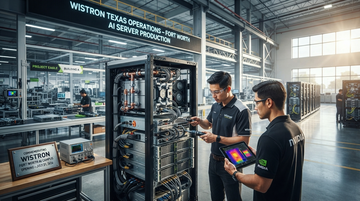
Wistron's $761M Fort Worth AI-Server Factory Is a “Domestic Scale” Test—Here’s What Could Still Break in Mid-2026
Wistron is building two Fort Worth AI supercomputer manufacturing sites totaling $761M, with the facilities expected to be operational by early 2026 and ramping mass production over the following 12–15 months. The deal is heavily structured around delivery/performance triggers (including minimum investment, jobs, and salary floors), turning execution capacity—not just demand—into the primary risk. The operational bottlenecks to watch aren’t only factory construction; they’re supply of server components, quality ramp, and the ability to sustain output once “pilot” becomes “production.”
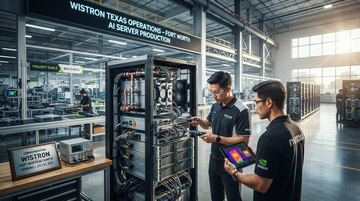
Wistron's $700M Texas AI-Server Factory Is the “Domestic Scaling” Test for NVIDIA’s Supercomputer Supply Chain
Wistron opened a $700M, 324,000-square-foot AI-server assembly-and-test facility in Fort Worth on July 21, 2026, built to support NVIDIA’s next wave of AI systems. The U.S. move matters less because it changes the chip source—and more because it stress-tests integration, yield, thermal/liquid-cooling readiness, and speed-to-ramp for high-volume Blackwell Ultra and Vera Rubin “system” production. For investors, the key question is whether domestic manufacturing reduces latency and risk enough to win sustained orders without permanently worsening Wistron’s working-capital and cash-flow profile.
Zhongji Innolight's $7B Hong Kong IPO Is a Real-Time Demand Test for AI Optical Interconnect
Zhongji Innolight’s Hong Kong listing approval (expected to raise about $7B) is more than a capital-markets milestone—it’s a market verdict on whether AI data-center buildouts will keep translating into high-margin optical transceiver demand. The company’s disclosed growth profile (Q1/3M 2026 revenue and gross margin acceleration) plus its supply-chain scaling plans are the core reason this IPO can be used as a near-term benchmark for AI optical infrastructure capex intensity.
2026-07-21
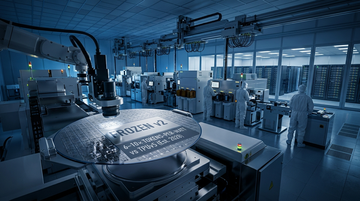
Google’s “Frozen v2” (Gemini-aware) chip targets 6–10× better tokens-per-watt by 2028—reshaping the AI inference hardware stack
Reuters/The Information reports Google is developing an internally named “Frozen v2” server chip that bakes Gemini model elements into hardware, targeted for as early as 2028 deployment. The chip is expected to deliver 6–10× more AI tokens per unit of power than Google’s latest custom silicon and is intended to complement (not replace) Google’s existing TPU roadmap—aiming to relieve compute bottlenecks as AI capex rises. For investors, the key question isn’t only whether the chip works, but whether Google can turn improved tokens-per-watt into measurable inference cost leverage versus competitors’ GPUs/accelerators, with TSMC likely central to the advanced packaging and manufacturing ramp.
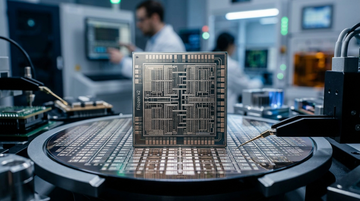
Google Develops 'Frozen v2' Chip With Gemini Baked Into Silicon — A 6-10x Efficiency Play for 2028
Reuters reported on July 20, 2026 that Google is developing a new server chip codenamed 'Frozen v2' that embeds elements of its Gemini model directly into the hardware. The chip is projected to be 6–10x more efficient than current custom Google AI silicon (measured by tokens served per watt) and is targeted for deployment as early as 2028. The 'Frozen' program runs alongside but does not replace Google's existing TPU roadmap (TPU 8t/8i announced at Cloud Next '26) and signals an architectural shift toward model-silicon co-design, putting further pressure on the GPU-centric AI compute stack.
Oracle's $165B AI Megacampus Bet Hits Cost Overruns — BBB Rating, $55.7B FY26 Capex, New Debt/Equity Raise Looms
On July 20, 2026, multiple outlets reported Oracle is facing multibillion-dollar cost overruns across its $165B AI data-center buildout, including its flagship Wisconsin ($15B, ~1 GW) and El Paso/Texas (Project Jupiter) sites. FY2026 capex reached $55.7B — exceeding Oracle's own $50B guidance and up 162% YoY. The company has signaled further debt and equity issuance to fund expansion while its credit rating has slid to BBB, triggering a lawsuit with the Wisconsin Public Service Commission over $100M+ annual financial guarantees. Concerns include local power-grid constraints in New Mexico and broader questions about hyperscaler AI infrastructure returns.
2026-07-20
Bezos, Nvidia, Meta Back CuspAI's $450M Series B and 'AI Materials Foundry' — AI Drug-Discovery-Style Bets Now Target Chipmaking Inputs
On July 20, 2026, Cambridge-based CuspAI launched its 'AI Materials Foundry' — a coalition of 45+ technology firms, industrial players, and research labs — alongside a $450 million Series B led by Jeff Bezos with participation from Nvidia (compute), Meta FAIR (Universal Model for Atoms), Kleiner Perkins, NEA, and Temasek, bringing total funding to $650 million. Powered by CuspAI's 'MIRA' platform, the Foundry already screened 300 trillion molecular structures for client Kemira in 6 months (versus years traditionally) and uses curated data from the Cambridge Structural Database, Inorganic Crystal Structure Database, and Wiley. The bet signals that generative-AI-for-materials — analogous to AI drug discovery — is now being explicitly aimed at chipmaking materials bottlenecks.
Micron Stock Snap: SK Hynix's Memory Price Warning Reprices the AI Memory Oligopoly
On July 19–20, 2026, Micron shares snapped a recent losing streak after an SK Hynix memory-price warning reinforced that the AI-driven DRAM/HBM cycle remains supply-constrained into 2027 and beyond. The warning follows SK Hynix CEO Kwak Noh-jung's comments on July 10 calling 2027 the 'worst year' for memory supply shortages, with the crunch expected to last to 2030 — and comes as memory stocks (SK Hynix, Micron, SanDisk, Western Digital) sold off sharply the prior week on concerns about peak-cycle pricing.
Molex-Prysmian's $6.29B Data-Center Cable Deal Is the Newest Anchor for the Hyperscaler Optical Supply Chain
On July 20, 2026, Koch-owned Molex struck a 10-year, up to $6.29 billion (€5.5 billion) deal with Italy's Prysmian for the supply of optical cables used inside AI data centers, including a €550 million upfront payment. The agreement — one of the largest hyperscaler-adjacent cabling contracts ever disclosed — follows Prysmian's May 2026 guidance that hyperscaler deals would push 2028 EBITDA up ~64% from 2024, and a $4.68B M&A exploration to bolt on capacity. The deal locks in critical optical interconnect supply at a moment when AI-driven data-center fiber demand is competing with telecom and subsea projects for the same Prysmian capacity.
TSMC Accelerates Arizona Buildout, Lifts 2026 Capex to $60-64B — The AI 'Megatrend' Is Now a US Foundry Story
On July 20, 2026, TSMC CFO Wendell Huang told CNBC the company is accelerating its Arizona fab buildout to capitalize on what he called a 'multi-year structural' AI 'megatrend', with the Arizona pipeline raised to $265 billion on top of an additional $100 billion commitment. TSMC simultaneously lifted full-year 2026 capex guidance to $60-64 billion (from a prior $52-56B) and confirmed Phase 1 of Arizona is in production on 4nm, with advanced packaging also being built on-site. Crucially, Huang disclosed that US fab construction costs run 4-5x Taiwan levels, a key margin datapoint for assessing the long-run economics of US-based AI chip manufacturing.
2026-07-19
2026-07-18

CXMT's IPO Turns China's Memory Catch-Up Into a Direct Challenge to Micron, SK Hynix, and Samsung Electronics
China's biggest memory-chip listing in years is not just a capital-raising event. It is a signal that the memory market is being pulled into a state-backed industrial race, with consequences for pricing, capacity, and the global AI supply chain.

CXMT's Mega IPO Is Draining Liquidity From China and Repricing Hong Kong Tech
CXMT's $8.6 billion listing is not just a memory-chip event. The bigger market signal is that a giant domestic IPO can pull liquidity out of mainland China and into a policy-backed industrial story, forcing Alibaba, Tencent, and other Hong Kong tech names to reprice against a tighter cash pool.

Nvidia Barely Kept the Market Cap Crown Over Apple, and That Turns the AI Trade Into a Cash-Conversion Test
The intraday fight between Nvidia and Apple is not just a market-cap headline. It is the market asking which mega-cap can still justify a premium when AI capex, memory costs, and valuation crowding are all rising at once.

The SOX Bear Market Is Not the End of AI, It Is the Start of a Capital-Discipline Regime
When the Philadelphia Semiconductor Index drops more than 20% from its high, the market is not saying AI demand vanished. It is saying the cost of owning the AI supply chain is now high enough that only the cleanest cash converters deserve a premium.
The SOX Bear Market Is Splitting AI Toll Collectors From AI Beta
When the semiconductor index falls into bear-market territory, the market is not dumping AI. It is sorting the AI stack into companies that toll the buildout and companies that are still being priced like pure beta.
2026-07-17
CXMT's $8.6B IPO Turns China's DRAM Catch-Up Into a Direct Challenge to Micron
China's ChangXin Memory Technologies is using a blockbuster IPO to turn AI demand into domestic DRAM capacity. That is not just a China story; it is a direct pricing challenge for Micron, SK Hynix, and Samsung Electronics.
South Korea's ETF Crackdown Proves the AI Chip Rally Had Become a Leverage Product
South Korea's move to suspend new single-stock leveraged ETF listings is not just a retail-protection headline. It is a market-structure admission that the AI chip rally had become a leverage trade layered on top of a real memory upcycle.
기대할 수 있는 것
보이는 관점이 있는, 증거 우선의 노트.
이 섹션은 실적, 주주총회, 시장 구조에 대한 날카로운 해석을 모아둡니다. 새 글은 첫 화면 안에서 논지, 사실, 시사점이 모두 드러나야 합니다.
일반론이 아닌 직접적인 분석을 기대하세요.
데이터는 명확하고, 논리는 따라가기 쉬워야 합니다.