
Data Centers & Cloud
Data Centers & Cloud Insights
실적, 시장 구조, 재무제표에 대한 리서치 노트입니다. 각 글은 결론부터 시작하고, 이후 근거와 시사점을 정리합니다.
2026-07-21
%22%2F%3E%0A%20%20%3Ccircle%20cx%3D%22220%22%20cy%3D%22150%22%20r%3D%22180%22%20fill%3D%22%2322d3ee%22%20fill-opacity%3D%220.12%22%2F%3E%0A%20%20%3Ccircle%20cx%3D%221010%22%20cy%3D%22130%22%20r%3D%22220%22%20fill%3D%22%2338bdf8%22%20fill-opacity%3D%220.08%22%2F%3E%0A%20%20%3Ccircle%20cx%3D%22920%22%20cy%3D%22520%22%20r%3D%22170%22%20fill%3D%22%2322d3ee%22%20fill-opacity%3D%220.06%22%2F%3E%0A%20%20%3Cpath%20d%3D%22M140%20430h920%22%20stroke%3D%22url(%23line)%22%20stroke-width%3D%2212%22%20stroke-linecap%3D%22round%22%2F%3E%0A%20%20%3Cpath%20d%3D%22M220%20360c120-150%20260-220%20380-220s260%2070%20380%20220%22%20fill%3D%22none%22%20stroke%3D%22%2367e8f9%22%20stroke-opacity%3D%220.5%22%20stroke-width%3D%2216%22%20stroke-linecap%3D%22round%22%20stroke-linejoin%3D%22round%22%2F%3E%0A%20%20%3Cpath%20d%3D%22M300%20398h600%22%20stroke%3D%22%2394a3b8%22%20stroke-opacity%3D%220.24%22%20stroke-width%3D%228%22%20stroke-linecap%3D%22round%22%2F%3E%0A%20%20%3Ctext%20x%3D%22220%22%20y%3D%22510%22%20fill%3D%22%23e2e8f0%22%20fill-opacity%3D%220.7%22%20font-family%3D%22Arial%2C%20Helvetica%2C%20sans-serif%22%20font-size%3D%2238%22%20letter-spacing%3D%228%22%3EINSIGHTS%3C%2Ftext%3E%0A%3C%2Fsvg%3E)
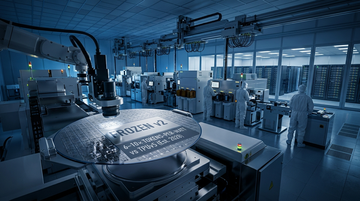
Google의 “Frozen v2”(Gemini 인지) 칩은 2028년까지 토큰당 전력 효율을 6–10배 개선해 AI 추론 하드웨어 스택을 재편—통찰 커버
Reuters/The Information에 따르면 Google은 내부적으로 “Frozen v2”로 명명된 서버 칩을 개발 중이며, Gemini 모델의 요소를 하드웨어에 내장하는 방식이다. 2028년 초 배치가 목표로 거론된다. 이 칩은 Google의 최신 커스텀 실리콘 대비 단위 전력당 AI 토큰을 6–10배 더 제공할 것으로 기대되며, Google의 기존 TPU 로드맵을 보완(대체가 아님)하기 위한 것이다—AI CAPEX가 늘어나는 가운데 컴퓨트 병목을 완화하려는 목적이다. 투자자 입장에서 핵심 질문은 칩이 작동하느냐뿐 아니라, Google이 향상된 토큰당 전력 효율을 경쟁사의 GPU/가속기 대비 측정 가능한 추론 비용 레버리지로 전환할 수 있느냐는 점이며, 고급 패키징과 제조 램프에서 TSMC가 중심에 있을 가능성이 크다.
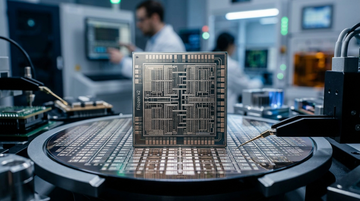
Google, Gemini 요소를 실리콘에 내장한 ‘Frozen v2’ 칩 개발—2028년용 6-10배 효율 전략
Reuters는 2026년 7월 20일 Google이 ‘Frozen v2’라는 코드명으로 새로운 서버 칩을 개발 중이라고 보도했다. 이 칩은 Gemini 모델의 요소를 하드웨어에 직접 내장한다. 이 칩은 현재의 커스텀 Google AI 실리콘(와트당 제공 토큰으로 측정)보다 6–10배 더 효율적일 것으로 전망되며, 2028년 초부터 배치가 목표다. ‘Frozen’ 프로그램은 기존 Google의 TPU 로드맵과 함께 진행되며 대체하지는 않는다(Cloud Next ‘26에서 발표된 TPU 8t/8i). 이는 모델-실리콘 공동 설계로의 아키텍처 전환을 시사하며, GPU 중심의 AI 컴퓨트 스택에 추가 압력을 가한다.
Oracle's $165B AI Megacampus Bet Hits Cost Overruns — BBB Rating, $55.7B FY26 Capex, New Debt/Equity Raise Looms
On July 20, 2026, multiple outlets reported Oracle is facing multibillion-dollar cost overruns across its $165B AI data-center buildout, including its flagship Wisconsin ($15B, ~1 GW) and El Paso/Texas (Project Jupiter) sites. FY2026 capex reached $55.7B — exceeding Oracle's own $50B guidance and up 162% YoY. The company has signaled further debt and equity issuance to fund expansion while its credit rating has slid to BBB, triggering a lawsuit with the Wisconsin Public Service Commission over $100M+ annual financial guarantees. Concerns include local power-grid constraints in New Mexico and broader questions about hyperscaler AI infrastructure returns.
2026-07-20
Databricks' $188B Coatue-Led Round Resets the Private-AI Ceiling: What a 40% Markup in Six Months Says About the Enterprise Data Stack
On July 17, 2026, Databricks signed a term sheet for a strategic funding round led by Coatue that values the data/AI platform at $188B — a roughly 40% step-up from its ~$134B valuation in December 2025. The round totals about $3B from new and existing investors and is expected to close later this summer. It comes on the heels of a separate ~$5B raise earlier in 2026 and stretches Databricks' lead as the most valuable non-foundation-model AI private company, sharpening questions about IPO timing, AI infrastructure economics, and the relative pricing of public SaaS peers.
Micron Stock Snap: SK Hynix's Memory Price Warning Reprices the AI Memory Oligopoly
On July 19–20, 2026, Micron shares snapped a recent losing streak after an SK Hynix memory-price warning reinforced that the AI-driven DRAM/HBM cycle remains supply-constrained into 2027 and beyond. The warning follows SK Hynix CEO Kwak Noh-jung's comments on July 10 calling 2027 the 'worst year' for memory supply shortages, with the crunch expected to last to 2030 — and comes as memory stocks (SK Hynix, Micron, SanDisk, Western Digital) sold off sharply the prior week on concerns about peak-cycle pricing.
Molex-Prysmian's $6.29B Data-Center Cable Deal Is the Newest Anchor for the Hyperscaler Optical Supply Chain
On July 20, 2026, Koch-owned Molex struck a 10-year, up to $6.29 billion (€5.5 billion) deal with Italy's Prysmian for the supply of optical cables used inside AI data centers, including a €550 million upfront payment. The agreement — one of the largest hyperscaler-adjacent cabling contracts ever disclosed — follows Prysmian's May 2026 guidance that hyperscaler deals would push 2028 EBITDA up ~64% from 2024, and a $4.68B M&A exploration to bolt on capacity. The deal locks in critical optical interconnect supply at a moment when AI-driven data-center fiber demand is competing with telecom and subsea projects for the same Prysmian capacity.
Prologis's Third $18.2B Bid for Segro Just Got Rejected — What Happens Before the July 22 Takeover Panel Deadline
On July 17, 2026, Segro's board unanimously rejected Prologis's third sweetened takeover offer valued at approximately £13.5 billion ($18.16 billion), comprising £2.7 billion in cash and 0.0890 new Prologis shares per Segro share. The bid carries a 33.8% premium to Segro's June 23 closing price but was dismissed as still materially undervaluing the UK warehouse landlord. Under UK Takeover Panel rules, Prologis has until July 22, 2026 to either make a formal offer or walk away, with Bloomberg reporting a possible secondary London Stock Exchange listing as a sweetener. The proposed merger would create the world's largest industrial REIT at a time when data-center demand is reshaping the logistics property thesis.
TSMC Accelerates Arizona Buildout, Lifts 2026 Capex to $60-64B — The AI 'Megatrend' Is Now a US Foundry Story
On July 20, 2026, TSMC CFO Wendell Huang told CNBC the company is accelerating its Arizona fab buildout to capitalize on what he called a 'multi-year structural' AI 'megatrend', with the Arizona pipeline raised to $265 billion on top of an additional $100 billion commitment. TSMC simultaneously lifted full-year 2026 capex guidance to $60-64 billion (from a prior $52-56B) and confirmed Phase 1 of Arizona is in production on 4nm, with advanced packaging also being built on-site. Crucially, Huang disclosed that US fab construction costs run 4-5x Taiwan levels, a key margin datapoint for assessing the long-run economics of US-based AI chip manufacturing.
2026-07-19
2026-07-18

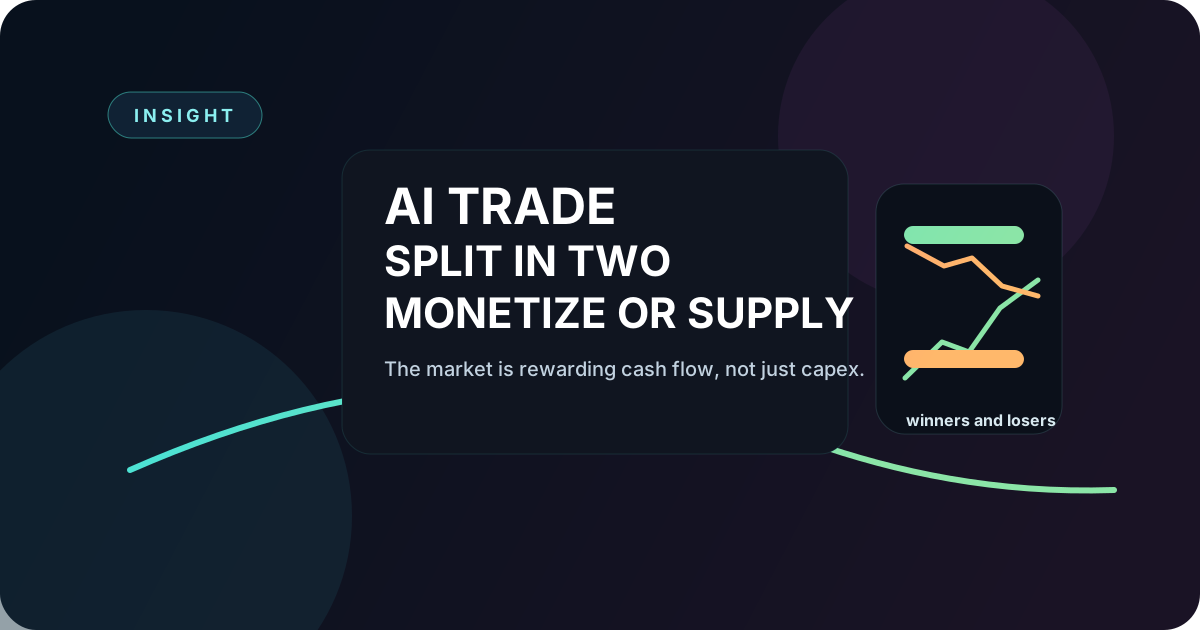
Amazon, Alphabet, Microsoft, and Meta Are Turning AI Capex Into a Return-on-Compute Test
The latest capex debate is not about whether the hyperscalers are spending enough. It is about whether the next dollar of AI infrastructure produces a return that is high enough to justify the power, memory, and financing burden.

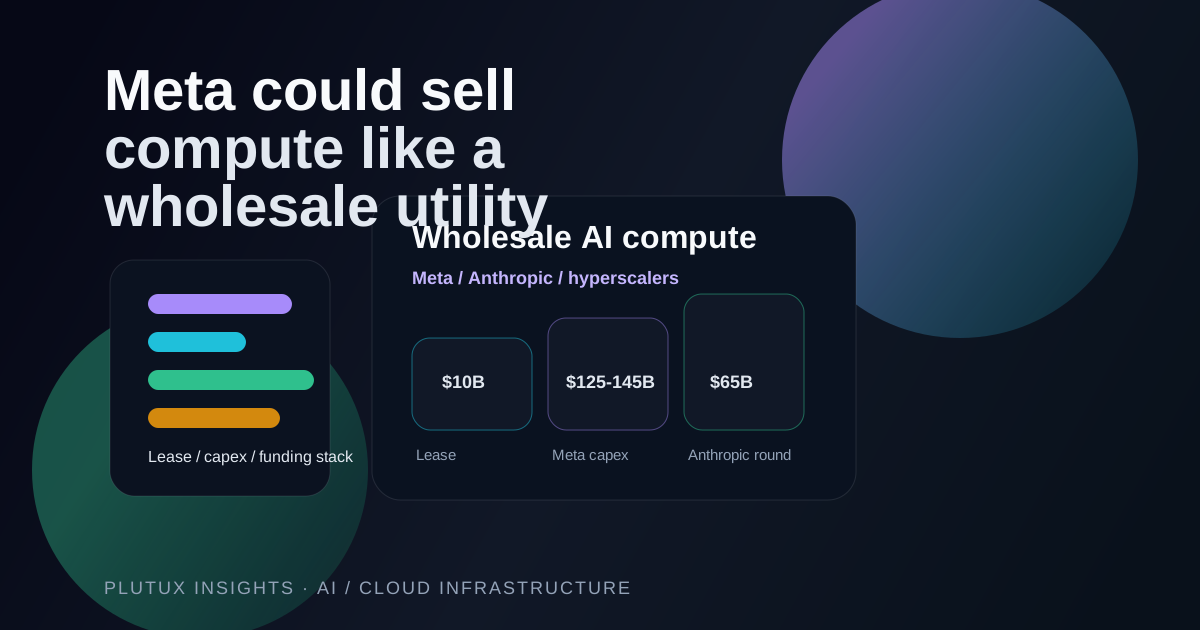
Meta's Anthropic Lease Turns AI Compute Into a Wholesale Market
A potential $10 billion deal to rent compute to Anthropic would move Meta one step closer to treating its AI infrastructure like a saleable utility. That changes the market's question from 'is Meta overinvesting?' to 'can Meta monetize spare capacity better than the cloud incumbents?'

Meta's AWS Poach Turns AI Infrastructure Into a Cloud-Business Trial
Hiring a senior Amazon Web Services executive is a small headline with a large read-through: Meta is no longer just buying compute, it is starting to organize itself like a compute platform. That changes the valuation debate around AI capex, cloud economics, and what counts as a durable moat.
2026-07-16
2026-07-15
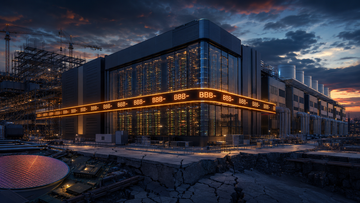
Oracle's 63% Slide From Its 52-Week High Is the First AI-Infrastructure 'Fallen-Angel Watch' the Bond Market Has to Price
Oracle is down roughly 13% over the last 10 sessions and ~63% from its 52-week high of $345.72, with the 52-week low of $127.60 set on July 14, 2026. After the June 11, 2026 8% tumble on a $20 billion capital-raise disclosure and the June 23, 2026 disclosure that Oracle shed ~21,000 roles over the past year, the equity is now pricing the risk that AI-infrastructure capex commitments are pushing the balance sheet toward fallen-angel territory. With debt-to-equity at 322.86%, the question for the bond market is no longer whether Oracle can fund the AI build, but whether the cost of capital will move before the next earnings print on September 7.

Amazon Just Lost a 19-Year AWS S-Team Veteran Right When the AI Capex Cycle Is at Its Peak
Dave Brown, an Amazon Web Services SVP who helped assemble the original EC2 service in South Africa in the 2000s and oversaw AWS's compute and machine learning units including Bedrock and SageMaker, plans to leave the company at the end of July 2026 after nearly 19 years. He will be replaced by Dave Treadwell from the e-commerce division. Brown's exit from Jassy's 28-person S-team comes as AWS recorded 28% revenue growth in Q1 2026 and as Amazon raised at least $25B in a bond sale to fund its AI capex - the worst possible timing for a leadership transition.
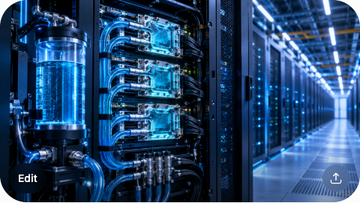
Liquid Cooling Deep Dive: How Vertiv, Boyd, Rittal, CoolIT Systems, and Asetek Built the Most Concentrated AI Data Center Thermal Stack of the Cycle
Liquid cooling is the binding AI data center thermal stack of the cycle - air cooling is no longer sufficient for AI accelerators >700W TDP, and the 2026-2028 liquid cooling demand is the cleanest single read on the AI capex cycle's thermal leg. Vertiv leads with ~30% liquid cooling share, Boyd at ~10%, Rittal at ~10%, CoolIT Systems (the cleanest pure-play, recently acquired by Eaton) at ~8%, and Asetek at ~5%. This is a full-stack deep-dive into liquid cooling: cold plate (DLC) vs immersion (single-phase + two-phase) vs rear-door heat exchanger (RDHx), the coolant chemistry (PG-25, dielectric fluids), the customer base (Microsoft, Alphabet, Amazon, Meta), the top experts, the capex, the 2026-2028 supply-demand, and the read-through for the AI capex stack.
2026-07-14
2026-07-13
2026-07-02

2026-07-01

기대할 수 있는 것
보이는 관점이 있는, 증거 우선의 노트.
이 섹션은 실적, 주주총회, 시장 구조에 대한 날카로운 해석을 모아둡니다. 새 글은 첫 화면 안에서 논지, 사실, 시사점이 모두 드러나야 합니다.
일반론이 아닌 직접적인 분석을 기대하세요.
데이터는 명확하고, 논리는 따라가기 쉬워야 합니다.