
%22%2F%3E%0A%20%20%3Ccircle%20cx%3D%22220%22%20cy%3D%22150%22%20r%3D%22180%22%20fill%3D%22%2322d3ee%22%20fill-opacity%3D%220.12%22%2F%3E%0A%20%20%3Ccircle%20cx%3D%221010%22%20cy%3D%22130%22%20r%3D%22220%22%20fill%3D%22%2338bdf8%22%20fill-opacity%3D%220.08%22%2F%3E%0A%20%20%3Ccircle%20cx%3D%22920%22%20cy%3D%22520%22%20r%3D%22170%22%20fill%3D%22%2322d3ee%22%20fill-opacity%3D%220.06%22%2F%3E%0A%20%20%3Cpath%20d%3D%22M140%20430h920%22%20stroke%3D%22url(%23line)%22%20stroke-width%3D%2212%22%20stroke-linecap%3D%22round%22%2F%3E%0A%20%20%3Cpath%20d%3D%22M220%20360c120-150%20260-220%20380-220s260%2070%20380%20220%22%20fill%3D%22none%22%20stroke%3D%22%2367e8f9%22%20stroke-opacity%3D%220.5%22%20stroke-width%3D%2216%22%20stroke-linecap%3D%22round%22%20stroke-linejoin%3D%22round%22%2F%3E%0A%20%20%3Cpath%20d%3D%22M300%20398h600%22%20stroke%3D%22%2394a3b8%22%20stroke-opacity%3D%220.24%22%20stroke-width%3D%228%22%20stroke-linecap%3D%22round%22%2F%3E%0A%20%20%3Ctext%20x%3D%22220%22%20y%3D%22510%22%20fill%3D%22%23e2e8f0%22%20fill-opacity%3D%220.7%22%20font-family%3D%22Arial%2C%20Helvetica%2C%20sans-serif%22%20font-size%3D%2238%22%20letter-spacing%3D%228%22%3EINSIGHTS%3C%2Ftext%3E%0A%3C%2Fsvg%3E)
Bottom line
The filing does not say AI or HPC. It says something more valuable to the equity: long-duration rent from investment-grade compute demand.
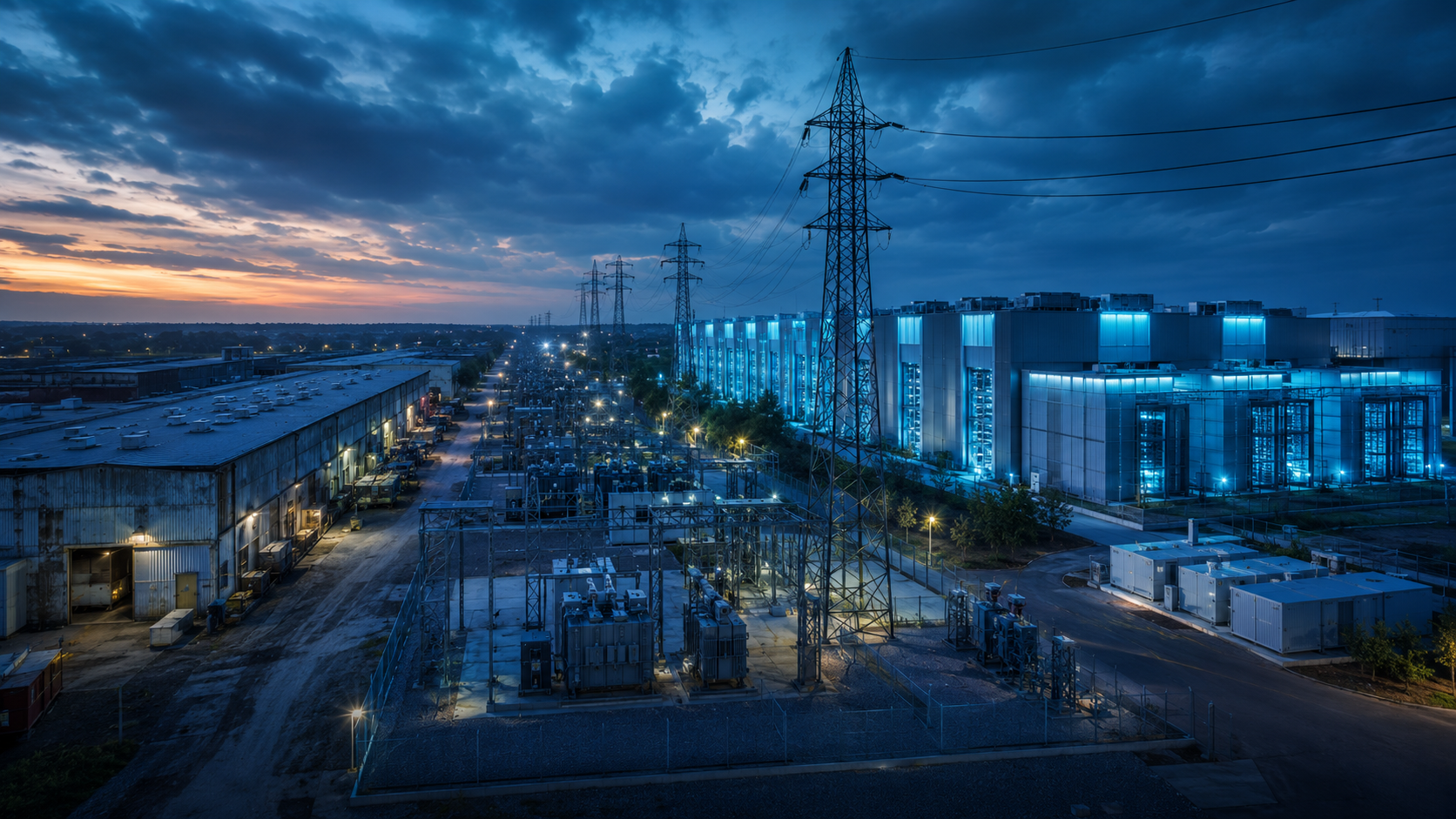
CleanSpark has spent years being valued as a levered claim on bitcoin economics: hash price, network difficulty, machine efficiency, and power cost. Its July 14 Form 8-K creates a second valuation language. A confidential high-investment-grade global technology company agreed to lease infrastructure supporting 175 megawatts of critical IT load at CleanSpark's Sandersville, Georgia campus for 20 years, with two five-year extension options. The company estimates approximately $6.6 billion of contracted revenue in the initial term and approximately $11.6 billion if both extensions are exercised.
The precision matters. CleanSpark called this data-center infrastructure and compute production; the filing did not label the workload AI or high-performance computing. Investors should resist turning an undisclosed tenant into an invented product story. The defensible thesis is narrower and stronger: power, land, interconnection, and delivery certainty have become scarce enough that a technology counterparty is willing to sign duration against them.
At $330 million of estimated average annual NOI, the lease is roughly 9.6% of CleanSpark's $3.45 billion midday equity value before considering corporate costs, financing, construction risk, or time value. That is not an earnings forecast. It is the bridge explaining why the stock traded up 8.66% on volume of roughly 39.7 million shares by midday, about 2.5 times the recent average. The market was repricing the quality and visibility of future cash flow, not merely adding $6.6 billion to enterprise value.
Contract anatomy
The headline is large because the duration is long; the underwriting question is whether CleanSpark can deliver the campus on time and on budget.
The lease begins delivering capacity in the fourth quarter of 2027. CleanSpark estimates landlord development cost of $10 million to $12 million per megawatt. Applied mechanically to 175 megawatts, that implies approximately $1.75 billion to $2.10 billion of project cost before any tenant reimbursements, financing structure, contingencies, or phased timing. That arithmetic is an analytical inference from company guidance, not a disclosed capital budget.
The economic attraction is visible in the stated structure: a triple-net lease, an investment-grade counterparty, and an estimated cumulative NOI margin of approximately 100% over the initial term. Triple-net generally shifts taxes, insurance, and operating expenses toward the tenant, but it does not remove CleanSpark's development, financing, schedule, or counterparty-concentration risk. A dollar of 2047 rent is not worth a dollar today, and a signed lease does not eliminate construction execution.
The second leg is optionality rather than contracted value. CleanSpark signed an exclusivity letter covering 718 Texas acres and up to 885 megawatts: approximately 300 megawatts at Sealy and 300 megawatts expandable to 600 megawatts at Brazoria. Exclusivity is not a lease. Treating it as backlog would overstate the evidence; treating it as a zero-value footnote would ignore the reason the tenant reserved it.
| Item | Disclosed scale | Investment interpretation | Main risk |
|---|---|---|---|
| Georgia initial term | $6.6B over 20 years | Long-duration contracted rent | Discount rate and tenant concentration |
| Georgia capacity | 175 MW critical IT load | Proof that powered sites can monetize beyond mining | Q4 2027 delivery |
| Average annual NOI | ~$330M | Potentially higher-quality cash flow | Company estimate, not current earnings |
| Landlord cost guide | $10M-$12M per MW | Implies capital intensity of ~$1.75B-$2.10B | Financing and cost overruns |
| Texas exclusivity | Up to 885 MW | Large follow-on option | Not yet contracted backlog |
Initial term
20 years
Two additional five-year options could extend total duration to 30 years.
Extension value
$11.6B
Approximate total rent only if both extension options are exercised.
Implied build range
$1.75B-$2.10B
175 MW multiplied by management's $10M-$12M per-MW cost guide; analytical inference.
Valuation transmission
One lease can reset the peer conversation, but it cannot erase bitcoin exposure or turn every powered acre into investment-grade rent.
For Riot Platforms, MARA Holdings, Hut 8, Cipher Mining, TeraWulf, and IREN, the read-through is a new comparable. Investors can now ask how many megawatts are genuinely deliverable, how much capital sits between a powered site and tenant acceptance, what credit supports the lease, and how much legacy mining cash flow funds the build. The correct peer multiple should reward contracted duration and penalize speculative pipeline.
This is also a financing story. A long lease with an investment-grade tenant may support project-level debt that volatile bitcoin revenue cannot. If CleanSpark can ring-fence construction financing without materially diluting shareholders, the equity begins to resemble a developer plus digital-infrastructure landlord. If it must fund most of the build with common stock, the nominal rent headline can coexist with disappointing per-share economics.
The most important distinction is between portfolio conversion and portfolio abandonment. Mining may provide near-term cash while the data center is built, but its cyclicality remains on the consolidated income statement. A blended company should not automatically receive a pure infrastructure multiple until contracted NOI dominates the cash-flow mix.
- Peer acreage is not comparable unless power, permits, interconnection, construction scope, and delivery dates are comparable.
- Project debt can improve equity returns, but guarantees and cross-defaults can move construction risk back to shareholders.
- An unnamed tenant raises concentration and disclosure risk even when its credit rating is described as high investment grade.
CleanSpark lease scale versus market value
Company-disclosed nominal lease figures compared with CleanSpark's July 14 midday market capitalization. Nominal multi-decade rent is not directly comparable with current equity value; the chart illustrates scale, not valuation equivalence.
단위: USD billions
Midday market cap
CNBC quote at 12:29 p.m. EDT, Jul. 14
3.4
20-year rent
Nominal contracted revenue
6.6
30-year rent
Only if both extension options are exercised
11.6
What to watch
The thesis becomes real through milestones: financing, construction notices, tenant identity, and megawatts accepted—not through more pipeline language.
First, watch the financing package. The decisive variables are project debt, interest rate, equity contribution, tenant support, completion guarantees, and whether the contract contains material termination rights or service credits. Second, watch quarterly capital expenditure and share count. A good asset can still be a poor stock outcome if funding dilution outruns the present value created.
Third, watch the Q4 2027 delivery schedule and any phased acceptance disclosures. Each accepted megawatt reduces development risk and begins converting narrative into rent. Fourth, treat the Texas exclusivity as a free option until there is a definitive contract. A signed Texas lease would demonstrate repeatability; an expired exclusivity period would show that Georgia was a transaction, not yet a platform.
The falsification test is straightforward: if costs rise materially above the $10 million to $12 million per-megawatt guide, commissioning slips, or tenant protections force CleanSpark to retain more operating risk than the triple-net label suggests, the infrastructure multiple should compress. If financing is ring-fenced and delivery stays on schedule, the market will have evidence that a bitcoin miner can become a credible compute landlord.