
Energy
Energy Insights
실적, 시장 구조, 재무제표에 대한 리서치 노트입니다. 각 글은 결론부터 시작하고, 이후 근거와 시사점을 정리합니다.
2026-07-22
%22%2F%3E%0A%20%20%3Ccircle%20cx%3D%22220%22%20cy%3D%22150%22%20r%3D%22180%22%20fill%3D%22%2322d3ee%22%20fill-opacity%3D%220.12%22%2F%3E%0A%20%20%3Ccircle%20cx%3D%221010%22%20cy%3D%22130%22%20r%3D%22220%22%20fill%3D%22%2338bdf8%22%20fill-opacity%3D%220.08%22%2F%3E%0A%20%20%3Ccircle%20cx%3D%22920%22%20cy%3D%22520%22%20r%3D%22170%22%20fill%3D%22%2322d3ee%22%20fill-opacity%3D%220.06%22%2F%3E%0A%20%20%3Cpath%20d%3D%22M140%20430h920%22%20stroke%3D%22url(%23line)%22%20stroke-width%3D%2212%22%20stroke-linecap%3D%22round%22%2F%3E%0A%20%20%3Cpath%20d%3D%22M220%20360c120-150%20260-220%20380-220s260%2070%20380%20220%22%20fill%3D%22none%22%20stroke%3D%22%2367e8f9%22%20stroke-opacity%3D%220.5%22%20stroke-width%3D%2216%22%20stroke-linecap%3D%22round%22%20stroke-linejoin%3D%22round%22%2F%3E%0A%20%20%3Cpath%20d%3D%22M300%20398h600%22%20stroke%3D%22%2394a3b8%22%20stroke-opacity%3D%220.24%22%20stroke-width%3D%228%22%20stroke-linecap%3D%22round%22%2F%3E%0A%20%20%3Ctext%20x%3D%22220%22%20y%3D%22510%22%20fill%3D%22%23e2e8f0%22%20fill-opacity%3D%220.7%22%20font-family%3D%22Arial%2C%20Helvetica%2C%20sans-serif%22%20font-size%3D%2238%22%20letter-spacing%3D%228%22%3EINSIGHTS%3C%2Ftext%3E%0A%3C%2Fsvg%3E)
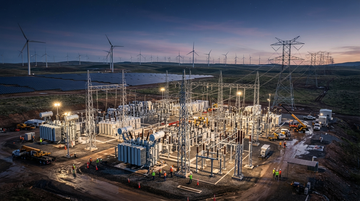
GE Vernova’s Q2 2026 Grid Backlog Signal: Why Utility-Scale Electrification Is the Real “Demand Proof”
GE Vernova GEV is set to report Q2 2026 results on July 22, 2026, with investor focus on backlog growth tied to grid modernization and utility-scale infrastructure. The key question for an industrial-energy supply-chain bet: does the backlog expansion translate into a higher-quality mix (electrification + services) and durable cash generation—or is it offset by execution risk and schedule timing. Investors should underwrite the quarter through the lens of backlog composition, not just headline orders.

The U.S.-Saudi Nuclear Deal’s Real Market Signal: Enrichment Permission Is the Policy Variable Congress Can Still Break
As of July 22, 2026, a U.S.-Saudi civil nuclear cooperation agreement is still awaiting final signature and is reportedly structured in a way that could permit uranium enrichment on Saudi soil. The investment relevance isn’t “nuclear is coming,” but whether enrichment/reprocessing and safeguards constraints survive the U.S. Section 123 / congressional review process. If the deal’s enrichment pathway is curtailed, the first-order winners shift from fuel-cycle capacity beneficiaries toward reactor EPC and nuclear components—changing near-term contracting and long-cycle supply-chain demand.

The US–Saudi Nuclear Pact’s Real Risk Isn’t Reactors—It’s the Fuel-Cycle Loopholes Congress May Force Closed
As of July 2026, the US–Saudi civil nuclear pact is still being debated in Washington because the draft safeguards framework reportedly falls short of the IAEA “Additional Protocol” (and the “gold standard” approach) even as it tentatively permits Saudi enrichment and/or reprocessing. That mismatch creates a fuel-cycle risk that could delay or reshape US vendor participation and the supply-chain plans tied to Saudi nuclear industrialization, regardless of how fast reactor contracting moves.
2026-07-19
2026-07-17

Chevron's Iraq Pipeline Push Turns Hormuz Risk Into a Midstream Re-Routing Trade
New Iraq agreements worth roughly $60 billion do more than add barrels. They signal that the market is starting to price alternative export routes, which changes the value of Chevron, ConocoPhillips, and the entire Gulf energy infrastructure stack.

Kuwait's Desalination Strike Makes Gulf Utilities the Hidden Front Line of the Oil Shock
An Iranian strike on Kuwait's water-and-power infrastructure turns a crude-price headline into a utility and inflation problem. The deeper read is that Gulf desalination, not just shipping lanes, is now part of the market's geopolitical risk premium.
2026-07-16
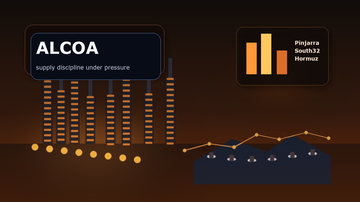
Alcoa Missed the Bar, But the Real Signal Is Supply Discipline: Pinjarra, South32, and Hormuz Are Repricing Aluminum
Alcoa reported Q2 2026 adjusted EPS of $2.12 and revenue of $3.97B, both below expectations, while cutting alumina production guidance after setbacks at the Pinjarra refinery. The stock slid despite better year-over-year profitability because the market is now focused on supply discipline, capital intensity, and how much of the aluminum chain is being shaped by Middle East risk and a major South32 acquisition.

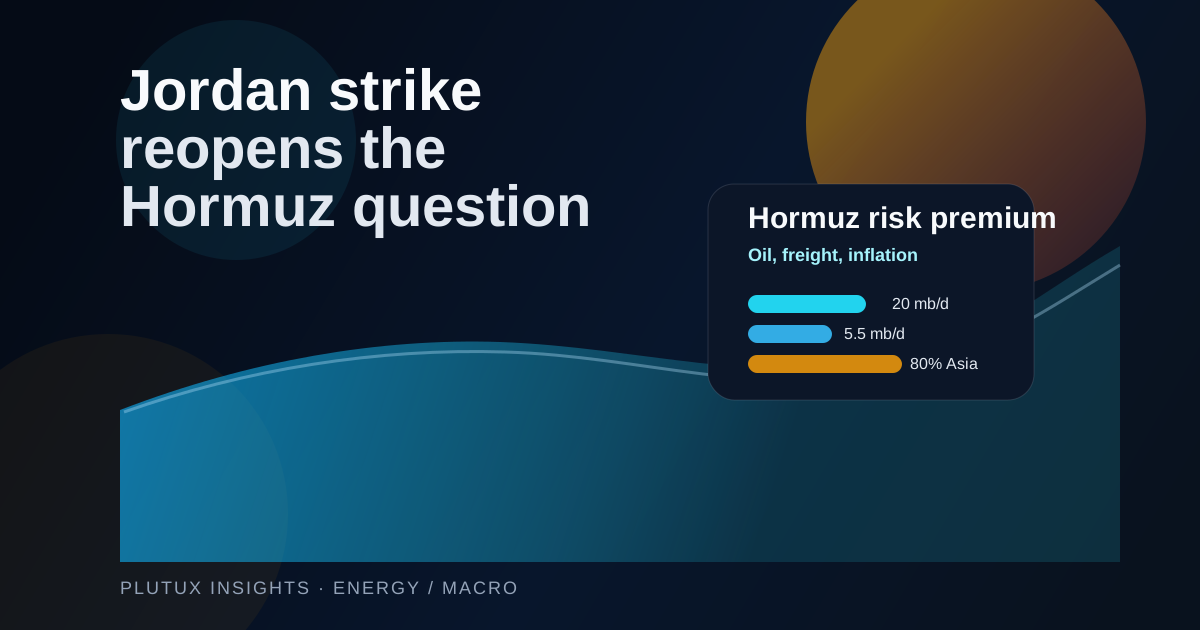
IEA Warns 'Weeks, Not Months' to Reopen Strait of Hormuz - Brent Jumps 13% in 7 Days - The Cleanest Single Stagflation Catalyst of 2026
IEA Chief Fatih Birol warned on July 16, 2026 that the world has 'weeks, not months' to reopen the Strait of Hormuz, with Brent crude jumping 13% in 7 days to ~$84.60/barrel. The IEA warning + IMO Secretary General's declaration that Hormuz transit is 'too dangerous' for ship owners + the US naval blockade reinstatement + Iran's strikes on 5 Gulf countries and 2 UAE-operated supertankers have all combined to create the cleanest single stagflation catalyst of 2026. The read-through is direct for E&P (XOM, CVX, OXY), oilfield services (SLB, HAL, BKR), refiners (VLO, MPC, PSX), tankers (FRO, INSW, STNG), defense (LMT, RTX, NOC), and the cleanest single most direct headwind for airlines (UAL, DAL, AAL), consumer cyclicals, and the cleanest single Fed pause regime.
2026-07-15
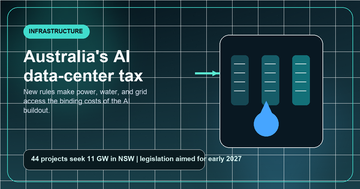
Australia's New AI Data-Center Rules Turn Power and Water Into the Next AI Capex Tax
Australia's July 15-16, 2026 policy shift says large AI data centers must secure their own power, cover their connection costs, manage peak-load behavior, and use water efficiently. The headline is about regulation, but the real message is capital discipline: AI infrastructure is no longer just a software or hardware spend, it is a grid, water, and permitting problem. That matters for Vertiv, Eaton, Equinix, Digital Realty, and every hyperscaler trying to scale demand without colliding with local utility politics.

Trump's 24-Hour Hormuz Toll Reversal Was the First Real Test of the Global Shipping Industry's Leverage
On July 14, 2026, U.S. forces struck Iranian targets and reinstated the naval blockade of Iranian ports. President Trump simultaneously announced a 20% toll on cargo transiting the Strait of Hormuz via Truth Social. Within 24 hours, the policy was reversed and replaced by 'Trade and Investment Deals' with Gulf states. The episode is the first public test of whether the global shipping industry, working through the International Maritime Organization, has enough leverage to reshape a unilateral U.S. policy in real time. The read-through matters for Maersk, Hapag-Lloyd, ZIM Integrated Shipping, Diana Shipping, Frontline, and the broader tanker and dry-bulk complex.
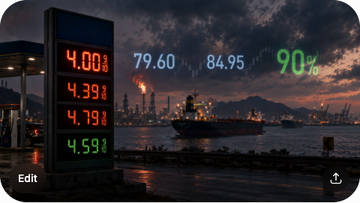
Kalshi Traders Now Put 90% Odds on Gas Crossing $4 This Month - And the Prediction Market Just Became the Cleanest Real-Time Tape on Hormuz Risk
CNBC reported on July 15, 2026 that prediction market Kalshi traders had priced a 90% probability that U.S. gas prices cross $4 per gallon by end of July - up from 56% just two days ago - with a 93% chance of crossing $4 and a 63% chance of exceeding $4.10, following the U.S. ending its Iran ceasefire and relaunching strikes. With WTI at $79.60 and Brent at $84.95, the prediction market is now the cleanest real-time tape on Hormuz risk - faster than futures, faster than retail gas data, faster than analyst notes. The read-through is direct for ExxonMobil, Chevron, ConocoPhillips, Valero, Marathon Petroleum, Phillips 66, United Airlines, Delta Air Lines, American Airlines, and the entire energy + transport complex.

LNG Deep Dive: How Cheniere Energy, Shell, TotalEnergies, QatarEnergy, and Woodside Run the $400B Global LNG Trade - and Why the 2026-2030 Supply-Demand Is the Binding Read on the Energy Transition
LNG (Liquefied Natural Gas) is a $400B/year global trade that has become the binding flexible-supply leg of the global energy transition. The 5 largest LNG suppliers are QatarEnergy (~25% global LNG export share), Cheniere Energy (~15%, the largest US LNG exporter), Shell (~10%, the largest IOC LNG portfolio), TotalEnergies (~8%), and Woodside (~5%, the largest Australian LNG exporter). This is a full-stack deep-dive into LNG: liquefaction technology (ConocoPhillips Optimized Cascade, Air Products AP-C3MR, Black & Black & Veatch PRICO), the FLNG revolution (Shell Prelude + Petronas PFLNG), the customer base (China, Japan, Korea, Europe), the top experts, the capex ($80-100B/year industry), the 2026-2030 supply-demand, and the read-through for the energy transition.

Trump vs Hochul's NY Data-Center Moratorium Is the First Real Test of Whether AI Capex Has a Political Ceiling
President Trump publicly slammed New York Governor Kathy Hochul's new executive order barring for up to a year the construction of data centers that use 50+ MW of power, the first state-level moratorium of its kind in the U.S. Trump wrote on Truth Social that New York 'has made a terrible decision' and urged the state to change policy 'IMMEDIATELY.' The moratorium is the first concrete political constraint on the AI capex stack from a U.S. state, and the read-through is direct for Microsoft, Alphabet, Amazon, Meta, Nvidia, Equinix, Digital Realty, and every AI-infrastructure issuer with a NY exposure.
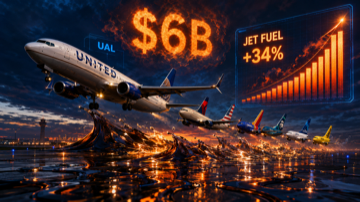
United Airlines Beat Earnings but the $6B Fuel-Cost Guide Means Airlines Are Now Trading Oil, Not Capacity
United Airlines Holdings reported Q2 2026 adjusted EPS of $1.99 (vs $1.88 est.) on $17.67B revenue (vs $17.61B est.), but guided to $9-$11 full-year EPS and warned that jet fuel costs could add nearly $6 billion vs the start of the year. July jet fuel prices at major U.S. airports are up 34% MTD through Tuesday per Argus/Airlines for America data. Q2 fuel costs rose 84% YoY to $2.3B. UAL traded down 2.37% to close at $120.97 after-hours. The trade is no longer about premium revenue or international expansion - it is about how much of the $6B fuel hit airlines can pass through, and which carrier survives the worst-case fuel tape.
2026-07-14
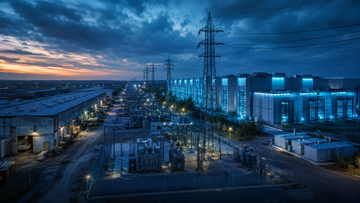
CleanSpark's $6.6 Billion Lease Turns a Bitcoin Miner Into a Power-and-Compute Landlord
CleanSpark's July 14 SEC filing disclosed a 20-year data-center lease covering 175 megawatts of critical IT load, approximately $6.6 billion of initial-term rent, and about $330 million of average annual net operating income. The market's 8.7% midday response is not just an AI enthusiasm trade: it is a vote that contracted rent from investment-grade compute demand can deserve a very different multiple from volatile bitcoin-mining cash flow.

Valero, Marathon Petroleum, and Phillips 66 Are Trading the Product Shortage, Not Just the Oil Shock
Valero, Marathon Petroleum, and Phillips 66 simultaneously printed fresh 52-week highs on July 14 as crude and refined-product risk premia rose. The deeper signal is that investors are paying for conversion scarcity—the ability to turn crude into the right gasoline, diesel, and jet fuel in the right region—while political scrutiny and a potential demand response make the trade increasingly asymmetric.
2026-07-13
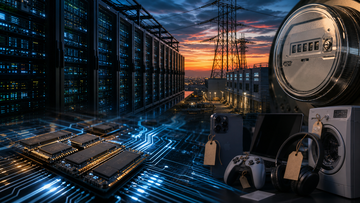
Massive AI Buildout Is Turning Into an Inflation Test Before It Becomes a Productivity Story
The AI spending boom is no longer just a future-growth story. With $720 billion of expected data-center investment, sharply higher memory-chip costs, and visible consumer price increases for laptops and consoles, the market now has to decide whether AI is adding durable productivity or leaking into the inflation data first.
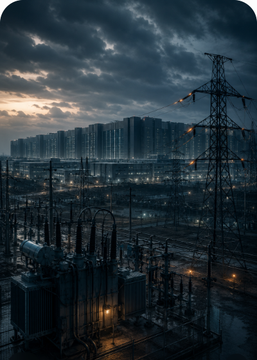
AI Data Centers Are Hitting the U.S. Grid Before They Hit Scale
Meta's expanded Louisiana build shows hyperscalers are still willing to spend at a shocking scale, but the real bottleneck is now transformers, interconnection queues, and local resistance. The winners are shifting from pure compute landlords to whoever can finance electricity.
The Strait of Hormuz Shock Is an Inflation Test Before It Is an Energy Trade
The latest U.S.-Iran escalation sent Brent and WTI higher, but the market consequence is broader than oil beta. If shipping risk persists, airlines, chemicals, retailers, and rate-sensitive growth all absorb a second-round inflation tax.

LNG Is Not Short Everywhere. It Is Becoming Scarce in the Wrong Places.
The latest LNG headlines show a market split into regional bottlenecks rather than one clean global price. Cheniere and other exporters can still benefit, but Europe, Asia, and gas-sensitive industries are paying the price of security risk and contract rigidity.
기대할 수 있는 것
보이는 관점이 있는, 증거 우선의 노트.
이 섹션은 실적, 주주총회, 시장 구조에 대한 날카로운 해석을 모아둡니다. 새 글은 첫 화면 안에서 논지, 사실, 시사점이 모두 드러나야 합니다.
일반론이 아닌 직접적인 분석을 기대하세요.
데이터는 명확하고, 논리는 따라가기 쉬워야 합니다.