
Financials
Financials Insights
Notas de investigación sobre resultados, estructura de mercado y estados financieros. Cada pieza empieza con la conclusión y luego presenta la evidencia y las implicaciones.
2026-07-16
%22%2F%3E%0A%20%20%3Ccircle%20cx%3D%22220%22%20cy%3D%22150%22%20r%3D%22180%22%20fill%3D%22%2322d3ee%22%20fill-opacity%3D%220.12%22%2F%3E%0A%20%20%3Ccircle%20cx%3D%221010%22%20cy%3D%22130%22%20r%3D%22220%22%20fill%3D%22%2338bdf8%22%20fill-opacity%3D%220.08%22%2F%3E%0A%20%20%3Ccircle%20cx%3D%22920%22%20cy%3D%22520%22%20r%3D%22170%22%20fill%3D%22%2322d3ee%22%20fill-opacity%3D%220.06%22%2F%3E%0A%20%20%3Cpath%20d%3D%22M140%20430h920%22%20stroke%3D%22url(%23line)%22%20stroke-width%3D%2212%22%20stroke-linecap%3D%22round%22%2F%3E%0A%20%20%3Cpath%20d%3D%22M220%20360c120-150%20260-220%20380-220s260%2070%20380%20220%22%20fill%3D%22none%22%20stroke%3D%22%2367e8f9%22%20stroke-opacity%3D%220.5%22%20stroke-width%3D%2216%22%20stroke-linecap%3D%22round%22%20stroke-linejoin%3D%22round%22%2F%3E%0A%20%20%3Cpath%20d%3D%22M300%20398h600%22%20stroke%3D%22%2394a3b8%22%20stroke-opacity%3D%220.24%22%20stroke-width%3D%228%22%20stroke-linecap%3D%22round%22%2F%3E%0A%20%20%3Ctext%20x%3D%22220%22%20y%3D%22510%22%20fill%3D%22%23e2e8f0%22%20fill-opacity%3D%220.7%22%20font-family%3D%22Arial%2C%20Helvetica%2C%20sans-serif%22%20font-size%3D%2238%22%20letter-spacing%3D%228%22%3EINSIGHTS%3C%2Ftext%3E%0A%3C%2Fsvg%3E)
2026-07-15

BlackRock Crossing $15.3 Trillion AUM Turns Passive Flows Into the Real Market-Structure Trade
BlackRock reported Q2 2026 adjusted EPS of $13.91, revenue of $7.084 billion, and $15.3 trillion of assets under management after $192 billion of second-quarter net inflows and $321 billion in first-half inflows. The headline matters because it shows how equity beta, ETF dominance, and private-markets expansion are feeding the same fee engine. The stock's move was just the first-order reaction; the deeper read-through runs to State Street, Charles Schwab, KKR, Blackstone, and the active-vs-passive balance across the asset-management complex.

JPMorgan Quietly Made AI Job Cuts a Reported Number — And the Labor Market Can No Longer Ignore It
On July 14, 2026, JPMorgan disclosed that it has roughly 1,000 active AI use cases and that 'discrete areas' saw headcount reduced 30%-40%, with most affected employees redeployed rather than terminated. Headcount held at 320,560 employees, almost flat quarter-over-quarter, while net income jumped 41% year-over-year to $21.2 billion and adjusted EPS beat by 5% at $6.14. The tape ignored the EPS beat and focused on the labor story because a 30%-40% headcount cut inside the largest US bank is no longer an HR footnote — it is a labor-market datapoint the Fed cannot avoid.
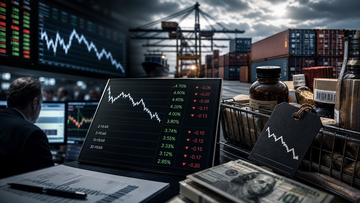
June PPI's 0.3% Drop Gives the Fed Breathing Room, but It Does Not End the Inflation Trade
The U.S. Producer Price Index fell 0.3% in June, goods prices dropped 1.4%, services rose 0.2%, and year-over-year final-demand PPI still ran 5.5%. Markets immediately read the print as lower odds of further tightening, with the 2-year yield slipping and Fed pause odds rising, but the deeper message is that goods disinflation does not erase service inflation or energy volatility. The result still matters for BlackRock, JPMorgan, UnitedHealth, housing, utilities, and every rate-sensitive part of the market that lives off the next 25 basis points.
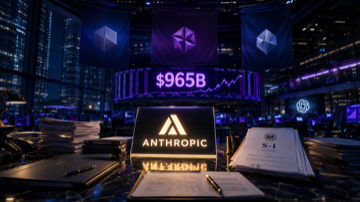
Anthropic Is Now the Cleanest Test of Whether a $965B Private AI Can Survive Wall Street's Discipline
CNBC reported on July 15, 2026 that Anthropic is scheduling investor meetings with Goldman Sachs, Morgan Stanley, and JPMorgan Chase ahead of a potential IPO as soon as October, with a confidential SEC filing already in place. The company closed a $65B funding round at a $965B valuation in May, putting it above OpenAI's $852B private mark. The Anthropic listing would be the first mega-private-AI IPO test, and the read-through is direct for the entire cap-markets fee pool that the Street has been modeling higher - and for the AI multiple that the public tape has been paying for every other mega-cap.
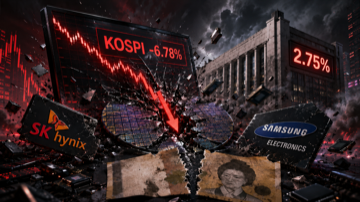
The Bank of Korea's First Hike in Three Years Is the First Asian Central Bank to Admit the Won Crisis Is Over
The Bank of Korea hiked rates 25bp to 2.75% on July 16, 2026 - the first hike since January 2023 - against June CPI at a three-year high of 3.2% and a won that had touched a 17-year low of 1,561.5 on June 5. The move is the first Asian central-bank admission that the regional currency-defense regime is ending, and the read-through is direct for Samsung Electronics, SK Hynix, Hyundai Motor, Kia, POSCO, KB Financial, and Shinhan Financial. The won at 1,484.86 is still 5% weaker than the 1,400 cycle-supportive level, and the BoK is buying time before any further tightening.

BNY Mellon supera las expectativas en el 2T de 2026 - Eleva la previsión de ingresos de 2026 por encima del consenso - La lectura única más clara del ciclo de infraestructura financiera
BNY Corporation reportó una superación de resultados en el 2T de 2026 y elevó su previsión de crecimiento de ingresos para todo el año 2026 por encima de las expectativas de Wall Street el 15 de julio de 2026. La sorpresa estuvo impulsada por una mayor actividad en las comisiones por servicios de inversión, en las comisiones de gestión de activos, en los ingresos de custodia y administración sensibles al mercado, y por unos activos de los clientes más altos respaldados por el alza de los mercados bursátiles. El desempeño de BNY es la lectura única más clara del ciclo de infraestructura financiera: el “sistema hidráulico” de los mercados de capitales basado en comisiones que opera por debajo de los gestores de activos, los fondos de pensiones, los ETF y las carteras institucionales. El efecto indirecto es directo para BlackRock (BLK), State Street (STT) y el grupo más amplio de gestión de activos + custodia + administración basado en comisiones, que se beneficia de la subida de los mercados bursátiles y de un mayor volumen de operaciones institucionales.
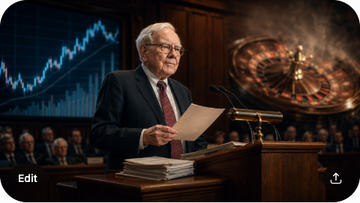
Buffett acaba de decirle a CNBC que él mismo inició Alphabet: “Es difícil encontrar valores cuando todos prefieren apostar”
CNBC informó el 15 de julio de 2026 que Berkshire Hathaway el presidente Warren Buffett, en una entrevista con Becky Quick, dijo que él mismo inició la posición de Berkshire en Alphabet, no la del CEO entrante Greg Abel, y advirtió que “es difícil encontrar valores cuando todos prefieren apostar”. La primera confirmación pública de Buffett sobre su papel directo en la inversión en Alphabet es la señal única más clara hasta ahora de que Berkshire está tratando a Alphabet como una inversión central a largo plazo, no como una operación táctica. La lectura es directa para Alphabet, Microsoft, Apple, Meta, Amazon, Nvidia, todo el grupo de Big Tech y la tesis de rotación valor versus crecimiento.
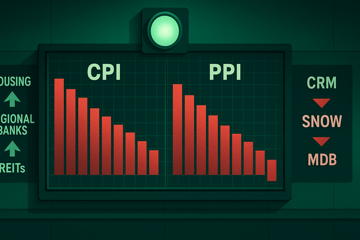
El CPI de junio de 2026 (-0,4%) y el PPI (-0,3%) en la misma semana: el primer verdadero trade de desinflación del ciclo
El CPI de junio de 2026 de la BLS cayó 0,4% MoM (la mayor caída desde abril de 2020) y el PPI cayó 0,3% MoM (el consenso no cambió) el 14-15 de julio, con los precios de los bienes cayendo 1,4% (la mayor caída desde julio de 2022) tras una fuerte caída del 12% en la gasolina. El CPI subyacente se deslizó a 2,6% interanual y el PPI subyacente subió solo 0,2%. La lectura del mercado es directa: los sectores sensibles a las tasas (vivienda, bancos regionales, REITs, small caps, crecimiento de dividendos) ahora tienen luz verde real, y la fijación de precios de los recortes de tasas se ha desplomado de una alza casi segura a una apuesta de septiembre 50-50. La expresión más limpia es estar largo en la rotación sensible a las tasas y corto en el grupo de aplicaciones de IA con múltiplos altos que fue el trade cuando la Fed estaba endureciendo la política.
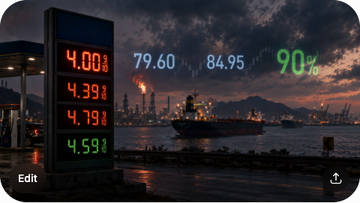
Los traders de Kalshi ahora fijan 90% de probabilidades a que el gas cruce los 4 dólares este mes - y el mercado de predicción acaba de convertirse en la cinta en tiempo real más limpia sobre el riesgo de Ormuz
CNBC informó el 15 de julio de 2026 que los traders del mercado de predicción Kalshi habían fijado un 90% de probabilidad de que los precios del gas en EE. UU. crucen los 4 dólares por galón a finales de julio, frente al 56% de solo dos días antes, con un 93% de probabilidad de cruzar los 4 y un 63% de probabilidad de superar los 4,10, después de que EE. UU. pusiera fin a su alto el fuego con Irán y relanzara los ataques. Con WTI en 79,60 dólares y Brent en 84,95 dólares, el mercado de predicción es ahora la cinta en tiempo real más limpia sobre el riesgo de Ormuz: más rápido que los futuros, más rápido que los datos minoristas del gas, más rápido que las notas de analistas. La lectura es directa para ExxonMobil, Chevron, ConocoPhillips, Valero, Marathon Petroleum, Phillips 66, United Airlines, Delta Air Lines, American Airlines y todo el complejo de energía + transporte.
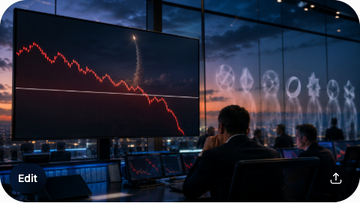
SpaceX Just Closed Below Its $135 IPO Price for the First Time - And the Private-to-Public Trade Is Now the Binding Test for Every Late-Stage Name in the Pipeline
CNBC reported on July 15, 2026 that SpaceX closed at $135.27 on its fourth consecutive losing session - the first close below the record $86B June 2026 IPO price of $135 - days after the Nasdaq-100 inclusion brought passive buyers in and ahead of the 13th Starship test flight on Thursday July 16. The break-under is the cleanest single read on whether the late-2025 / early-2026 private-mark pricing holds when $400B+ of cumulative private-tech paper tries to clear the public market. The read-through is direct for Anthropic, OpenAI, Stripe, Shein, Databricks, Canva, and the entire late-stage private cohort now queuing for 2026-2028 IPO windows.
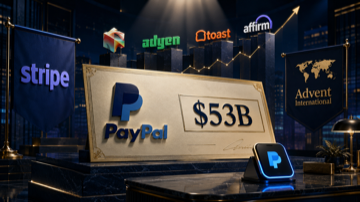
Stripe and Advent's $53B Bid for PayPal Is the First Mega-Deal That Says Fintech M&A Is Back
Stripe and Advent International made a $53 billion all-cash takeover offer for PayPal at $60.50 per share on July 15, 2026, sending PYPL up 17.20% to close at $55.52 on 72.5 million shares - roughly 7x its 10-day average volume. The bid is the first mega-deal of the post-SpaceX IPO window and re-prices the entire fintech M&A funnel: Block, Adyen, Robinhood, Toast, Payoneer, and Western Union all move with this trade. The bid premium, the consortium structure, and the unanswered response from PayPal's board all signal that fintech consolidation is no longer theoretical.
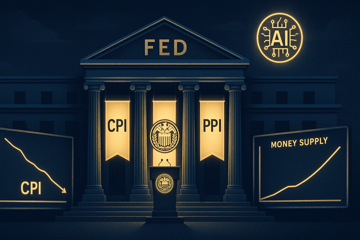
Warsh Just Turned the Fed From a Single-Mandate Inflation Fighter Into a Multi-Task Force Monetary Experiment
CNBC reported on July 15, 2026 that Fed Chair Kevin Warsh used two days of congressional testimony to launch a multi-pronged review of how the Fed measures inflation, restore money-supply reporting, and convene an all-bullish AI task force - all while CPI and PPI both printed unexpected declines. Fed Governor Lisa Cook pointed to AI spending as a potential inflation driver and warned 'inflation risks now outweighing employment risks.' The Fed meets in two weeks and markets are split on whether rates rise, hold, or fall - and the read-through is direct for every rate-sensitive sector, every AI capex issuer, and the bond market that is now repricing the Fed governance premium.
2026-07-14

Private Credit Is No Longer Quietly Carrying the Risk - It Is the Risk
Private credit is being stress-tested in public for the first time since the asset class scaled, with AP reporting that higher rates are squeezing borrowers and forcing the industry to defend NAV marks. The exposure matters far beyond Apollo, KKR, Blackstone, Blue Owl, and Ares; it now sits inside the loan books of regional banks, BDC ETFs, and the AI capex financing pipeline.

SpaceX Is Now Trading Like a Post-IPO Test of Whether Mega-Cap Private Tech Can Clear the Public Market
SpaceX closed at $139.14 on July 13, 2026, after touching a 52-week low of $136.78, having fallen from a $225.64 high set on June 16. The slide is more than a chart event. It is the first serious test of whether a private-era mega-cap can survive the public-market discipline of lockup expiries, index inclusions, and investor rotation.

Wall Street's Super Tuesday Puts the Big Banks in a Trading Test
Five of the largest U.S. banks are reporting on the same morning, and the market is not just checking earnings. It is checking whether trading, investment banking, and fee income can keep outrunning deposit competition, higher funding costs, and a noisy geopolitical backdrop.
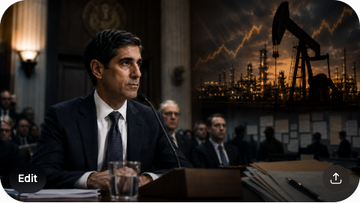
Warsh's First Testimony Meets an Oil Shock and a 4.6% Treasury Yield
The market is heading into Kevin Warsh's first congressional testimony with oil prices higher, Treasury yields repricing, and traders already leaning hawkish. The question is no longer whether inflation is cooling in a straight line; it is whether the Fed's communication reset makes the market tolerate less forward guidance and more volatility.
Wells Fargo Reports Q2 2026 as the First Real Test of Whether It Can Climb Out of the Penalty Box
Wells Fargo enters its July 14, 2026 print having bounced off 52-week lows, with the market still treating the bank as a regulatory-recovery story rather than an earnings-growth story. The Q2 release has to prove that fee income, capital return, and an asset-cap conversation can move together, or the stock will keep trading like a fallen leader waiting for permission to fully re-rate.
2026-07-13

Bank Lending Guidance Turns Immigration Status Into a Credit Underwriting Variable
Federal regulators are now explicitly telling banks to treat immigration status as part of credit-risk analysis for borrowers who may not be legally authorized to work in the U.S. That is more than a policy headline: it changes underwriting, compliance costs, and the way banks think about certain customer segments.
Citigroup's Remake Is Now an Earnings and Capital-Return Test
The bank is entering earnings with the cleanest restructuring story on Wall Street, but the market still wants proof that simplification turns into higher ROTCE, better fees, and more buybacks. The read-through matters for Citigroup, JPMorgan Chase, Bank of America, Goldman Sachs, and Wells Fargo.
Qué esperar
Notas basadas en evidencia con un punto de vista visible.
Esta sección recoge análisis directos sobre resultados, reuniones de accionistas y estructura de mercado. Cada pieza nueva debe dejar clara la tesis, los hechos y las implicaciones desde las primeras pantallas.
Espera análisis directos, no comentarios genéricos.
Espera datos claros y argumentos fáciles de seguir.