
%22%2F%3E%0A%20%20%3Ccircle%20cx%3D%22220%22%20cy%3D%22150%22%20r%3D%22180%22%20fill%3D%22%2322d3ee%22%20fill-opacity%3D%220.12%22%2F%3E%0A%20%20%3Ccircle%20cx%3D%221010%22%20cy%3D%22130%22%20r%3D%22220%22%20fill%3D%22%2338bdf8%22%20fill-opacity%3D%220.08%22%2F%3E%0A%20%20%3Ccircle%20cx%3D%22920%22%20cy%3D%22520%22%20r%3D%22170%22%20fill%3D%22%2322d3ee%22%20fill-opacity%3D%220.06%22%2F%3E%0A%20%20%3Cpath%20d%3D%22M140%20430h920%22%20stroke%3D%22url(%23line)%22%20stroke-width%3D%2212%22%20stroke-linecap%3D%22round%22%2F%3E%0A%20%20%3Cpath%20d%3D%22M220%20360c120-150%20260-220%20380-220s260%2070%20380%20220%22%20fill%3D%22none%22%20stroke%3D%22%2367e8f9%22%20stroke-opacity%3D%220.5%22%20stroke-width%3D%2216%22%20stroke-linecap%3D%22round%22%20stroke-linejoin%3D%22round%22%2F%3E%0A%20%20%3Cpath%20d%3D%22M300%20398h600%22%20stroke%3D%22%2394a3b8%22%20stroke-opacity%3D%220.24%22%20stroke-width%3D%228%22%20stroke-linecap%3D%22round%22%2F%3E%0A%20%20%3Ctext%20x%3D%22220%22%20y%3D%22510%22%20fill%3D%22%23e2e8f0%22%20fill-opacity%3D%220.7%22%20font-family%3D%22Arial%2C%20Helvetica%2C%20sans-serif%22%20font-size%3D%2238%22%20letter-spacing%3D%228%22%3EINSIGHTS%3C%2Ftext%3E%0A%3C%2Fsvg%3E)
Bottom line
A unilateral U.S. maritime toll got walked back inside a single trading session. That is the most important precedent for global shipping in years.
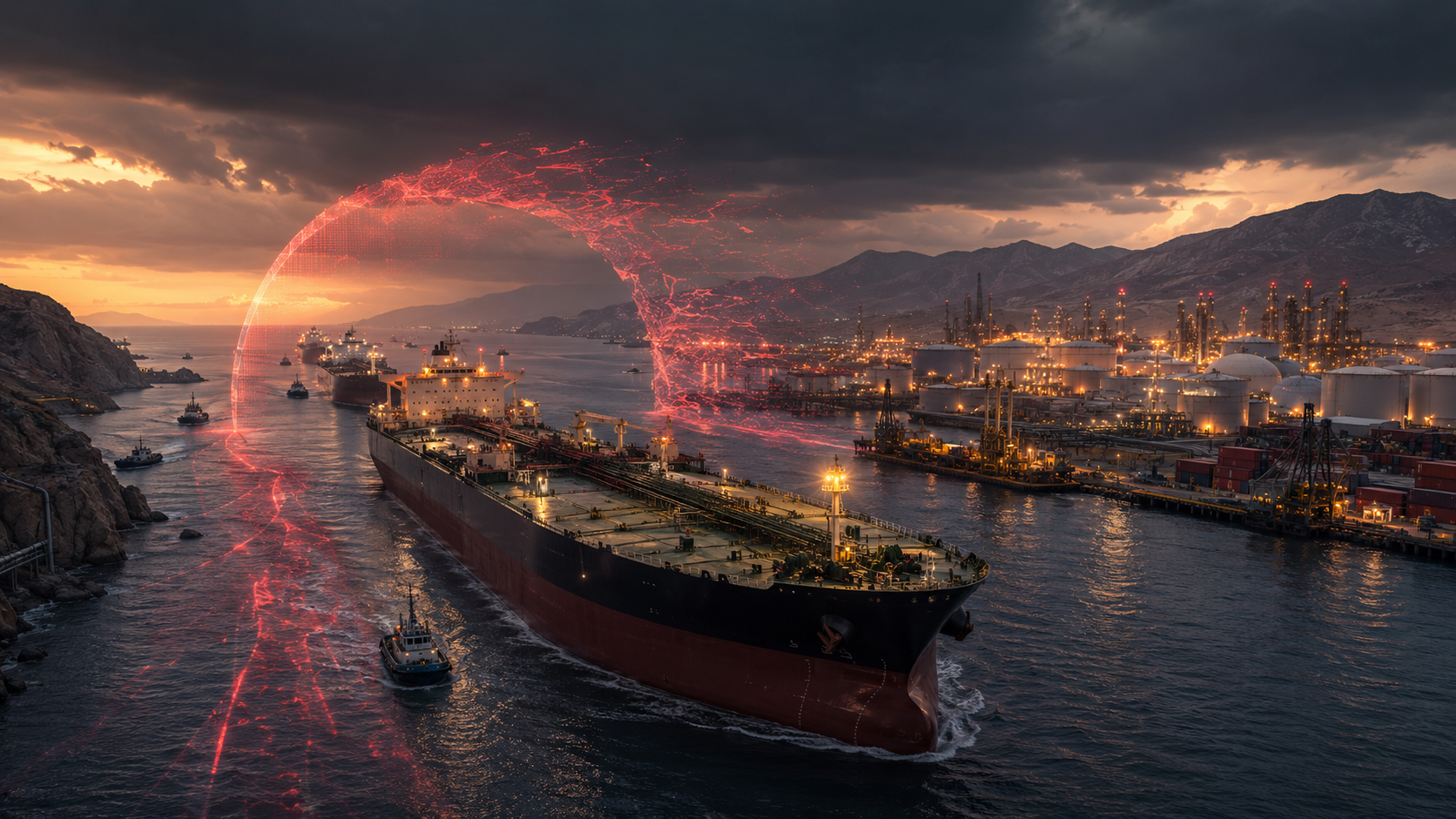
On July 14, 2026, U.S. forces struck Iranian targets starting at 3 p.m. ET, and the naval blockade of Iranian ports resumed at 4 p.m. ET. The same day, President Trump posted on Truth Social that the U.S. would 'demand reimbursement at the rate of 20% on all cargo shipped' through the Strait of Hormuz. He added that 'The Hormuz Strait is OPEN, and will remain OPEN, with or without Iran.' Within 24 hours, the toll was gone. Trump reversed course, stating he would 'replace' the toll with 'Trade and Investment Deals that the various Gulf States will be making into the United States.'
The reversal matters more than the policy. The Strait of Hormuz handles about 20% of the world's oil, and a 20% toll would have effectively been a global energy tax implemented by one government without an international mandate. The shipping industry, working through the International Maritime Organization (IMO), pushed back almost immediately. The U.S. administration had to back down because the cost of holding the policy was higher than the cost of dropping it: legal exposure under UNCLOS, retaliation from European and Asian shippers, and a near-term spike in freight rates that would have shown up in U.S. inflation prints.
For A.P. Moller-Maersk, Hapag-Lloyd, ZIM Integrated Shipping, Diana Shipping, Star Bulk Carriers, Frontline, DHT Holdings, and the broader tanker and dry-bulk complex, the precedent is enormous. A unilateral U.S. maritime toll was attempted, contested in public, and reversed inside a day. That tells the market that the global shipping industry's political leverage is real, and that freight-rate policy is now a two-sided conversation, not a one-sided imposition.
The 24-hour timeline
The strike, the toll, and the reversal happened inside a single trading session — and the market had to reprice each step.
The sequence is unusually compressed. Strikes began at 3 p.m. ET. The blockade resumed at 4 p.m. ET. The toll was announced on Truth Social later in the afternoon. Within 24 hours, the toll was reversed in favor of 'Trade and Investment Deals' with Saudi Arabia, UAE, Qatar, Bahrain, Kuwait, and others. At the White House, Trump said world leaders preferred 'a different way' and added 'I don't think anybody should be able to charge a fee for the strait.' None of the Gulf states have publicly announced new U.S. investment plans, which means the replacement framework is still verbal, not contractual.
The shipping-industry pushback was the key constraint. The IMO, the International Chamber of Shipping, BIMCO, and individual carriers all raised legal and operational concerns. The argument was twofold: UNCLOS treats the Strait of Hormuz as an international waterway, and a unilateral toll is not legal without international mandate; and a 20% toll would create a parallel shipping market that diverts cargo to higher-cost routes and inflates global freight rates.
The market response was direct. Commercial shipping traffic through the strait 'sharply dropped in recent days' and was 'far below prewar levels even as the ceasefire was in effect,' according to ship-tracking firms. A toll would have accelerated that drop. Without the toll, traffic can recover to the post-ceasefire baseline. That is why the tanker and dry-bulk complex traded the reversal as a relief event even though the underlying Iran conflict was unchanged.
| Time / Event | What happened | Market reaction | Reversibility |
|---|---|---|---|
| 3 p.m. ET, July 14 | U.S. strikes on Iranian targets begin | Energy spike; tanker complex bid up | Military; no reversal |
| 4 p.m. ET, July 14 | Naval blockade of Iranian ports resumes | Freight-rate volatility; insurance premiums rise | Military; no reversal |
| Afternoon, July 14 | Trump announces 20% toll on Hormuz cargo | Initial confusion, then shipping industry pushback | Reversible via policy |
| <24 hours later | Toll reversed in favor of Gulf-state investment deals | Tanker and dry-bulk relief; freight futures fade | Rescinded |
| Day 2 | U.S. Treasury sanctions on Shamkhani shipping network | Targeted shipping names under pressure | Sanctions; no reversal |
Industry read-through
Container shipping won this round, but the next test is whether the framework is durable or whether it returns inside a new crisis.
For container shipping, the read-through is the most positive. Maersk, Hapag-Lloyd, ZIM Integrated Shipping, and Evergreen Marine operate on routes that run through or near the Strait of Hormuz. A 20% toll would have flowed directly to either the shipper (lower margins) or the carrier (revenue extraction). With the toll reversed, container shipping rates can revert to the post-ceasefire baseline and the next-rate-cycle conversation is about supply discipline and demand recovery, not a unilateral U.S. tax.
For tanker shipping, the read-through is more nuanced. The Iran conflict continues. The blockade is still in force. Even without the toll, commercial traffic through the strait is 'far below prewar levels,' which compresses effective fleet utilization. Frontline, DHT Holdings, Euronav, and International Seaways benefit from elevated freight rates because of the Iran conflict, but the absence of a toll removes the windfall layer that a few analysts had modeled into the most bullish scenarios.
For dry bulk, the read-through is indirect. Diana Shipping, Star Bulk Carriers, Genco Shipping, and Safe Bulkers do not run most of their cargoes through the Strait of Hormuz, but they benefit from the broader geopolitical risk premium that supports the Baltic Dry Index. The reversal removes a small upside tail. The bigger variable for dry bulk remains Chinese steel demand, which sits on the other side of the same July 15 China GDP print.
- A unilateral U.S. maritime toll was attempted, contested publicly, and reversed in under 24 hours.
- The shipping industry's political leverage now matches its economic leverage in global trade.
- Container shipping rates can revert to the post-ceasefire baseline; tanker rates stay elevated because the underlying conflict is unresolved.
- The next test is whether the policy framework is durable when the next crisis hits, or whether the toll idea returns.
The 24-hour Hormuz toll episode: who gains, who loses
Qualitative impact scores based on the 24-hour episode. Higher values indicate more positive read-through from the toll reversal; negative values indicate continued pressure from the underlying Iran conflict.
Unidad: relative impact
Container shipping
Toll removal is a clean relief event
9
Tanker shipping
Conflict premium remains; toll upside removed
6
Dry bulk
Indirect read; bigger driver is China demand
3
U.S. refiners
Crude input still exposed to blockade
-2
Global shippers
Avoided unilateral U.S. tax
7
Gulf-state sovereigns
Pressure to commit to investment deals
-1
What to watch
Watch the Gulf-state investment framework, the IMO legal commentary, the next Hormuz transit data, and the next crisis.
The first tell is whether the 'Trade and Investment Deals' framework becomes a real announcement or stays verbal. Watch Saudi Arabia, UAE, Qatar, Bahrain, and Kuwait for any concrete investment commitment to U.S. infrastructure, defense, AI, or energy. If those deals materialize, the reversal becomes a strategic success. If they remain unannounced for more than a month, the reversal becomes a policy stumble that invites a new attempt.
The second tell is the IMO response. The organization opposed the toll publicly. A formal legal opinion or resolution would harden the precedent and make a future unilateral toll harder to justify. The third tell is Hormuz transit data. Ship-tracking firms reported traffic 'far below prewar levels' even during the ceasefire. Watch whether traffic recovers in the next two weeks. A recovery confirms the reversal worked. A persistent drop confirms the conflict itself is the binding constraint.
The fourth tell is the next crisis. The Hormuz toll was attempted because the geopolitical context made it plausible. The next time a crisis emerges - whether in the Taiwan Strait, the South China Sea, the Red Sea, or the Black Sea - the policy template is now on the shelf. The shipping industry proved it can block the policy. The question is whether the same playbook works against a different adversary or a different chokepoint.