
%22%2F%3E%0A%20%20%3Ccircle%20cx%3D%22220%22%20cy%3D%22150%22%20r%3D%22180%22%20fill%3D%22%2322d3ee%22%20fill-opacity%3D%220.12%22%2F%3E%0A%20%20%3Ccircle%20cx%3D%221010%22%20cy%3D%22130%22%20r%3D%22220%22%20fill%3D%22%2338bdf8%22%20fill-opacity%3D%220.08%22%2F%3E%0A%20%20%3Ccircle%20cx%3D%22920%22%20cy%3D%22520%22%20r%3D%22170%22%20fill%3D%22%2322d3ee%22%20fill-opacity%3D%220.06%22%2F%3E%0A%20%20%3Cpath%20d%3D%22M140%20430h920%22%20stroke%3D%22url(%23line)%22%20stroke-width%3D%2212%22%20stroke-linecap%3D%22round%22%2F%3E%0A%20%20%3Cpath%20d%3D%22M220%20360c120-150%20260-220%20380-220s260%2070%20380%20220%22%20fill%3D%22none%22%20stroke%3D%22%2367e8f9%22%20stroke-opacity%3D%220.5%22%20stroke-width%3D%2216%22%20stroke-linecap%3D%22round%22%20stroke-linejoin%3D%22round%22%2F%3E%0A%20%20%3Cpath%20d%3D%22M300%20398h600%22%20stroke%3D%22%2394a3b8%22%20stroke-opacity%3D%220.24%22%20stroke-width%3D%228%22%20stroke-linecap%3D%22round%22%2F%3E%0A%20%20%3Ctext%20x%3D%22220%22%20y%3D%22510%22%20fill%3D%22%23e2e8f0%22%20fill-opacity%3D%220.7%22%20font-family%3D%22Arial%2C%20Helvetica%2C%20sans-serif%22%20font-size%3D%2238%22%20letter-spacing%3D%228%22%3EINSIGHTS%3C%2Ftext%3E%0A%3C%2Fsvg%3E)
What happened
The market stopped rewarding the simple earnings beat and started asking whether the AI spend cycle can sustain its own valuation multiple.
The clean read is that investors are now treating semiconductor exposure as a duration trade. If AI capex keeps stretching into the future, the present-value discount rate matters more, and the names with the longest implied runway get the hardest question marks.
That is why the move matters even though it was not a washout. The tape is no longer paying for 'AI' as a shortcut. It wants proof that spending keeps converting into margins, orders, and free cash flow at the same pace.
Why it matters
The AI trade is now sensitive to the cost of capital because the spend curve is so large.
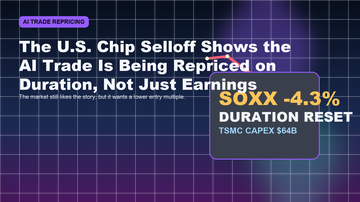
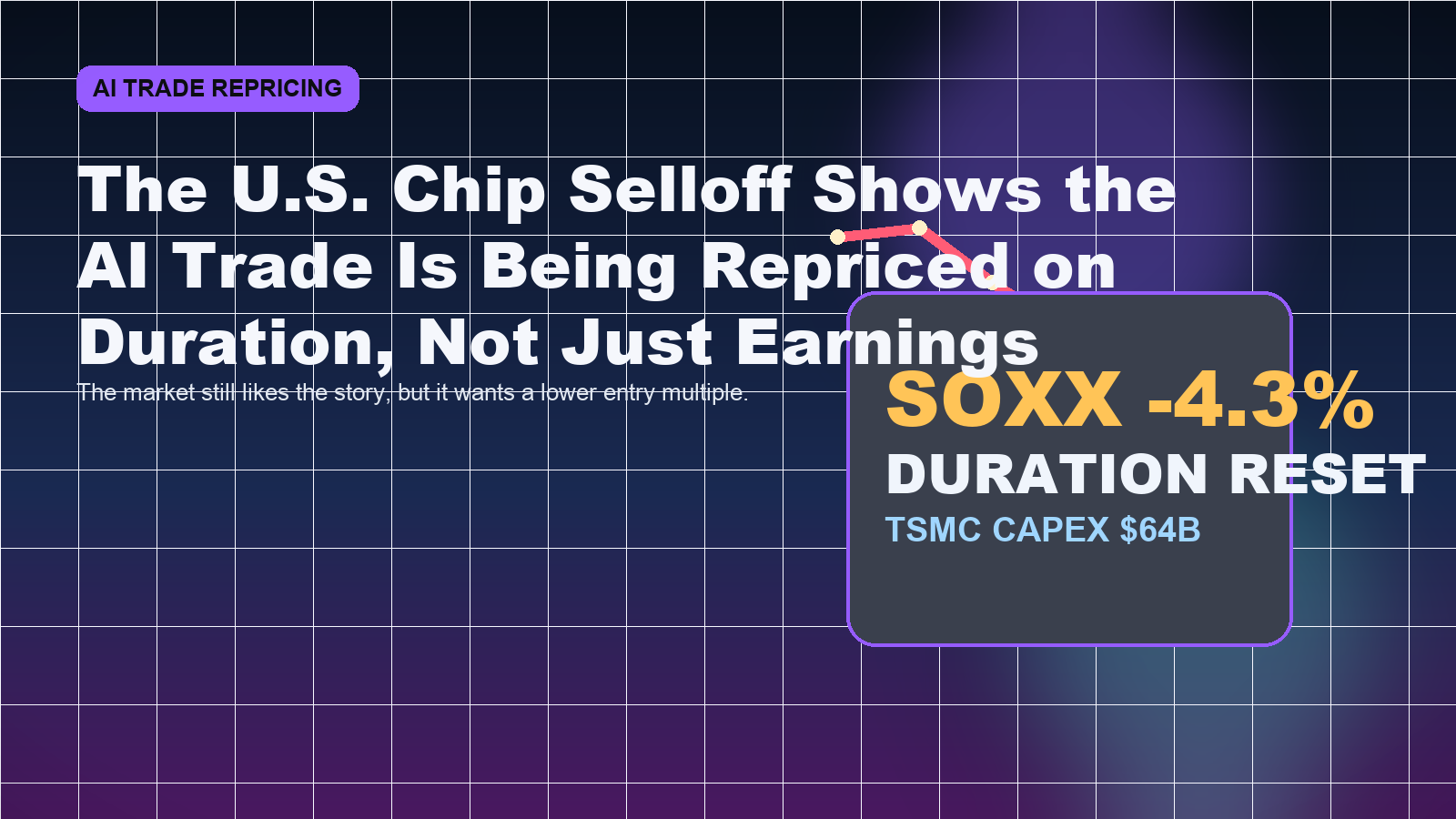
TSMC's capex hike to $60 billion to $64 billion, plus its separate $100 billion Arizona commitment, underscores the size of the infrastructure buildout. That kind of spending creates a lot of revenue for suppliers, but it also stretches the market's patience.
A Bank of America fund-manager survey saying investors trimmed July tech longs to hedge AI risk, while 'no one is short,' is exactly the kind of setup that produces an air-pocket rather than a clean bear market. Nobody wants to fight the secular story, but plenty of people want to de-risk the timing.
The result is that semis behave less like a simple growth factor and more like a long-duration asset class. When rates, yields, or macro uncertainty rise, the first thing the market does is compress the multiple even if the business still looks strong.
U.S. chip selloff: earnings beat versus duration reset
Headline moves from July 16 market coverage.
Unidad: percent / USD billions
Read-through
The market is separating 'AI as a secular theme' from 'AI as a crowded trade'.
The distinction matters because the same companies can still be winners in the first category while being vulnerable in the second. The stock market is saying that the secular story is intact, but the crowding around the story is expensive.
If the market continues to reprice duration, then the winners are not necessarily the fastest growers. They are the names with the cleanest conversion of AI demand into free cash flow and the least dependence on a perfect macro backdrop.
| Layer | Why it matters | Market implication |
|---|---|---|
| Compute | Anchor of the AI buildout | Multiple stays high, but less room for error |
| Memory | Direct benefit from HBM and DRAM demand | Highest beta to sentiment |
| Foundry | Capacity bottleneck and capex engine | Bigger spending, slower payback |
| Equipment | Captures the buildout toll | Less glamorous, more durable cash flow |