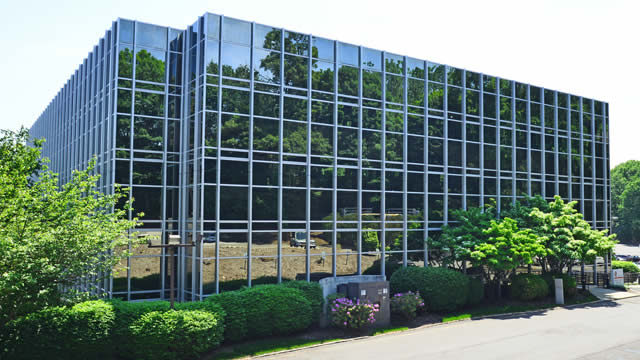
Empire State Realty Trust, Inc. (NYSE: ESRT) functions as a leading real estate investment trust (REIT), focused on the acquisition, ownership, management, ...
Empire State Realty Trust, Inc. is a publicly traded real estate investment trust headquartered in New York City. The company was established in 2011 and became publicly listed on the New York Stock Exchange in October 2013. Its business is rooted in the ownership and operation of commercial real estate, ...Empire State Realty Trust, Inc. is a publicly traded real estate investment trust headquartered in New York City. The company was established in 2011 and became publicly listed on the New York Stock Exchange in October 2013. Its business is rooted in the ownership and operation of commercial real estate, with a geographic concentration in Manhattan and selected markets in the greater New York metropolitan region, including Westchester County, New York, and Fairfield County, Connecticut. The company is best known for owning the Empire State Building, one of the most recognizable commercial properties in the world, together with a portfolio of office and retail assets.
ESRT generates revenue primarily through office and retail rental income, tenant reimbursements, property-management activities, observatory-related operations associated with the Empire State Building, and other property services. Its office portfolio is positioned around well-located, amenitized, and modernized buildings intended to attract corporate tenants, professional-services firms, technology companies, media organizations, and other commercial occupants. Retail space provides additional income and supports the tenant ecosystem around its office properties and prominent landmark assets.
The company’s operating model requires substantial expenditures for property maintenance, utilities, repairs, insurance, real estate taxes, leasing commissions, tenant improvements, security, staffing, and building modernization. Capital expenditures are directed toward renovations, energy-efficiency projects, mechanical systems, elevators, technology infrastructure, common areas, and tenant-facing amenities. Unlike a manufacturing company, ESRT does not have a conventional bill of materials; its equivalent cost base consists of construction materials, engineering and contracting services, building systems, cleaning, security, property operations, and ongoing capital improvements.
ESRT has promoted sustainability as a core operating capability. It has invested in energy-efficiency retrofits and indoor environmental quality, and it has highlighted leadership in environmental, social, and governance practices. The company has also reported being the first commercial real estate portfolio in the United States to receive the WELL Health-Safety Rating.
Anthony E. Malkin serves as chairman and chief executive officer. The supplied company information reports approximately 642 full-time employees, placing ESRT in the 501-to-1,000 employee category. A supplied financial snapshot reports a market capitalization of approximately $830 million, enterprise value of approximately $3.0 billion, a debt-to-assets ratio of about 52.1%, and a dividend of $0.14 per share. These figures can change with market prices, reporting periods, property valuations, interest rates, leasing conditions, and financing activity. As a REIT, ESRT’s performance is particularly influenced by New York office demand, occupancy and rental rates, tenant-credit quality, refinancing costs, interest rates, capital requirements, and the long-term value of its strategic real estate holdings.
Operator: Greetings, and welcome to the Empire State Realty Trust Second Quarter 2026 Earnings Call.[Operator Instructions] As a reminder, this conference is being recorded. It is now my pleasure to introduce Susanne Lieu, SVP, Chief Counsel, Real Estate. Thank you. You may begin.
Susanne Lieu: Good afternoon. Welcome to Empire State Realty Trust's Second Quarter 2026 Earnings Conference Call. In addition to the press release distributed yesterday, a quarterly supplemental package with further detail on our results and our latest investor presentation were posted in the Investors section of the company's website at esrtreit.com. During today's call, management's prepared remarks and responses to questions may include forward-looking statements within the meaning of applicable securities laws. These statements reflect management's current views and assumptions and are subject to risks and uncertainties that could cause actual results to differ materially. Empire State Realty Trust assumes no obligation to update any forward-looking statement in the future. We encourage listeners to review the more detailed discussions related to these forward-looking statements in the company's filings with the SEC. During today's call, we will discuss certain non-GAAP financial measures such as FFO, modified and core FFO, NOI, same-store property cash NOI, EBITDA and adjusted EBITDA, which we believe are meaningful in evaluating the company's performance. The definitions and reconciliations of these measures to the most directly comparable GAAP measures are included in the earnings release and supplemental package, each available on the company's website. Now I will turn the call over to Tony Malkin, our Chairman and Chief Executive Officer.
Anthony Malkin: Good afternoon, everyone. Yesterday, we reported ESRT's second quarter results. We delivered strong performance across the property portfolio, which represents approximately 80% of our NOI. Office leasing accelerated from the first quarter as we converted our pipeline into executed leases. Our retail portfolio is highly leased, and our multifamily properties delivered solid growth. We remain active on transactions. During the quarter, we completed the once-in-a-lifetime opportunity to acquire the land under 111 West 33rd Street and 1400 Broadway and executed on the sale of 250 West 57th Street, the proceeds from which we swapped into the prior purchase of 130 Mercer. Against excellent leasing in our property portfolio, the Empire State Building observation deck weighed on performance. In our press release, we gave an updated FFO range under an assumption there is no improvement to current visitation levels, and it utilizes $55 million of NOI for the observation deck for full year 2026. I'll spend a few minutes on our Observation Deck business, then get to our strong leasing. During our first quarter call, we called out softer visitation amidst today's geopolitical environment and K-shaped consumer economy and …