
Macro & Policy
Macro & Policy Insights
Notas de investigación sobre resultados, estructura de mercado y estados financieros. Cada pieza empieza con la conclusión y luego presenta la evidencia y las implicaciones.
2026-07-15
%22%2F%3E%0A%20%20%3Ccircle%20cx%3D%22220%22%20cy%3D%22150%22%20r%3D%22180%22%20fill%3D%22%2322d3ee%22%20fill-opacity%3D%220.12%22%2F%3E%0A%20%20%3Ccircle%20cx%3D%221010%22%20cy%3D%22130%22%20r%3D%22220%22%20fill%3D%22%2338bdf8%22%20fill-opacity%3D%220.08%22%2F%3E%0A%20%20%3Ccircle%20cx%3D%22920%22%20cy%3D%22520%22%20r%3D%22170%22%20fill%3D%22%2322d3ee%22%20fill-opacity%3D%220.06%22%2F%3E%0A%20%20%3Cpath%20d%3D%22M140%20430h920%22%20stroke%3D%22url(%23line)%22%20stroke-width%3D%2212%22%20stroke-linecap%3D%22round%22%2F%3E%0A%20%20%3Cpath%20d%3D%22M220%20360c120-150%20260-220%20380-220s260%2070%20380%20220%22%20fill%3D%22none%22%20stroke%3D%22%2367e8f9%22%20stroke-opacity%3D%220.5%22%20stroke-width%3D%2216%22%20stroke-linecap%3D%22round%22%20stroke-linejoin%3D%22round%22%2F%3E%0A%20%20%3Cpath%20d%3D%22M300%20398h600%22%20stroke%3D%22%2394a3b8%22%20stroke-opacity%3D%220.24%22%20stroke-width%3D%228%22%20stroke-linecap%3D%22round%22%2F%3E%0A%20%20%3Ctext%20x%3D%22220%22%20y%3D%22510%22%20fill%3D%22%23e2e8f0%22%20fill-opacity%3D%220.7%22%20font-family%3D%22Arial%2C%20Helvetica%2C%20sans-serif%22%20font-size%3D%2238%22%20letter-spacing%3D%228%22%3EINSIGHTS%3C%2Ftext%3E%0A%3C%2Fsvg%3E)

LNG en profundidad: cómo Cheniere Energy, Shell, TotalEnergies, QatarEnergy y Woodside ejecutan el comercio mundial de LNG de 400.000M$ (400B) y por qué la oferta-demanda 2026-2030 es la que condiciona la transición energética
El LNG (gas natural licuado) es un comercio mundial de 400.000M$/año que se ha convertido en el componente flexible que condiciona la transición energética global. Los 5 mayores proveedores de LNG son QatarEnergy (~25% de la cuota global de exportación de LNG), Cheniere Energy (~15%, el mayor exportador de LNG de EE. UU.), Shell (~10%, la mayor cartera de LNG de las IOC), TotalEnergies (~8%) y Woodside (~5%, el mayor exportador de LNG australiano). Este es un análisis profundo de extremo a extremo del LNG: la tecnología de licuefacción (ConocoPhillips Optimized Cascade, Air Products AP-C3MR, Black & Black & Veatch PRICO), la revolución del FLNG (Shell Prelude + Petronas PFLNG), la base de clientes (China, Japón, Corea, Europa), los principales expertos, el capex ($80-100B/año en la industria), la oferta-demanda 2026-2030 y las implicaciones para la transición energética.
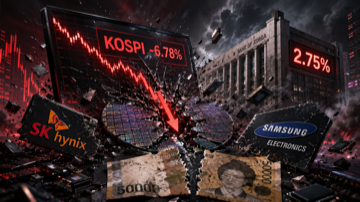
SK Hynix's 10% Single-Day Crash Made Korea the First Asia Tape to Reprice the Micron Memory Sell-Off
SK Hynix las acciones cayeron más de un 9% en Seúl el 16 de julio de 2026, revirtiendo la subida del 8% de la sesión anterior, ya que el desplome del Micron del -8% en EE. UU. durante la noche se extendió a Asia. El Kospi bajó un 6,78% hasta 6.790,23, con Samsung Electronics -7%, Seoul Semiconductor -5% y Tokyo Electron -5%. El Banco de Corea elevó las tasas simultáneamente 25 pb hasta el 2,75%: la primera subida desde enero de 2023, en un contexto de un IPC de junio en su máximo de tres años (3,2%) y un won cerca de 1.484. La cinta combinada es la prueba de estrés más limpia del intercambio entre IA y memoria fuera de EE. UU. desde el pico del ciclo de 2024.
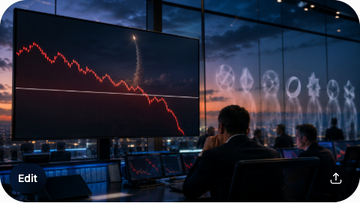
SpaceX Acaba de caer por debajo de su precio de IPO de 135$ por primera vez - y la operación de privado a público ya es la prueba vinculante para cada nombre de última etapa en el pipeline
CNBC informó el 15 de julio de 2026 que SpaceX cerró en 135,27$ en su cuarta sesión consecutiva con pérdidas - el primer cierre por debajo del precio récord de 135$ de la IPO de junio de 2026 de 86B$ - días después de que la inclusión en el Nasdaq-100 trajera compradores pasivos y de cara al decimotercer vuelo de prueba de Starship el jueves 16 de julio. La caída por debajo de ese nivel es la lectura más limpia de si la fijación de precios privada de fines de 2025 / principios de 2026 se sostiene cuando 400B$+ de papel acumulado de tecnología privada intenta abrirse paso en el mercado público. La lectura es directa para Anthropic, OpenAI, Stripe, Shein, Databricks, Canva y para todo el grupo privado de última etapa que ahora se pone en fila para las ventanas de IPO de 2026-2028.
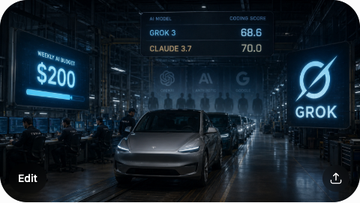
Tesla Just Capped Engineers' AI Spending at $200/Week - And Then Musk Mandated They Use His Own Grok Model That Ranks 9th
Electrek reported on July 10, 2026 that Tesla implemented a $200 weekly cap on third-party AI spending - notably exempting xAI's Grok - and Elon Musk then sent a memo instructing Tesla employees to switch to Grok, the AI model from his xAI company (now merged into SpaceX). Grok 4.5 ranks 9th on multi-domain leaderboards with a coding score of 68.6 (the lowest among compared models), trailing OpenAI (GPT-5.6 Sol/5.5/5.6 Terra/5.4), Anthropic (Claude Fable 5, 4.8 Opus, 4.7 Opus), and Google (Gemini 3.1 Pro). Tesla engineers reportedly prefer Anthropic's Claude for daily development work. The read-through is direct for Tesla, Anthropic, OpenAI, Alphabet, Meta, and the entire enterprise AI cohort now navigating self-dealing concerns.

Trump vs Hochul's Moratoria de datos de Nueva York es la primera prueba real de si el capex de la IA tiene un techo político
El presidente Trump arremetió públicamente contra la nueva orden ejecutiva de la gobernadora de Nueva York, Kathy Hochul, que durante hasta un año prohíbe la construcción de centros de datos que utilizan 50+ MW de energía; se trata de la primera moratoria de este tipo a nivel estatal en EE. UU. Trump escribió en Truth Social que Nueva York "ha tomado una decisión terrible" y pidió al estado que cambiara la política "INMEDIATAMENTE". La moratoria es la primera restricción política concreta en el conjunto de capex de la IA desde un estado de EE. UU., y la lectura es directa para Microsoft, Alphabet, Amazon, Meta, Nvidia, Equinix, Digital Realty y para cada emisor de infraestructura de IA con exposición a Nueva York.
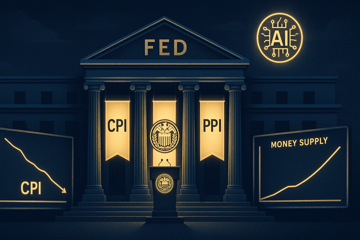
Warsh Just Turned the Fed From a Single-Mandate Inflation Fighter Into a Multi-Task Force Monetary Experiment
CNBC reported on July 15, 2026 that Fed Chair Kevin Warsh used two days of congressional testimony to launch a multi-pronged review of how the Fed measures inflation, restore money-supply reporting, and convene an all-bullish AI task force - all while CPI and PPI both printed unexpected declines. Fed Governor Lisa Cook pointed to AI spending as a potential inflation driver and warned 'inflation risks now outweighing employment risks.' The Fed meets in two weeks and markets are split on whether rates rise, hold, or fall - and the read-through is direct for every rate-sensitive sector, every AI capex issuer, and the bond market that is now repricing the Fed governance premium.
2026-07-14

Hundreds of Economists Are Telling the Market What the AI Trade Does Not Want to Hear
AP reported on July 13 that hundreds of economists signed a joint letter calling for immediate action on AI's economic impact and job-displacement risks. The market is still pricing AI as a productivity story. The economists are forcing a parallel conversation about labor-market disruption, antitrust, and AI-specific regulation that can change the political risk premium on the entire AI trade.
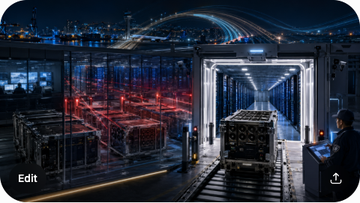
Nvidia's Asia Buyer Crackdown Turns Export Compliance Into a Moat
Nvidia is halving its list of authorized Asian buyers and tightening checks across Singapore, Malaysia, and Japan. The immediate effect is less channel freedom, but the deeper read is that compliance is becoming part of Nvidia's pricing power and its geopolitical firewall.

Private Credit Is No Longer Quietly Carrying the Risk - It Is the Risk
Private credit is being stress-tested in public for the first time since the asset class scaled, with AP reporting that higher rates are squeezing borrowers and forcing the industry to defend NAV marks. The exposure matters far beyond Apollo, KKR, Blackstone, Blue Owl, and Ares; it now sits inside the loan books of regional banks, BDC ETFs, and the AI capex financing pipeline.

Valero, Marathon Petroleum, and Phillips 66 Are Trading the Product Shortage, Not Just the Oil Shock
Valero, Marathon Petroleum, and Phillips 66 simultaneously printed fresh 52-week highs on July 14 as crude and refined-product risk premia rose. The deeper signal is that investors are paying for conversion scarcity—the ability to turn crude into the right gasoline, diesel, and jet fuel in the right region—while political scrutiny and a potential demand response make the trade increasingly asymmetric.

El “Supermartes” de Wall Street pone a los grandes bancos a prueba en el trading
Cinco de los mayores bancos de EE. UU. informan el mismo lunes por la mañana, y el mercado no solo está revisando resultados. Está comprobando si el trading, la banca de inversión y los ingresos por comisiones pueden seguir superando la competencia por depósitos, los mayores costos de financiación y un contexto geopolítico ruidoso.
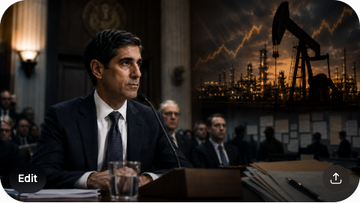
La primera comparecencia de Warsh se encuentra con un shock petrolero y un rendimiento del Tesoro del 4.6%
El mercado se dirige a la primera comparecencia del congresista Kevin Warsh con los precios del petróleo más altos, los rendimientos de los bonos del Tesoro reajustándose y los traders inclinándose aún más a una postura firme. La pregunta ya no es si la inflación se enfría en línea recta; es si el reinicio de la comunicación de la Fed hace que el mercado tolere menos orientación futura y más volatilidad.

Wells Fargo Informa su Q2 2026 como la primera prueba real de si puede salir del “banco de penalizaciones”
Wells Fargo entra en su publicación del 14 de julio de 2026 después de haber rebotado desde mínimos de 52 semanas, mientras el mercado aún trata al banco como una historia de recuperación regulatoria más que como una historia de crecimiento de ganancias. El anuncio del Q2 tiene que demostrar que los ingresos por comisiones, la devolución de capital y el debate sobre el límite de activos pueden avanzar juntos, o la acción seguirá cotizando como un líder caído que espera permiso para volver a valorizarse plenamente.

Lucid Group's 16% Single-Day Crash on a Chapter 11 Rumor Is the First Real Stress Test of the Sovereign-Backed EV Model
Lucid Group closed down 16.15% at $4.62 on July 14, 2026 on volume of 152.27 million shares - more than 35x its 10-day average - after an EV-blog report claimed restructuring adviser AlixPartners was weighing Chapter 11 or a take-private path for the Saudi-backed automaker. Lucid's IR lead Nick Twork called the report 'completely false' and pointed to the $800 million loan draw from a Saudi affiliate on July 6 as proof of liquidity into 2027. The crash is the first public stress test of whether the sovereign-backed EV model can survive a liquidity scare, and the read-through matters for every loss-making EV OEM still burning cash.
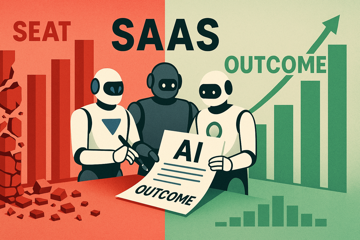
AI Agents Are About to Kill the SaaS Seat - and Sierra Just Made the Outcome-Pricing Bet Public
CNBC reported on July 14, 2026 that Sierra co-founder Clay Bavor said AI agents are moving from demos into real business workflows - customer service, sales, and support - and that outcome-based pricing could challenge the way software companies get paid. Sierra is the cleanest publicly-discussed example of the AI-agent outcome-pricing model, and the read-through is direct for Salesforce, ServiceNow, Snowflake, MongoDB, Datadog, and the entire enterprise-software seat-based cohort that has been the dominant pricing model for two decades.
2026-07-13

Massive AI Buildout Is Turning Into an Inflation Test Before It Becomes a Productivity Story
The AI spending boom is no longer just a future-growth story. With $720 billion of expected data-center investment, sharply higher memory-chip costs, and visible consumer price increases for laptops and consoles, the market now has to decide whether AI is adding durable productivity or leaking into the inflation data first.

Bank Lending Guidance Turns Immigration Status Into a Credit Underwriting Variable
Federal regulators are now explicitly telling banks to treat immigration status as part of credit-risk analysis for borrowers who may not be legally authorized to work in the U.S. That is more than a policy headline: it changes underwriting, compliance costs, and the way banks think about certain customer segments.

China's Export Surge Shows AI Demand Is Still Pulling Global Supply Chains
China's June export data is not just a macro surprise. The 27% jump in exports and 36% rise in imports show that AI-related demand is still rippling through semiconductors, electronics, EVs, and shipping, even while domestic demand remains softer than the headline trade numbers imply.
Citigroup's Remake Is Now an Earnings and Capital-Return Test
The bank is entering earnings with the cleanest restructuring story on Wall Street, but the market still wants proof that simplification turns into higher ROTCE, better fees, and more buybacks. The read-through matters for Citigroup, JPMorgan Chase, Bank of America, Goldman Sachs, and Wells Fargo.
The Strait of Hormuz Shock Is an Inflation Test Before It Is an Energy Trade
The latest U.S.-Iran escalation sent Brent and WTI higher, but the market consequence is broader than oil beta. If shipping risk persists, airlines, chemicals, retailers, and rate-sensitive growth all absorb a second-round inflation tax.
Qué esperar
Notas basadas en evidencia con un punto de vista visible.
Esta sección recoge análisis directos sobre resultados, reuniones de accionistas y estructura de mercado. Cada pieza nueva debe dejar clara la tesis, los hechos y las implicaciones desde las primeras pantallas.
Espera análisis directos, no comentarios genéricos.
Espera datos claros y argumentos fáciles de seguir.