
%22%2F%3E%0A%20%20%3Ccircle%20cx%3D%22220%22%20cy%3D%22150%22%20r%3D%22180%22%20fill%3D%22%2322d3ee%22%20fill-opacity%3D%220.12%22%2F%3E%0A%20%20%3Ccircle%20cx%3D%221010%22%20cy%3D%22130%22%20r%3D%22220%22%20fill%3D%22%2338bdf8%22%20fill-opacity%3D%220.08%22%2F%3E%0A%20%20%3Ccircle%20cx%3D%22920%22%20cy%3D%22520%22%20r%3D%22170%22%20fill%3D%22%2322d3ee%22%20fill-opacity%3D%220.06%22%2F%3E%0A%20%20%3Cpath%20d%3D%22M140%20430h920%22%20stroke%3D%22url(%23line)%22%20stroke-width%3D%2212%22%20stroke-linecap%3D%22round%22%2F%3E%0A%20%20%3Cpath%20d%3D%22M220%20360c120-150%20260-220%20380-220s260%2070%20380%20220%22%20fill%3D%22none%22%20stroke%3D%22%2367e8f9%22%20stroke-opacity%3D%220.5%22%20stroke-width%3D%2216%22%20stroke-linecap%3D%22round%22%20stroke-linejoin%3D%22round%22%2F%3E%0A%20%20%3Cpath%20d%3D%22M300%20398h600%22%20stroke%3D%22%2394a3b8%22%20stroke-opacity%3D%220.24%22%20stroke-width%3D%228%22%20stroke-linecap%3D%22round%22%2F%3E%0A%20%20%3Ctext%20x%3D%22220%22%20y%3D%22510%22%20fill%3D%22%23e2e8f0%22%20fill-opacity%3D%220.7%22%20font-family%3D%22Arial%2C%20Helvetica%2C%20sans-serif%22%20font-size%3D%2238%22%20letter-spacing%3D%228%22%3EINSIGHTS%3C%2Ftext%3E%0A%3C%2Fsvg%3E)
The event
UnitedHealth did not just beat. It proved that the margin reset is real, and that is why the stock traded like a cost-discipline story instead of a simple earnings surprise.
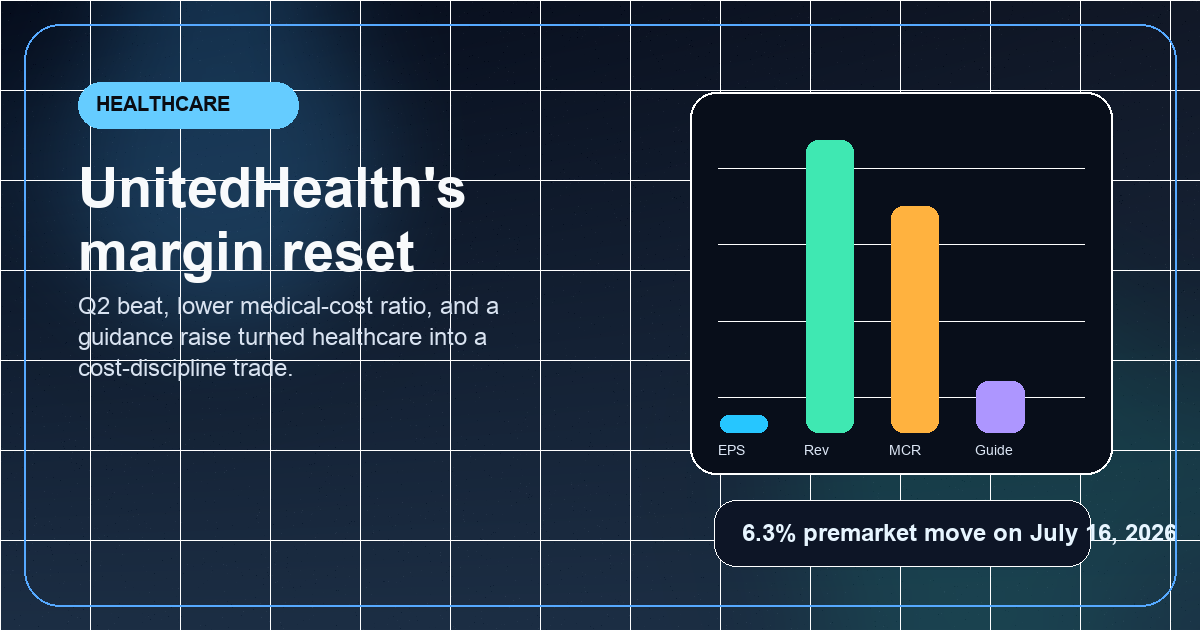
UnitedHealth Group reported second-quarter 2026 results on July 16, 2026, with revenue of $112.0 billion, earnings of $6.04 per share, and adjusted earnings of $6.38 per share. The company also raised full-year adjusted EPS guidance to $19.50-$20.00. The most important line in the release was the medical-cost ratio: 86.7%, a clear improvement from the 2025 comparison base and below Street expectations. That is the part of the print that changes the narrative.
The market reaction was straightforward because the numbers were better than a typical beat. This was a quarter where the company showed it can still price its risk correctly after a year of cost pressure. That matters for Medicare Advantage, employer plans, and any peer whose margin story depends on underwriting discipline rather than just premium growth.
Why it matters
The medical-cost ratio is the real profit engine in managed care, and 86.7% says UnitedHealth is forcing the economics back into line.
UnitedHealth's problem in the last few quarters was never the size of the franchise. It was the gap between premium pricing and medical utilization. The company appears to be closing that gap with a mix of redesigned benefits, better pricing, narrower enrollment, and more disciplined cost controls. In other words, this is not a cyclical rebound story. It is a pricing power story inside a regulated industry.
That is why the quarter matters for the whole healthcare complex. If the largest managed-care name can show that it is recovering its margin without losing control of the book, then peers such as Humana, CVS Health, Centene, and Molina Healthcare have to be judged on whether they can prove the same thing. In the short run, the market usually rewards the first company that proves the reset is real.
The other underappreciated detail is management's willingness to use technology in the cost stack. UnitedHealth highlighted AI-driven billing anomaly detection as part of the operating process. That does not mean AI is the thesis, but it does mean the company is trying to turn automation into margin retention rather than headline growth.
Evidence table
The cleanest comparison is actuals versus consensus, because the beat was broad enough to matter on both revenue and margin.
The release looked good on the surface, but the table below shows why the stock traded higher so quickly. Revenue beat modestly, EPS beat strongly, and the medical-cost ratio improved enough to suggest the guidance raise is grounded in operating reality rather than optimism.
| Metric | Q2 2026 | Street | What it says |
|---|---|---|---|
| Adjusted EPS | $6.38 | $4.91 | The beat was large enough to reset sentiment, not just adjust it. |
| Revenue | $112.0B | $110.8B | A modest revenue beat, but not the main reason the stock moved. |
| Medical-cost ratio | 86.7% | 88.4% | The cleanest proof that pricing and utilization are moving in the right direction. |
| FY26 adjusted EPS guide | $19.50-$20.00 | $18.49 consensus | Guidance now sits above the market's prior expectations. |
| Premarket stock move | +6%+ | 0% | The sector rewarded the print immediately. |
UnitedHealth beat versus expectations
Actual results compared with the Street's expectations and the margin profile that mattered most.
단위: Mixed operating metrics
EPS actual
Adjusted EPS
6.4
EPS est.
Consensus
4.9
Revenue actual
USD billions
112
Revenue est.
USD billions
110.8
MCR actual
Percent
86.7
MCR est.
Percent
88.4
What to watch
The next test is whether the recovery is broad enough to survive member mix pressure and higher employer-plan costs.
The key watch items now are member retention, Medicare Advantage pricing, and whether the employer book keeps behaving. If those lines stay disciplined, the market can keep treating UnitedHealth as a margin-recovery trade and not as a one-quarter anomaly.
The risk is obvious: if utilization re-accelerates or if pricing loses traction, the improvement in the medical-cost ratio will look temporary. That would matter not just for UnitedHealth but for the entire healthcare leadership group because the market has already started to re-rate the sector around better earnings quality.