
%22%2F%3E%0A%20%20%3Ccircle%20cx%3D%22220%22%20cy%3D%22150%22%20r%3D%22180%22%20fill%3D%22%2322d3ee%22%20fill-opacity%3D%220.12%22%2F%3E%0A%20%20%3Ccircle%20cx%3D%221010%22%20cy%3D%22130%22%20r%3D%22220%22%20fill%3D%22%2338bdf8%22%20fill-opacity%3D%220.08%22%2F%3E%0A%20%20%3Ccircle%20cx%3D%22920%22%20cy%3D%22520%22%20r%3D%22170%22%20fill%3D%22%2322d3ee%22%20fill-opacity%3D%220.06%22%2F%3E%0A%20%20%3Cpath%20d%3D%22M140%20430h920%22%20stroke%3D%22url(%23line)%22%20stroke-width%3D%2212%22%20stroke-linecap%3D%22round%22%2F%3E%0A%20%20%3Cpath%20d%3D%22M220%20360c120-150%20260-220%20380-220s260%2070%20380%20220%22%20fill%3D%22none%22%20stroke%3D%22%2367e8f9%22%20stroke-opacity%3D%220.5%22%20stroke-width%3D%2216%22%20stroke-linecap%3D%22round%22%20stroke-linejoin%3D%22round%22%2F%3E%0A%20%20%3Cpath%20d%3D%22M300%20398h600%22%20stroke%3D%22%2394a3b8%22%20stroke-opacity%3D%220.24%22%20stroke-width%3D%228%22%20stroke-linecap%3D%22round%22%2F%3E%0A%20%20%3Ctext%20x%3D%22220%22%20y%3D%22510%22%20fill%3D%22%23e2e8f0%22%20fill-opacity%3D%220.7%22%20font-family%3D%22Arial%2C%20Helvetica%2C%20sans-serif%22%20font-size%3D%2238%22%20letter-spacing%3D%228%22%3EINSIGHTS%3C%2Ftext%3E%0A%3C%2Fsvg%3E)

Bottom line
Oil is no longer just a geopolitics trade. It is becoming a margin trade again.
The latest oil read is more important than a single headline about the Middle East. OPEC+ is easing supply by 188,000 barrels per day in August, and the EIA has simultaneously pushed its Brent forecast materially lower. That combination tells you the market is moving from a scarcity regime toward a balance-sheet and margin regime.
This matters because oil does not hit every stock the same way. Upstream producers lose pricing power first, refiners can get a mixed but often better near-term setup, and transport-heavy sectors get immediate relief on fuel costs before the consumer sees anything in CPI.
Supply chain
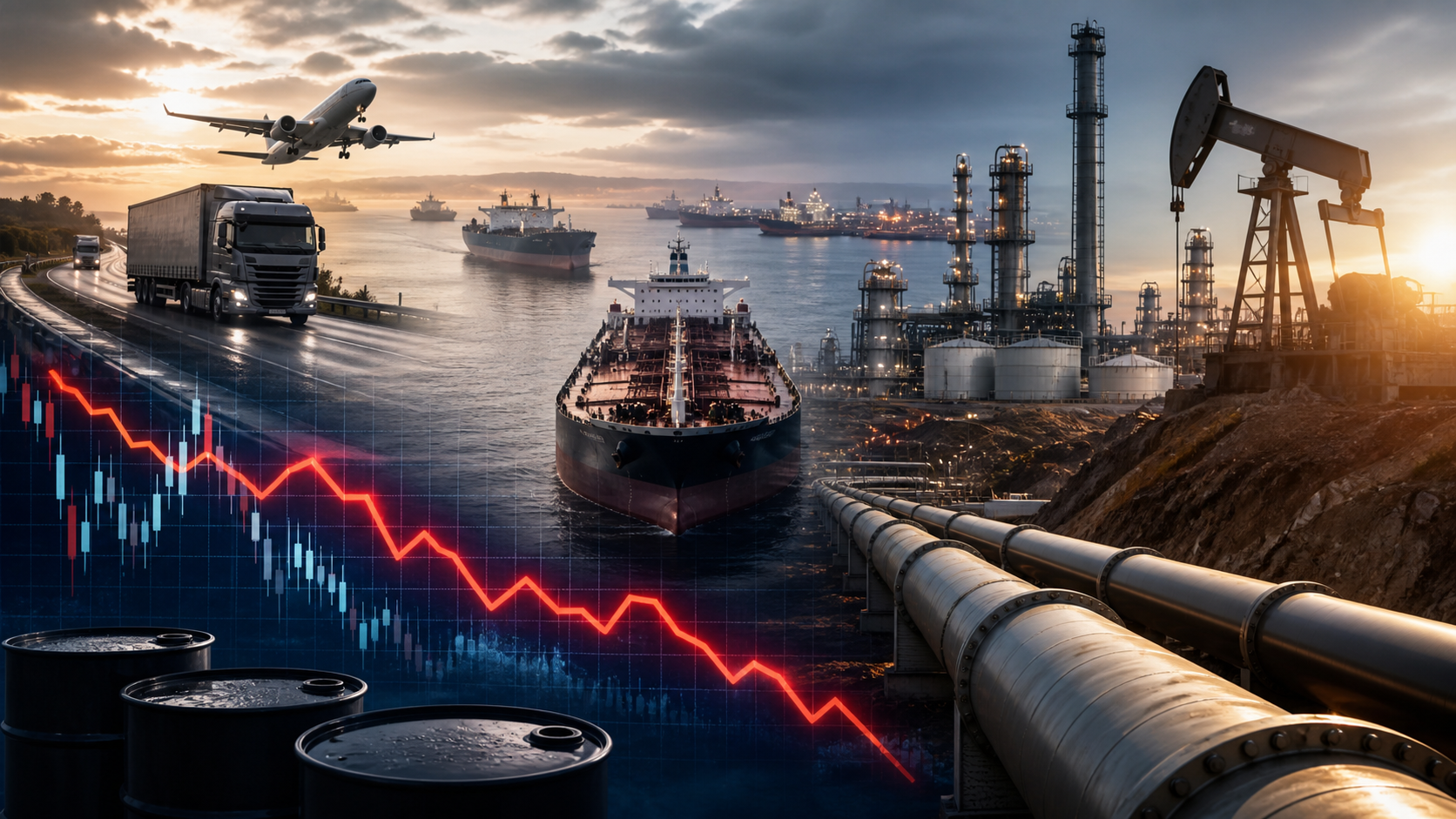
The chain runs from OPEC barrels to refinery cracks to airline and trucking margins.
The EIA says production resumption and trade normalization are pushing inventories from steep draws toward eventual builds. In plain English: the shortage math that drove prices higher is fading, and the market is beginning to price the return of supply faster than the return of demand.
That path matters for the industrial chain. Lower crude usually flows into cheaper feedstocks, lower jet fuel, lower diesel, and better transport economics, but it also squeezes E&P cash generation and can cap the upside in oil-services names that were living off the scarcity premium.
EIA now sees a lower oil-price path
Brent forecast path from the July 2026 EIA short-term outlook. The shift is downward because supply is recovering faster than demand.
Unidad: USD/bbl
2Q26
Observed June average
85
3Q26
Current EIA forecast
74
2027
Oversupply expected to persist
65
Who wins first
The first beneficiaries are not oil bulls. They are the businesses that buy energy every day.
A lower Brent forecast helps airlines, parcel networks, trucking firms, chemicals, and selected consumer businesses because energy is an input cost rather than the end product. Those names usually see the first-order margin benefit before households notice lower pump prices.
The losers are concentrated upstream: producers, royalty names, and some oil-field service firms that were priced for a tighter market. The secondary loser can be the inflation trade itself, because a lower oil path gives the Fed a little more room to stay patient if other data cooperate.
| Segment | Immediate impact | Why it happens |
|---|---|---|
| E&P producers | Negative | Lower realized prices compress cash flow and valuation |
| Oil services | Mixed to negative | Activity can stay healthy, but pricing power fades |
| Airlines / trucking | Positive | Fuel is a direct operating expense |
| Chemicals / industrials | Positive | Lower feedstock and freight costs help margins |
My conclusion
The right read is not just 'oil is down.' It is that the inflation impulse is shifting from headline fear to downstream relief.
If the oil market keeps easing, energy stops being the most obvious inflation accelerant and starts becoming a margin release valve for parts of corporate America. That is why the trade is broader than crude futures: it touches transport, consumer prices, and the Fed's tolerance for rate cuts.
Disclosure: This article is personal analysis only. It is not investment advice, not a recommendation to buy or sell securities, and it may be wrong.