
%22%2F%3E%0A%20%20%3Ccircle%20cx%3D%22220%22%20cy%3D%22150%22%20r%3D%22180%22%20fill%3D%22%2322d3ee%22%20fill-opacity%3D%220.12%22%2F%3E%0A%20%20%3Ccircle%20cx%3D%221010%22%20cy%3D%22130%22%20r%3D%22220%22%20fill%3D%22%2338bdf8%22%20fill-opacity%3D%220.08%22%2F%3E%0A%20%20%3Ccircle%20cx%3D%22920%22%20cy%3D%22520%22%20r%3D%22170%22%20fill%3D%22%2322d3ee%22%20fill-opacity%3D%220.06%22%2F%3E%0A%20%20%3Cpath%20d%3D%22M140%20430h920%22%20stroke%3D%22url(%23line)%22%20stroke-width%3D%2212%22%20stroke-linecap%3D%22round%22%2F%3E%0A%20%20%3Cpath%20d%3D%22M220%20360c120-150%20260-220%20380-220s260%2070%20380%20220%22%20fill%3D%22none%22%20stroke%3D%22%2367e8f9%22%20stroke-opacity%3D%220.5%22%20stroke-width%3D%2216%22%20stroke-linecap%3D%22round%22%20stroke-linejoin%3D%22round%22%2F%3E%0A%20%20%3Cpath%20d%3D%22M300%20398h600%22%20stroke%3D%22%2394a3b8%22%20stroke-opacity%3D%220.24%22%20stroke-width%3D%228%22%20stroke-linecap%3D%22round%22%2F%3E%0A%20%20%3Ctext%20x%3D%22220%22%20y%3D%22510%22%20fill%3D%22%23e2e8f0%22%20fill-opacity%3D%220.7%22%20font-family%3D%22Arial%2C%20Helvetica%2C%20sans-serif%22%20font-size%3D%2238%22%20letter-spacing%3D%228%22%3EINSIGHTS%3C%2Ftext%3E%0A%3C%2Fsvg%3E)
Bottom line
Physical AI is not just an inference story. It is a safety-certification story.
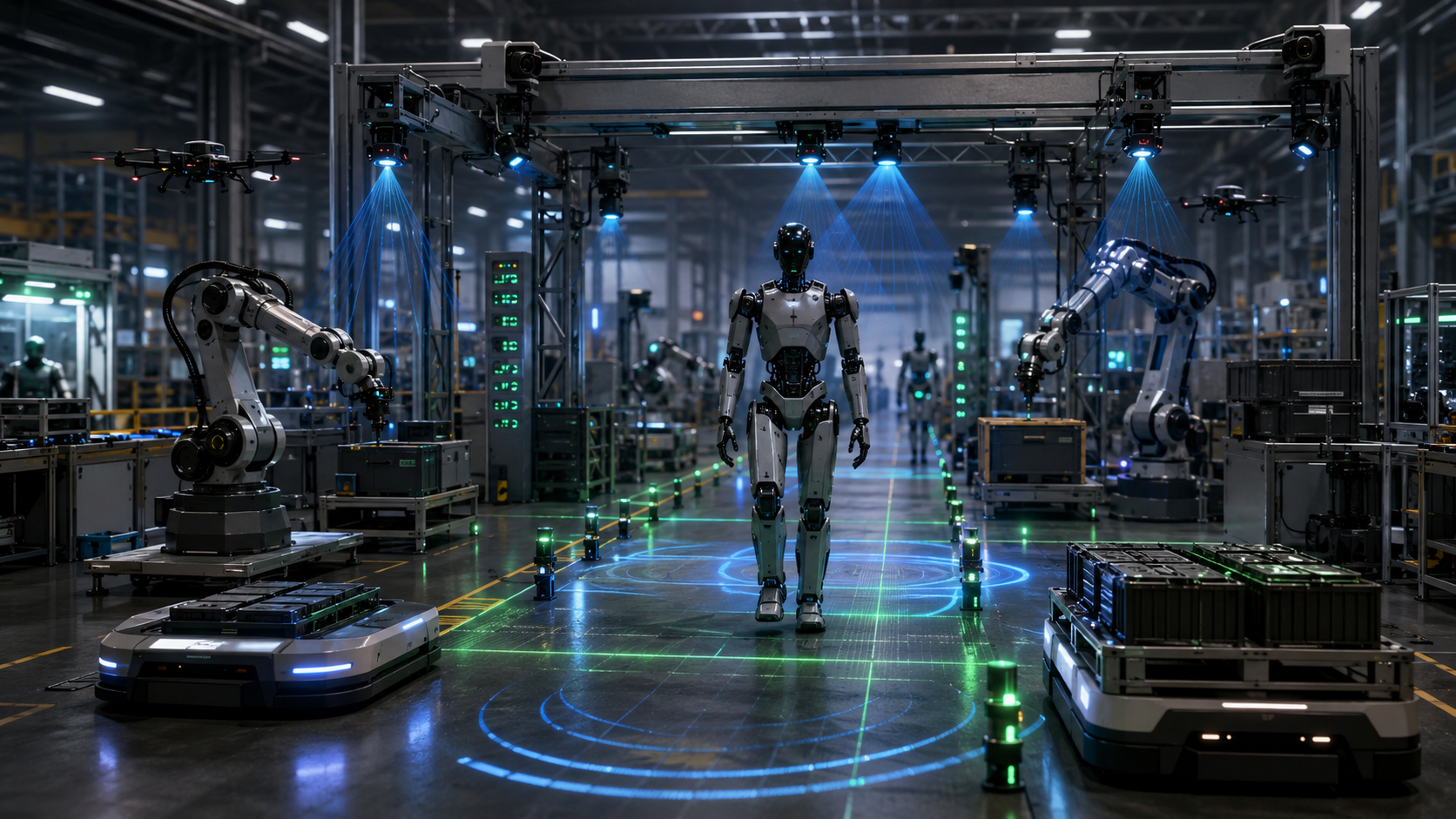
NVIDIA's Halos for Robotics matters because it shifts the bottleneck in robotics from 'can the model see and act?' to 'can the system be safely deployed around people at scale?'. That is a very different commercial problem, and it is the one that decides whether humanoids and industrial robots actually enter factories, warehouses, and logistics lines.
For NVIDIA, the strategy is clear: if safety becomes the gating function, the company can sit at the center of the hardware, software, sensor, and certification stack instead of selling only a chip.
What NVIDIA launched
Halos bundles compute, safety software, and inspection into one architecture.
NVIDIA said Halos for Robotics is the industry's first full-stack, comprehensive safety system for robotics and physical AI. The system unifies AI compute and safety and is built around hardware safety on the NVIDIA IGX Thor platform and Holoscan Sensor Bridge, safety software through Halos OS, and validation through the Halos AI Systems Inspection Lab.
The first adopter is Agility Robotics, which is using Halos for Robotics to build safety into its humanoids serving customers including Amazon, GXO, Schaeffler, and Toyota Motor Manufacturing Canada. That makes the launch commercially meaningful rather than purely conceptual.
| Layer | NVIDIA component | What it does |
|---|---|---|
| Hardware safety | IGX Thor + Holoscan Sensor Bridge | Provides the compute and sensor foundation. |
| Safety software | Halos OS | Turns safety into a software-defined layer. |
| Inspection and validation | Halos AI Systems Inspection Lab | Helps prepare robots for certification and deployment. |
| First customer | Agility Robotics | Makes the platform real in factories, warehouses, and logistics. |
Why the market cares
The value migrates from model performance to platform trust.
The read-through is also bullish for integrators and automation vendors that can certify faster. The companies that benefit are the ones that can turn the Halos stack into a repeatable deployment pathway, not just a demo.
- Safety lowers adoption friction in human-adjacent robotics.
- Certification-ready architecture can become a moat.
- Robot deployments need a platform, not just a model.
Investor lens
The next phase of physical AI may look more like industrial infrastructure than software hype.
If Halos for Robotics becomes a de facto deployment layer, NVIDIA gains another reason to be embedded in robotics procurement, from design to inspection. That could make physical AI look less like a speculative vertical and more like a regulated industrial stack.
The downside is execution: safety claims have to survive real factories, real audits, and real failure modes. But if they do, the market is looking at a platform that can expand the addressable market for autonomous robots in a very durable way.
Why Halos matters to physical AI economics
Directional scores show where the platform creates the most leverage.
단위: relative score
Safety moat
Certification gate
10
Platform breadth
Compute, sensor, software, inspection
9
Customer pull
Agility plus named customers
8
Deployment friction
Still real in human spaces
7