
%22%2F%3E%0A%20%20%3Ccircle%20cx%3D%22220%22%20cy%3D%22150%22%20r%3D%22180%22%20fill%3D%22%2322d3ee%22%20fill-opacity%3D%220.12%22%2F%3E%0A%20%20%3Ccircle%20cx%3D%221010%22%20cy%3D%22130%22%20r%3D%22220%22%20fill%3D%22%2338bdf8%22%20fill-opacity%3D%220.08%22%2F%3E%0A%20%20%3Ccircle%20cx%3D%22920%22%20cy%3D%22520%22%20r%3D%22170%22%20fill%3D%22%2322d3ee%22%20fill-opacity%3D%220.06%22%2F%3E%0A%20%20%3Cpath%20d%3D%22M140%20430h920%22%20stroke%3D%22url(%23line)%22%20stroke-width%3D%2212%22%20stroke-linecap%3D%22round%22%2F%3E%0A%20%20%3Cpath%20d%3D%22M220%20360c120-150%20260-220%20380-220s260%2070%20380%20220%22%20fill%3D%22none%22%20stroke%3D%22%2367e8f9%22%20stroke-opacity%3D%220.5%22%20stroke-width%3D%2216%22%20stroke-linecap%3D%22round%22%20stroke-linejoin%3D%22round%22%2F%3E%0A%20%20%3Cpath%20d%3D%22M300%20398h600%22%20stroke%3D%22%2394a3b8%22%20stroke-opacity%3D%220.24%22%20stroke-width%3D%228%22%20stroke-linecap%3D%22round%22%2F%3E%0A%20%20%3Ctext%20x%3D%22220%22%20y%3D%22510%22%20fill%3D%22%23e2e8f0%22%20fill-opacity%3D%220.7%22%20font-family%3D%22Arial%2C%20Helvetica%2C%20sans-serif%22%20font-size%3D%2238%22%20letter-spacing%3D%228%22%3EINSIGHTS%3C%2Ftext%3E%0A%3C%2Fsvg%3E)
Bottom line
June 24 was a bundle, not a one-off announcement
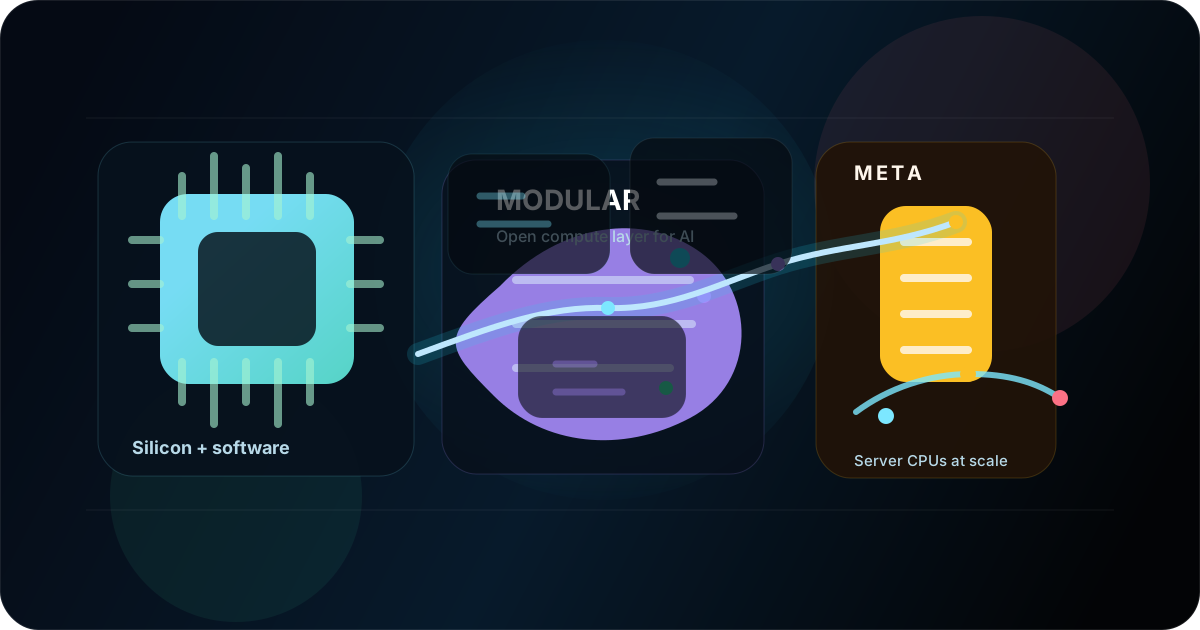
Qualcomm did not just announce one AI product. On June 24 it paired a data center roadmap, a multi-generation CPU agreement with Meta, and an agreement to acquire Modular. That combination matters because it says Qualcomm is not trying to sell a single chip. It is trying to sell a compute stack: silicon, software, orchestration, and a developer layer that can move across devices, edge systems, and data centers.
My read is that this is a more credible thesis than a straight 'NVIDIA challenger' narrative. Qualcomm does not need to win every training workload. It needs to win inference workloads where power efficiency, cost, and portability matter more than peak FLOPs. That is a narrower market, but it is also a market where procurement teams actually care about unit economics.
Economics
The fiscal 2029 targets are the real signal
| Metric | Target | Why it matters |
|---|---|---|
| Non-handset revenue | $40B | Shows Qualcomm wants to reduce dependence on smartphones. |
| Data center revenue | > $15B | Makes AI infrastructure a real P&L line, not a side project. |
| Automotive revenue | $10B | Gives the company another large cycle if design wins convert. |
| IoT revenue | > $14B | Includes industrial, networking, robotics, and personal AI. |
| Handsets share of QCT | About one-third | Handsets still matter, but no longer define the story. |
Qualcomm's efficiency claims versus GPU-based systems
These are Qualcomm's claims from its Dragonfly materials, not independent benchmarks.
단위: x
Tokens per watt
Up to 8x better than GPU-based systems
8
Memory bandwidth per watt
6x higher than HBM-based systems
6
Memory capacity per watt
200x higher than HBM-based systems
200
What to watch
Three proof points will decide whether this rerates
- Can Qualcomm turn the Meta agreement into repeatable shipments, starting with the planned first-generation C1000 CPU in the second half of 2028?
- Can Modular reduce software friction enough that customers actually deploy across heterogeneous compute instead of defaulting back to incumbent stacks?
- Can Qualcomm keep handset cash flows stable while data center and robotics ramp, or will the old core still dominate the narrative?
The risk is not that Qualcomm lacks ambition. The risk is execution across too many layers at once: silicon, software, channel, and customer trust. The opportunity, though, is real. If Qualcomm can make AI infrastructure feel less like a bespoke hardware science project and more like a portable software-defined product, it can take share in places where buyers are already looking for lower power and lower total cost of ownership.