
%22%2F%3E%0A%20%20%3Ccircle%20cx%3D%22220%22%20cy%3D%22150%22%20r%3D%22180%22%20fill%3D%22%2322d3ee%22%20fill-opacity%3D%220.12%22%2F%3E%0A%20%20%3Ccircle%20cx%3D%221010%22%20cy%3D%22130%22%20r%3D%22220%22%20fill%3D%22%2338bdf8%22%20fill-opacity%3D%220.08%22%2F%3E%0A%20%20%3Ccircle%20cx%3D%22920%22%20cy%3D%22520%22%20r%3D%22170%22%20fill%3D%22%2322d3ee%22%20fill-opacity%3D%220.06%22%2F%3E%0A%20%20%3Cpath%20d%3D%22M140%20430h920%22%20stroke%3D%22url(%23line)%22%20stroke-width%3D%2212%22%20stroke-linecap%3D%22round%22%2F%3E%0A%20%20%3Cpath%20d%3D%22M220%20360c120-150%20260-220%20380-220s260%2070%20380%20220%22%20fill%3D%22none%22%20stroke%3D%22%2367e8f9%22%20stroke-opacity%3D%220.5%22%20stroke-width%3D%2216%22%20stroke-linecap%3D%22round%22%20stroke-linejoin%3D%22round%22%2F%3E%0A%20%20%3Cpath%20d%3D%22M300%20398h600%22%20stroke%3D%22%2394a3b8%22%20stroke-opacity%3D%220.24%22%20stroke-width%3D%228%22%20stroke-linecap%3D%22round%22%2F%3E%0A%20%20%3Ctext%20x%3D%22220%22%20y%3D%22510%22%20fill%3D%22%23e2e8f0%22%20fill-opacity%3D%220.7%22%20font-family%3D%22Arial%2C%20Helvetica%2C%20sans-serif%22%20font-size%3D%2238%22%20letter-spacing%3D%228%22%3EINSIGHTS%3C%2Ftext%3E%0A%3C%2Fsvg%3E)
Bottom line
This is not a normal memory cycle anymore.
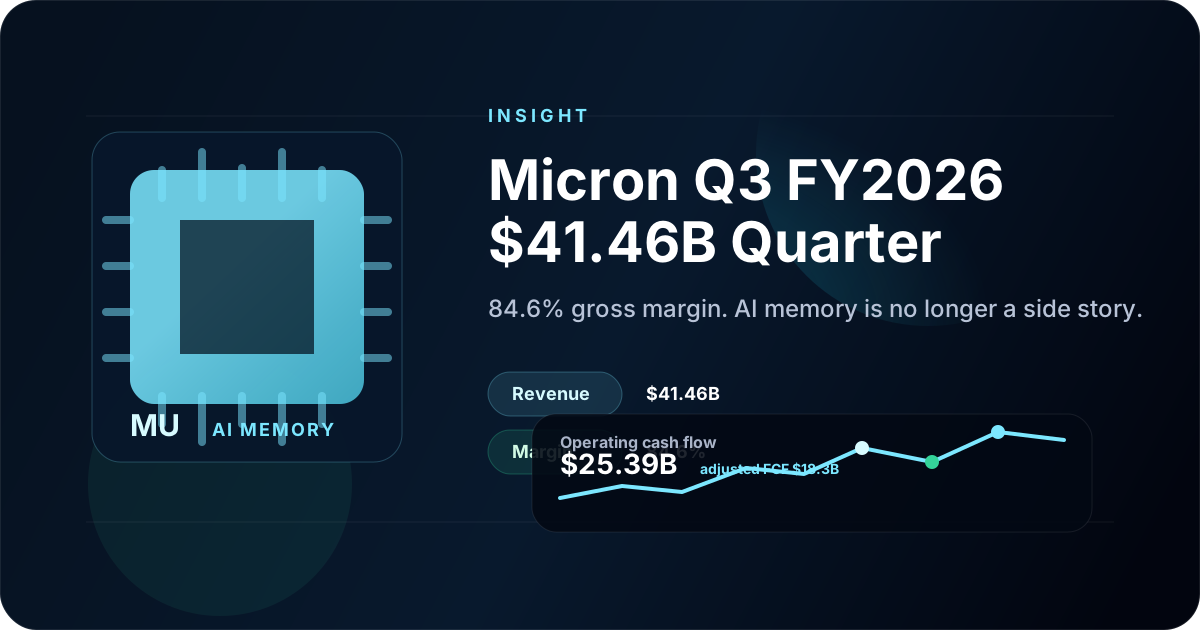
Micron's fiscal Q3 2026 release on June 24, 2026 was the kind of report that forces investors to update their mental model. Revenue hit $41.46 billion, gross margin reached 84.6%, GAAP net income came in at $28.24 billion, and operating cash flow climbed to $25.39 billion.
Those are not the numbers of a sleepy commodity supplier. They are the numbers of a company sitting on the right side of a structural shortage, with pricing power that looks increasingly tied to AI-driven memory intensity rather than a generic semiconductor recovery.
What changed
The quarter was broad, not one-dimensional.
The revenue mix was broad across Micron's four operating businesses. Cloud Memory Business Unit revenue was $13.769 billion, Core Data Center Business Unit revenue was $11.524 billion, Mobile and Client Business Unit revenue was $11.521 billion, and Automotive and Embedded Business Unit revenue was $4.634 billion.
That mix matters because it shows the AI story is no longer confined to one product bucket. Data center demand is still the headline, but the margin profile is now visible across client, mobile, and embedded segments as well.
- Cloud Memory gross margin: 83%
- Core Data Center gross margin: 87%
- Mobile and Client gross margin: 87%
- Automotive and Embedded gross margin: 79%
Why bulls care
Margins are telling you the market is still underestimating pricing power.
When gross margin moves into the mid-80s, the debate changes. This is no longer just about unit growth. It is about the quality of each incremental dollar of revenue and whether the company is operating with genuine scarcity economics.
Micron's prepared remarks reinforced that point. Management said memory has become a strategic asset in the AI era and disclosed 16 strategic customer agreements, which suggests the business is getting more predictable even as the AI buildout continues.
What can break the story
The market should still respect the cyclical risk.
This is still a memory business. If supply discipline cracks, if customer capex pauses, or if pricing softens faster than expected, the multiple can compress quickly. The same cyclicality that creates upside on the way up can punish complacency on the way down.
That is why I would frame the stock as a structural winner with cyclical timing risk, not as a straight-line compounder. The operating leverage is real, but so is the downside if the cycle turns before the market has fully repriced the story.
- Watch DRAM and NAND pricing discipline.
- Watch the durability of AI-related demand into the next quarter.
- Watch whether strategic customer agreements translate into steadier margins.
My conclusion
The market may still be using the wrong framework.
The biggest mistake investors can make here is treating Micron like an ordinary cyclical turnaround. This quarter reads more like a structural rerating event. The numbers say AI memory is not a side theme; it is increasingly the economic center of the business.
If I were writing the simplest possible thesis, it would be this: Micron is no longer just selling bits. It is selling constrained capacity inside the AI stack. That distinction matters, and it should matter to valuation too.