
%22%2F%3E%0A%20%20%3Ccircle%20cx%3D%22220%22%20cy%3D%22150%22%20r%3D%22180%22%20fill%3D%22%2322d3ee%22%20fill-opacity%3D%220.12%22%2F%3E%0A%20%20%3Ccircle%20cx%3D%221010%22%20cy%3D%22130%22%20r%3D%22220%22%20fill%3D%22%2338bdf8%22%20fill-opacity%3D%220.08%22%2F%3E%0A%20%20%3Ccircle%20cx%3D%22920%22%20cy%3D%22520%22%20r%3D%22170%22%20fill%3D%22%2322d3ee%22%20fill-opacity%3D%220.06%22%2F%3E%0A%20%20%3Cpath%20d%3D%22M140%20430h920%22%20stroke%3D%22url(%23line)%22%20stroke-width%3D%2212%22%20stroke-linecap%3D%22round%22%2F%3E%0A%20%20%3Cpath%20d%3D%22M220%20360c120-150%20260-220%20380-220s260%2070%20380%20220%22%20fill%3D%22none%22%20stroke%3D%22%2367e8f9%22%20stroke-opacity%3D%220.5%22%20stroke-width%3D%2216%22%20stroke-linecap%3D%22round%22%20stroke-linejoin%3D%22round%22%2F%3E%0A%20%20%3Cpath%20d%3D%22M300%20398h600%22%20stroke%3D%22%2394a3b8%22%20stroke-opacity%3D%220.24%22%20stroke-width%3D%228%22%20stroke-linecap%3D%22round%22%2F%3E%0A%20%20%3Ctext%20x%3D%22220%22%20y%3D%22510%22%20fill%3D%22%23e2e8f0%22%20fill-opacity%3D%220.7%22%20font-family%3D%22Arial%2C%20Helvetica%2C%20sans-serif%22%20font-size%3D%2238%22%20letter-spacing%3D%228%22%3EINSIGHTS%3C%2Ftext%3E%0A%3C%2Fsvg%3E)
What happened
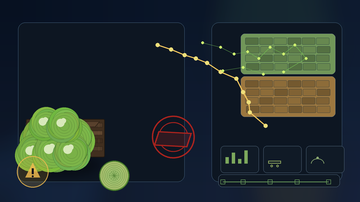
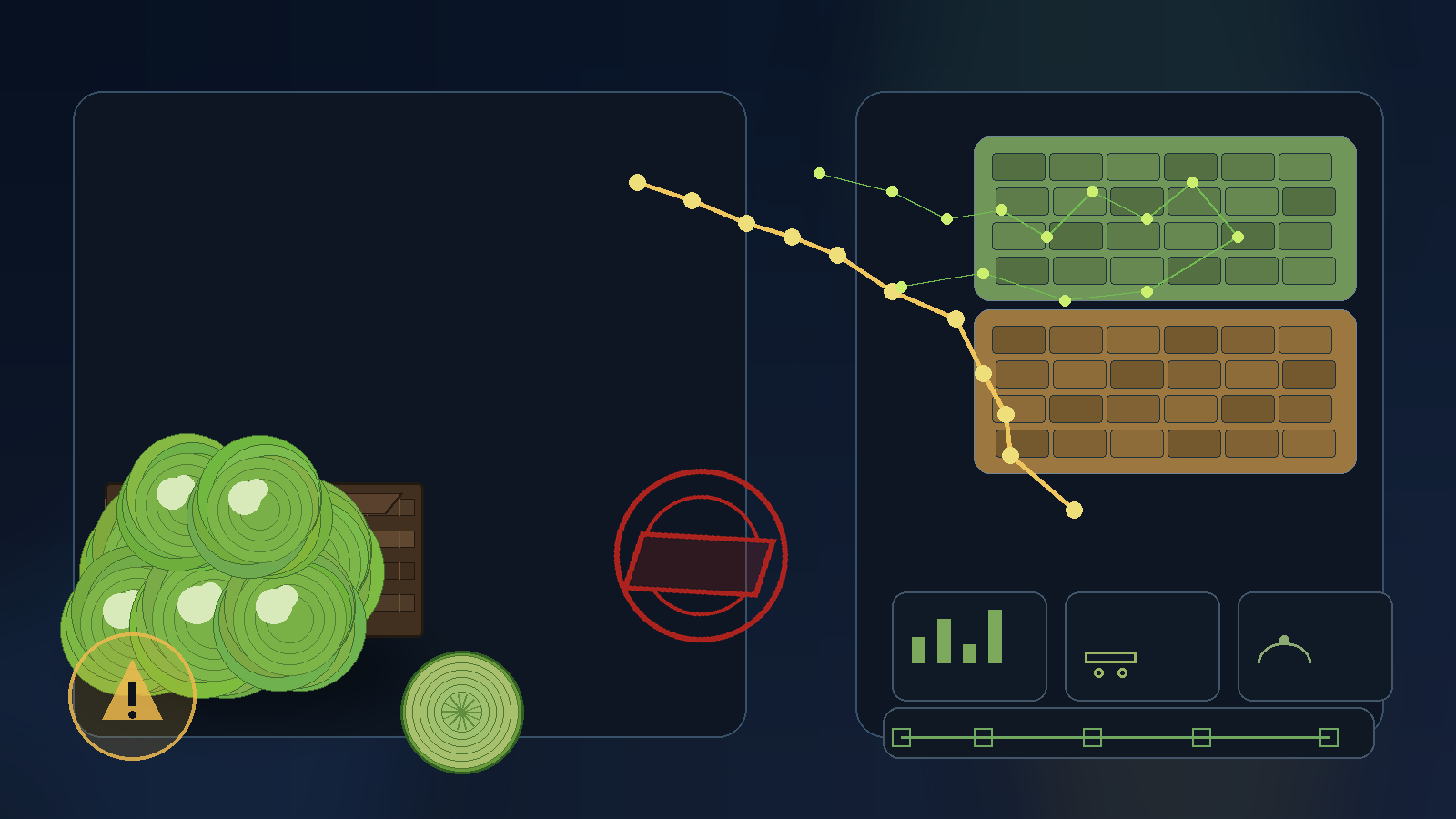
This was not a single-store handling problem. It was a shared sourcing problem that reached both restaurant meals and retail inventory.
The public-health trigger was a menu item: shredded iceberg lettuce served at Taco Bell locations in five states. The commercial consequence was broader: Taylor Farms' recall covered product distributed across 27 states during a June 29 to July 16 window.
That difference matters because the illness cluster only tells you where people got sick first. The recall footprint tells you where inventory risk existed in commerce, which is usually much wider than the initial case geography.
Taylor Farms treated the event as a supply-source issue, not a one-day packing anomaly. The company stopped receiving product from the implicated lot, suspended distribution from central Mexico, and removed affected product from commerce.
Event snapshot
The facts point to a source-channel failure, not a localized restaurant mistake.
The key details line up around one central thesis: a comminuted lettuce format can amplify the blast radius of an upstream contamination issue. Shredded and chopped products move faster through the chain, are more exposed to handling, and are harder to quarantine once distributed.
That is why the recall is commercial as well as public-health news. Retailers have to pull inventory with still-valid best-by dates, and food-service operators have to replace a menu component that is already embedded in operations.
Exposure window
2026-06-29 to 2026-07-16
Distribution period listed on the recall page.
CDC cluster states
IN, KY, MI, OH, WV
Initial outbreak geography.
Recall footprint
27 states
Where implicated product was distributed.
Mitigation
Stop, suspend, remove
Stop receiving, suspend central Mexico sourcing, remove product.
Why it matters
The operational pain sits in the gap between the illness cluster and the commerce footprint.
The gap is where the work is. Retail chains need to identify, return, and dispose of product that still looks usable by date code. Restaurant chains need substitute supply fast enough to preserve menu availability.
That is why this is more than a food-safety headline. It is a working-capital, logistics, and substitution problem. The inventory write-off is immediate; the sourcing disruption can last longer.
For investors, the key point is not Taylor Farms' own financial disclosure. It is the reminder that shared upstream produce channels can hit both retail and QSR demand at the same time.
| Channel | Immediate problem | Operational consequence |
|---|---|---|
| Retail | Packaged product still on shelves or in warehouses | Returns, disposal, customer service load, and replacement sourcing |
| QSR | Menu item already served at affected locations | Stop-use actions, menu substitution, and short-term operational rework |
| Regulators | Need to confirm whether additional lots are involved | Expanded traceback, sampling, and public advisories |
Supply chain mapping
The risk chain runs from origin, to processing, to multi-state distribution, and then into two different demand systems.
Upstream, the implicated iceberg lettuce came from central Mexico. Taylor Farms de Mexico is the named sourcing channel in the traceback framing. That is the origin point the market needs to watch, because a region-level sourcing issue can affect multiple SKUs at once.
Processing and packaging then turn raw lettuce into shredded, chopped, and salad-mix formats that are usable for grocery shelves and restaurant prep lines. Those formats are operationally efficient, but they also increase the blast radius if upstream controls fail.
Downstream, the same product family feeds grocery retail and quick-service restaurant demand. That is why the outbreak geography is five states while the commerce footprint is 27 states.
| Layer | Entity example | Evidence |
|---|---|---|
| Upstream sourcing | Taylor Farms de Mexico / central Mexico | Taylor Farms statement and FDA traceback framing |
| Processing / packing | Shredded and chopped iceberg formats | Recall product list and exposure description |
| Distribution | 27-state commerce footprint | Taylor Farms recall page |
| Downstream QSR | Taco Bell locations in five states | CDC outbreak release |
Multi-channel impact
Retail and QSR are hit differently, but the shock comes from the same upstream node.
Retail gets the inventory problem: cases of product still in the chain, often with best-by dates that look acceptable to consumers. QSR gets the menu problem: a live operational dependency on a component that has to be replaced immediately.
That means the commercial consequence is a mix of quarantine, substitution, refunds, and reputational cleanup. If the outbreak trace expands, those costs repeat across more lots and more partners.
The 27-state recall footprint also raises the probability of indirect exposure through cross-docking, relabeling, or similar SKUs sharing the same sourcing channel.
Why the commerce footprint matters more than the initial case cluster
The chart is directional: the recall footprint is much wider than the initial illness geography, which is why inventory risk is the larger operational problem.
Unidad: count
Recall states
Commerce footprint
27
Cluster states
Initial CDC-linked illnesses
5
Hospitalizations
Severity marker
94
Deaths
No fatalities reported
0
Fundamental angle
The financial hit is likely to come from write-offs, returns, and sourcing disruption rather than from a single-day sales miss.
Taylor Farms' recall mechanics imply near-term working-capital pressure. Product already shipped has to be tracked, isolated, and in many cases removed from commerce even if it is not physically spoiled.
The longer-duration risk is sourcing. If the company has to keep central Mexico distribution suspended while tracebacks continue, downstream customers have to fill the gap with substitute supply.
That is why the event matters beyond food safety. It tests how resilient a centralized produce sourcing model is when regulators and customers both need fast certainty.
| Topic | Status | Takeaway |
|---|---|---|
| Revenue or margin impact | Not quantified in public sources | Likely non-trivial but not disclosed |
| Inventory write-offs | Mechanically implied | Product removal and returns create direct cost |
| Operational disruption duration | Bounded by the recall window and best-by dates | The effect can outlast the initial announcement |
Beneficiaries and victims
The biggest victims are the partners tied to the implicated channel. The obvious beneficiaries are substitute suppliers, but only in a very limited sense.
Downstream victims include the Taco Bell locations that served the implicated lettuce and the retailers holding packed formats in the 27-state footprint.
Logistics partners and wholesalers also take a hit because they have to quarantine and return product already moving through the network.
Alternative lettuce suppliers may pick up short-notice replacement orders, but naming winners without disclosed substitution contracts would be speculation.
Long-term view
This is a stress test for centralized produce sourcing, not a one-off recall story.
The next questions are predictable: whether FDA expands the investigation, whether Taylor Farms requalifies the sourcing channel quickly, and whether similar product forms remain under scrutiny.
For operators, the lesson is that lot-level traceability and stop-distribution speed matter more than generic last-mile hygiene when a contamination signal hits a comminuted produce format.
For investors, the right frame is network resilience. Food-safety events propagate through distribution maps, not just through factory gates.
Synthesis
This recall behaves like a supply-chain network failure, not a single-batch accident.
The FDA/CDC linkage establishes the public-health signal. Taylor Farms' recall establishes the commerce footprint. The two are related, but they are not the same thing, and that distinction is what creates the operational burden.
The investment takeaway is simple: when a shared upstream sourcing channel fails, the blast radius is determined by traceability granularity, distribution breadth, and the speed of stop-use execution.
That is why this event matters beyond grocery and restaurant margins. It is a real-time test of how quickly the food network can unwind itself when a pathogen risk appears upstream.