
%22%2F%3E%0A%20%20%3Ccircle%20cx%3D%22220%22%20cy%3D%22150%22%20r%3D%22180%22%20fill%3D%22%2322d3ee%22%20fill-opacity%3D%220.12%22%2F%3E%0A%20%20%3Ccircle%20cx%3D%221010%22%20cy%3D%22130%22%20r%3D%22220%22%20fill%3D%22%2338bdf8%22%20fill-opacity%3D%220.08%22%2F%3E%0A%20%20%3Ccircle%20cx%3D%22920%22%20cy%3D%22520%22%20r%3D%22170%22%20fill%3D%22%2322d3ee%22%20fill-opacity%3D%220.06%22%2F%3E%0A%20%20%3Cpath%20d%3D%22M140%20430h920%22%20stroke%3D%22url(%23line)%22%20stroke-width%3D%2212%22%20stroke-linecap%3D%22round%22%2F%3E%0A%20%20%3Cpath%20d%3D%22M220%20360c120-150%20260-220%20380-220s260%2070%20380%20220%22%20fill%3D%22none%22%20stroke%3D%22%2367e8f9%22%20stroke-opacity%3D%220.5%22%20stroke-width%3D%2216%22%20stroke-linecap%3D%22round%22%20stroke-linejoin%3D%22round%22%2F%3E%0A%20%20%3Cpath%20d%3D%22M300%20398h600%22%20stroke%3D%22%2394a3b8%22%20stroke-opacity%3D%220.24%22%20stroke-width%3D%228%22%20stroke-linecap%3D%22round%22%2F%3E%0A%20%20%3Ctext%20x%3D%22220%22%20y%3D%22510%22%20fill%3D%22%23e2e8f0%22%20fill-opacity%3D%220.7%22%20font-family%3D%22Arial%2C%20Helvetica%2C%20sans-serif%22%20font-size%3D%2238%22%20letter-spacing%3D%228%22%3EINSIGHTS%3C%2Ftext%3E%0A%3C%2Fsvg%3E)
What changed
Nvidia is no longer merely selling chips; it is curating who gets to touch the supply chain.
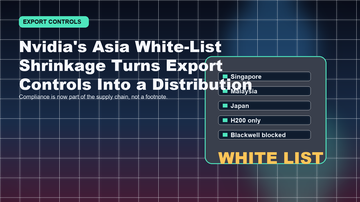
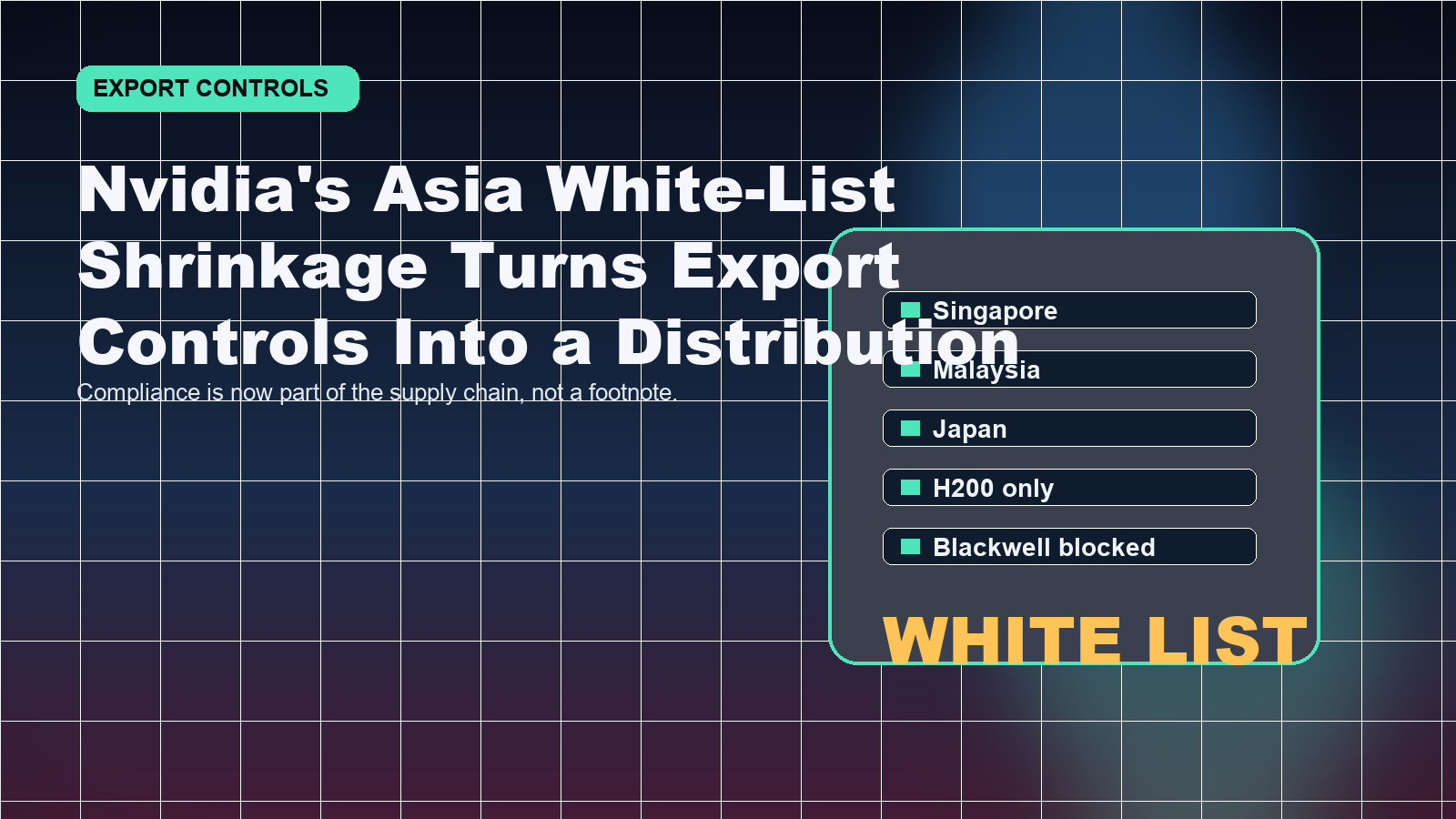
The white-list move is important because it changes the commercial model. Instead of a broad Asian customer base that can route hardware toward China, Nvidia is narrowing the funnel and increasing the amount of vetting required to stay in it.
That includes more site inspections, contract verification, and end-user checks in places like Singapore, Malaysia, and Japan. In other words, compliance is becoming a product attribute. If a customer is not on the list, they are not part of the distribution network.
The real point is that export controls are no longer just a government policy problem. They are now an operating-system problem for the chipmaker itself.
Why it matters
The moat is not just around the chip; it is around the route from factory to final user.
The Washington pressure is obvious, but the second-order effect is more interesting. By making approval status part of the distribution layer, Nvidia reduces the chances that its own product becomes the subject of a headline about unauthorized re-export.
That matters because the chip war is no longer only about model performance. It is about where the hardware lands, who verifies the landing, and whether the final user is visible to regulators. The best way to preserve the business is to make the chain auditable.
For investors, the trade-off is straightforward: a tighter buyer list can reduce short-term China volume, but it can also preserve the premium valuation by lowering the probability of a compliance shock.
Nvidia export-control tiers
A simple map of the current AI chip access hierarchy.
단위: count / binary / relative scale
Authorized Asian buyers reduction (%)
Customer list shrunk
50
Due-diligence intensity
More inspections
4
H200 access
Selective access
1
Blackwell access
Off-limits
0
China shipment scale
Still limited
1
Smuggling risk
Ongoing enforcement focus
3
Read-through
The distribution moat matters because China demand still exists even when the route gets narrower.
That is the real tension in the AI chip market. China wants the hardware, U.S. regulators want to constrain the route, and Nvidia wants to preserve the revenue without becoming the poster child for leakage.
If the company can keep the route clean, the market will likely reward the predictability even if it punishes the headline volume. Investors should think of this as margin defense by compliance rather than simple volume defense by product superiority.
The result is that the export regime becomes part of the competitive moat. The best-run supplier is the one that can sell less sloppily, not just the one that can sell more aggressively.
| Layer | Old model | New model |
|---|---|---|
| Customer screening | Broad buyer pool | Named and verified buyers |
| Routing | Multiple transshipment points | Tighter control across Asia |
| Enforcement | Mostly after the fact | Before shipment and at the site |
| Investor payoff | Max volume | Controlled volume with less policy risk |