
%22%2F%3E%0A%20%20%3Ccircle%20cx%3D%22220%22%20cy%3D%22150%22%20r%3D%22180%22%20fill%3D%22%2322d3ee%22%20fill-opacity%3D%220.12%22%2F%3E%0A%20%20%3Ccircle%20cx%3D%221010%22%20cy%3D%22130%22%20r%3D%22220%22%20fill%3D%22%2338bdf8%22%20fill-opacity%3D%220.08%22%2F%3E%0A%20%20%3Ccircle%20cx%3D%22920%22%20cy%3D%22520%22%20r%3D%22170%22%20fill%3D%22%2322d3ee%22%20fill-opacity%3D%220.06%22%2F%3E%0A%20%20%3Cpath%20d%3D%22M140%20430h920%22%20stroke%3D%22url(%23line)%22%20stroke-width%3D%2212%22%20stroke-linecap%3D%22round%22%2F%3E%0A%20%20%3Cpath%20d%3D%22M220%20360c120-150%20260-220%20380-220s260%2070%20380%20220%22%20fill%3D%22none%22%20stroke%3D%22%2367e8f9%22%20stroke-opacity%3D%220.5%22%20stroke-width%3D%2216%22%20stroke-linecap%3D%22round%22%20stroke-linejoin%3D%22round%22%2F%3E%0A%20%20%3Cpath%20d%3D%22M300%20398h600%22%20stroke%3D%22%2394a3b8%22%20stroke-opacity%3D%220.24%22%20stroke-width%3D%228%22%20stroke-linecap%3D%22round%22%2F%3E%0A%20%20%3Ctext%20x%3D%22220%22%20y%3D%22510%22%20fill%3D%22%23e2e8f0%22%20fill-opacity%3D%220.7%22%20font-family%3D%22Arial%2C%20Helvetica%2C%20sans-serif%22%20font-size%3D%2238%22%20letter-spacing%3D%228%22%3EINSIGHTS%3C%2Ftext%3E%0A%3C%2Fsvg%3E)

Bottom line
The MQ-28 is moving from prototype logic to product logic.
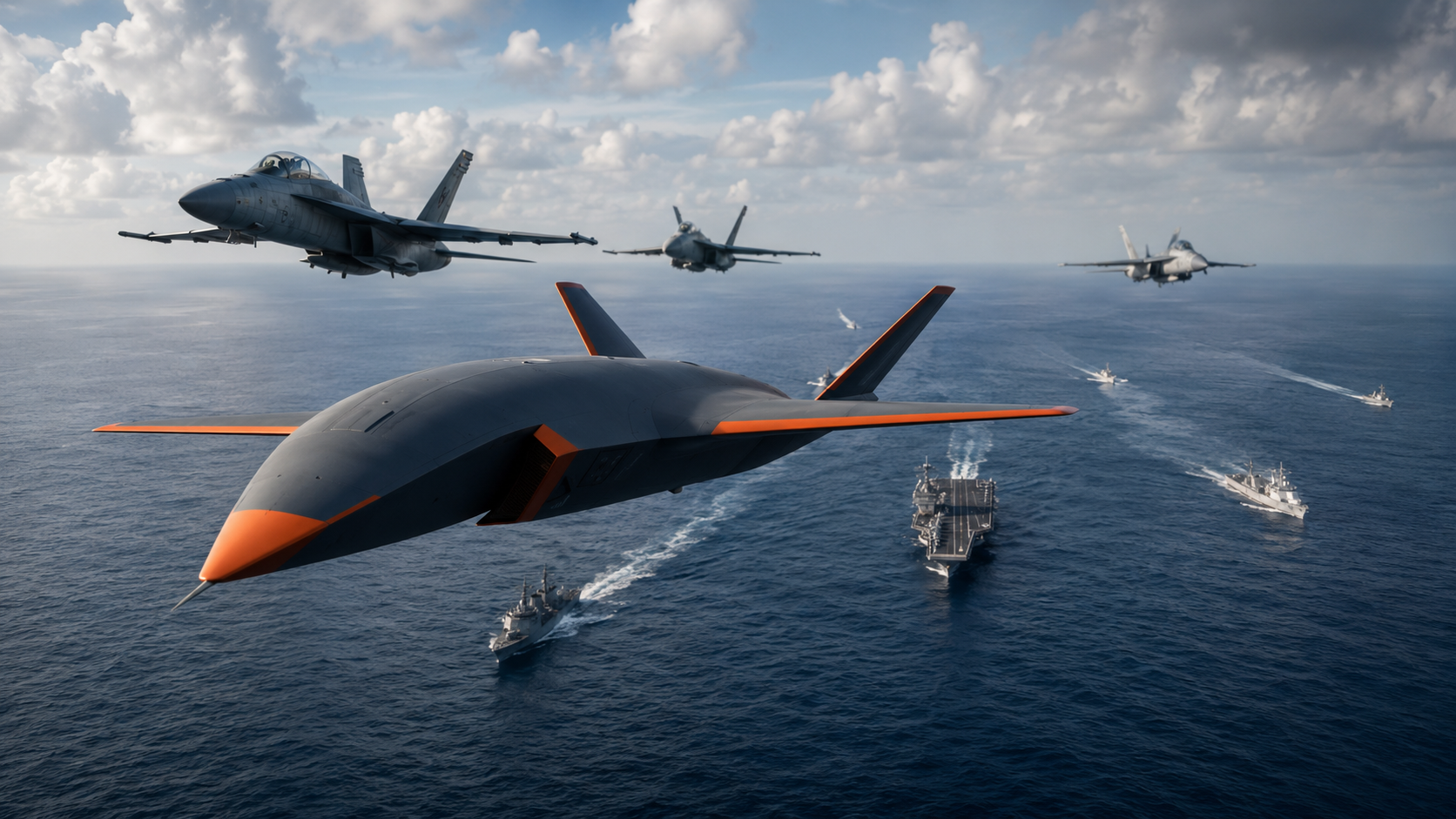
Boeing says the MQ-28 Ghost Bat became the first collaborative combat aircraft integrated into a multinational, joint-force exercise. That matters because defense programs tend to change value only when they stop being future promises and start being operationally visible.
The important shift is that the market can now think about autonomous wingmen as a category with deployment credibility. That should help Boeing's defense franchise even if the commercial airplane business is still dealing with its own execution issues.
What Boeing said
Valiant Shield gave Boeing a real-world integration test, not a slide-deck demo.
Boeing said MQ-28 Ghost Bat participated in Exercise Valiant Shield alongside F-35A, F-35B, F-15EX, HC-130, E-3, E-2D, EA-18G and RC-135 aircraft. The company framed the exercise as a way to collect learnings on deployment, sustainment, and agile combat employment for the U.S. Air Force's Experimental Operations Unit.
That is the key signal. The Air Force is not just buying a platform; it is trying to learn how a collaborative combat aircraft fits into the existing force package, and how quickly it can be deployed, supported, and re-tasked.
| Item | Official detail | Why it matters |
|---|---|---|
| Program | MQ-28 Ghost Bat | Autonomous wingman concept becomes a real operational object. |
| Exercise | Valiant Shield 2026 | Multinational joint-force use case is a step toward procurement. |
| Learning goals | Deployment, sustainment, agile combat employment | The military is testing logistics, not just sensors. |
| Adjoining aircraft | F-35s, F-15EX, E-3, E-2D and others | The platform must work inside a complex combat stack. |
Market read-through
The CCA story could become a margin tailwind if Boeing converts validation into backlog.
If collaborative combat aircraft become a procurement priority, Boeing can sell into a higher-value defense stack than traditional airframes alone. The upside is not just one program; it is the possibility that drones, autonomy software, support, and upgrade cycles become more repeatable revenue streams.
The risk is execution. The defense team still needs to prove that the MQ-28 can transition from test publicity to contract revenue without dragging on schedule or absorbing too much capital before the real orders arrive.
- Autonomy gives Boeing more content per platform if the program scales.
- Training, sustainment, and integration can become sticky recurring revenue.
- Defense credibility can partly offset pressure in commercial airplanes.
Why the stock cares
The market should read this as a signaling event for the future of air combat procurement.
A military exercise is not a contract award. But in aerospace, proof of integration is often the step that lets procurement conversations accelerate. That is why this release matters to investors watching the defense side of Boeing.
The deeper thesis is that the U.S. and its allies are moving toward mixed fleets of crewed aircraft and autonomous companions. If that happens, suppliers that can manage systems integration, sustainment, and mission software will matter more than suppliers that only build the airframe.
MQ-28's market significance is an integration story
The bars are a directional score for where the program's value shifts after Valiant Shield.
단위: relative score
Operational credibility
First joint-force integration
9
Procurement optionality
Easier to pitch as a category
8
Sustainment value
New recurring revenue layers
7
Execution risk
Still a program, not a contract
6