
%22%2F%3E%0A%20%20%3Ccircle%20cx%3D%22220%22%20cy%3D%22150%22%20r%3D%22180%22%20fill%3D%22%2322d3ee%22%20fill-opacity%3D%220.12%22%2F%3E%0A%20%20%3Ccircle%20cx%3D%221010%22%20cy%3D%22130%22%20r%3D%22220%22%20fill%3D%22%2338bdf8%22%20fill-opacity%3D%220.08%22%2F%3E%0A%20%20%3Ccircle%20cx%3D%22920%22%20cy%3D%22520%22%20r%3D%22170%22%20fill%3D%22%2322d3ee%22%20fill-opacity%3D%220.06%22%2F%3E%0A%20%20%3Cpath%20d%3D%22M140%20430h920%22%20stroke%3D%22url(%23line)%22%20stroke-width%3D%2212%22%20stroke-linecap%3D%22round%22%2F%3E%0A%20%20%3Cpath%20d%3D%22M220%20360c120-150%20260-220%20380-220s260%2070%20380%20220%22%20fill%3D%22none%22%20stroke%3D%22%2367e8f9%22%20stroke-opacity%3D%220.5%22%20stroke-width%3D%2216%22%20stroke-linecap%3D%22round%22%20stroke-linejoin%3D%22round%22%2F%3E%0A%20%20%3Cpath%20d%3D%22M300%20398h600%22%20stroke%3D%22%2394a3b8%22%20stroke-opacity%3D%220.24%22%20stroke-width%3D%228%22%20stroke-linecap%3D%22round%22%2F%3E%0A%20%20%3Ctext%20x%3D%22220%22%20y%3D%22510%22%20fill%3D%22%23e2e8f0%22%20fill-opacity%3D%220.7%22%20font-family%3D%22Arial%2C%20Helvetica%2C%20sans-serif%22%20font-size%3D%2238%22%20letter-spacing%3D%228%22%3EINSIGHTS%3C%2Ftext%3E%0A%3C%2Fsvg%3E)
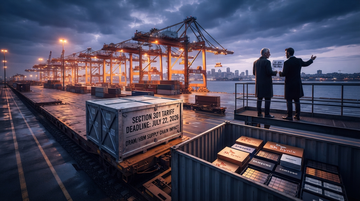
This is the wrong kind of policy shock for semiconductors: tariffs don’t just raise landed cost; they change who has pricing leverage inside existing contract economics. For SK hynix and Samsung Electronics, the critical question is whether tariff-induced cost changes show up as (1) pass-through in contract prices, or (2) volume/ordering volatility that forces margin compression.
What happened & what matters
The “deadline” matters because it compresses the time window for contract renegotiation—so the first thing to break is not cost, it’s volume-and-price alignment
- Section 301 is designed to trigger trade remedies through a time-bound administrative process; when a deadline passes, U.S. importers and counterparties shift immediately from “pricing optionality” to “tariff reality.”
- In memory, volumes are already constrained by supply chain physics (yield, packaging, HBM stack capacity), so tariff-driven uncertainty mainly attacks contract assumptions: whether buyers still place full orders at agreed pricing—or pull forward/slow down based on expected tariff pass-through.
Key mechanism investors should model (tariff → contracts → realized margins)
Tariff hits
Landed cost reprice at the border (timing + classification dependent)
Actual HTS/product scope drives realized duty; not disclosed in the sources we opened.
Contract response
Either pass-through via price clauses or renegotiation
Without published contract wording, outcome is inferred from market structure + company disclosure limits.
Fail mode
Margin compression through volume trade-down (customers accept less at current prices)
Second fail mode is buyers gaming timing (order pull-forward then cancellations).
The supply-chain math
HBM economics aren’t threatened by tariffs as much as they are threatened by contract volume volatility—because HBM supply is already the scarce “bottleneck input” to AI systems
If HBM were easy to substitute, tariffs would mostly change who pays. But HBM sits inside the AI memory bottleneck—so the dominant short-run lever becomes ordering behavior (volume timing and acceptance), not pure substitution.
| Scenario | Buyer behavior after tariff deadline | Memory maker pricing power | Likely P&L effect | What to watch next |
|---|---|---|---|---|
| Pass-through works | Buyers keep orders; only net effective price rises | High (contract clauses & scarcity support pricing) | Margins dip mildly (cost of goods + logistics offset by price) | Stable guidance + utilization; no abrupt volume downgrades |
| Pass-through constrained | Buyers demand renegotiation or accept less | Medium/low (scarcity not enough vs budget shock) | Margins compress through unit shortfalls | Order reshaping, weaker shipments, worse operating leverage |
| Timing game dominates | Orders pull forward then reset after deadline | Low for the near quarter (demand volatility > scarcity) | Revenue mix distortion; higher working-capital risk | Receivables/inventory swing vs prior year |
Fundamentals check (who has more cushion?)
Margin/cash cushion changes the damage radius: SK hynix generated much more operating cash in FY2025 than Samsung Electronics, so it can absorb a timing shock longer
SK hynix FY2025 gross margin proxy
60.4%
Gross profit / revenue (tool data: gross profit KRW 58.7T; revenue KRW 97.1T)
Samsung Electronics FY2025 operating cash flow
KRW 85.3T
Net cash provided by operating activities (tool data)
Samsung Electronics FY2025 gross margin proxy
38.6%
Gross profit / revenue (tool data: gross profit KRW 128.8T; revenue KRW 333.6T)
On the surface both companies printed large FY2025 profits and operating cash. The difference is that Samsung Electronics has a lower gross margin proxy (broader business mix, more non-memory exposure), so a tariff-driven demand/volume volatility can compress margins faster unless pass-through holds.
| Company | FY2023 net income | FY2024 net income | FY2025 net income | Interpretation for tariff shock |
|---|---|---|---|---|
| Samsung Electronics | KRW 14.5T | KRW 33.6T | KRW 44.3T | Ramping profitability: tariff impact more likely shows up as timing/volume than solvency risk |
| SK hynix | KRW -9.1T | KRW 19.8T | KRW 42.9T | Turnaround cushion: after a loss year, FY2025 cash generation gives a nearer-term buffer |
Contract volumes vs pricing power
If tariffs force buyers to renegotiate, the “winner” is the memory maker with the higher near-term ability to protect utilization (not necessarily the higher headline margin)
- Memory pricing is oligopoly-driven, but contract volumes are still budget-constrained for hyperscalers and system integrators—tariffs change the budget math and can trigger order reshaping.
- HBM is structurally scarce in the cycle; that supports pricing. But tariff deadlines change who bears the incremental cost: if buyers believe they can push the supplier to share the burden, they may slow acceptances or seek price concessions.
Upstream & downstream: where the shock propagates first
The tariff stress test propagates through (1) wafer/package throughput and (2) AI memory system build schedules—so equipment/materials with longer lead times can be the first victims
- Upstream (materials & process): chemicals, gases, photoresists, and specialty substrates have purchase timing that’s harder to unwind than finalized memory wafer sales—so cost absorption can hit before price correction.
- Process/equipment: deposition, lithography, and packaging capacity decisions are multi-month; tariff uncertainty can delay downstream firm orders, forcing equipment utilization volatility before memory pricing fully reflects the new duty reality.
- Downstream (customers): AI accelerators and server OEM build plans reallocate budgets when landed costs jump; if contract price clauses can’t fully shift, buyers may reduce short-cycle build rates or substitute to other memory modes.
| Chain layer | Entity examples to track | What tariff uncertainty changes | The leading KPI |
|---|---|---|---|
| Upstream materials | Specialty chemicals / gases / photoresists (private suppliers; not verified here) | Spot vs contract pricing; inventory strategy | Working capital + inventory days movement in memory makers |
| Capital equipment | Deposition, lithography, packaging equipment suppliers (not verified here) | Order timing from fabs/packagers | Equipment order comments + delivery schedules (company disclosures) |
| Downstream customers | Hyperscalers + server OEMs (not verified here) | Server build rates and acceptance timing | Memory shipment/bit growth vs prior quarter patterns |
Management & company signals to watch (next 1–2 quarters)
The first post-deadline “truth serum” is working-capital behavior: tariff shocks show up in receivables and inventory before they show up in gross margin
When buyers hesitate, you typically see inventory accumulation or slower cash conversion—especially for differentiated products where supply is constrained and can’t be instantly rerouted. In memory, that pattern can precede headline margin changes.
| Company | Quarterly KPI to monitor | Why it matters under tariff deadline risk | Baseline reference from tool data (FY2025 where available) |
|---|---|---|---|
| Samsung Electronics | Receivables & inventory changes | If buyers renegotiate, cash collection can slow and inventory can rise | FY2025 accounts receivable KRW 51.1T; inventory KRW 52.6T (tool data) |
| SK hynix | Operating cash flow vs net income drift | Volume acceptance changes can create timing gaps | FY2025 net income KRW 42.9T; operating cash flow KRW 53.4T (tool data) |
Answering the brief’s core question
What breaks first: HBM economics or contract volumes? In this setup, contract volumes break first—HBM pricing only holds if buyers can’t renegotiate the tariff burden
- Why volume breaks first: deadlines force a quick repricing of landed costs; buyers react faster than suppliers can redesign procurement, yields, or packaging flows.
- Why HBM still matters: HBM supply scarcity limits substitution, which supports pricing—but it doesn’t eliminate buyers’ ability to delay acceptance or demand contract concessions.
- So the investable bet: the most tariff-sensitive metric is not “HBM ASP headline,” it’s realized shipment/acceptance volumes and cash conversion after the deadline.
These Section 301 actions can impose tariffs as a remedy responding to foreign acts, policies, or practices that burden U.S. commerce—timing and scope determine how quickly importers must absorb new costs.